
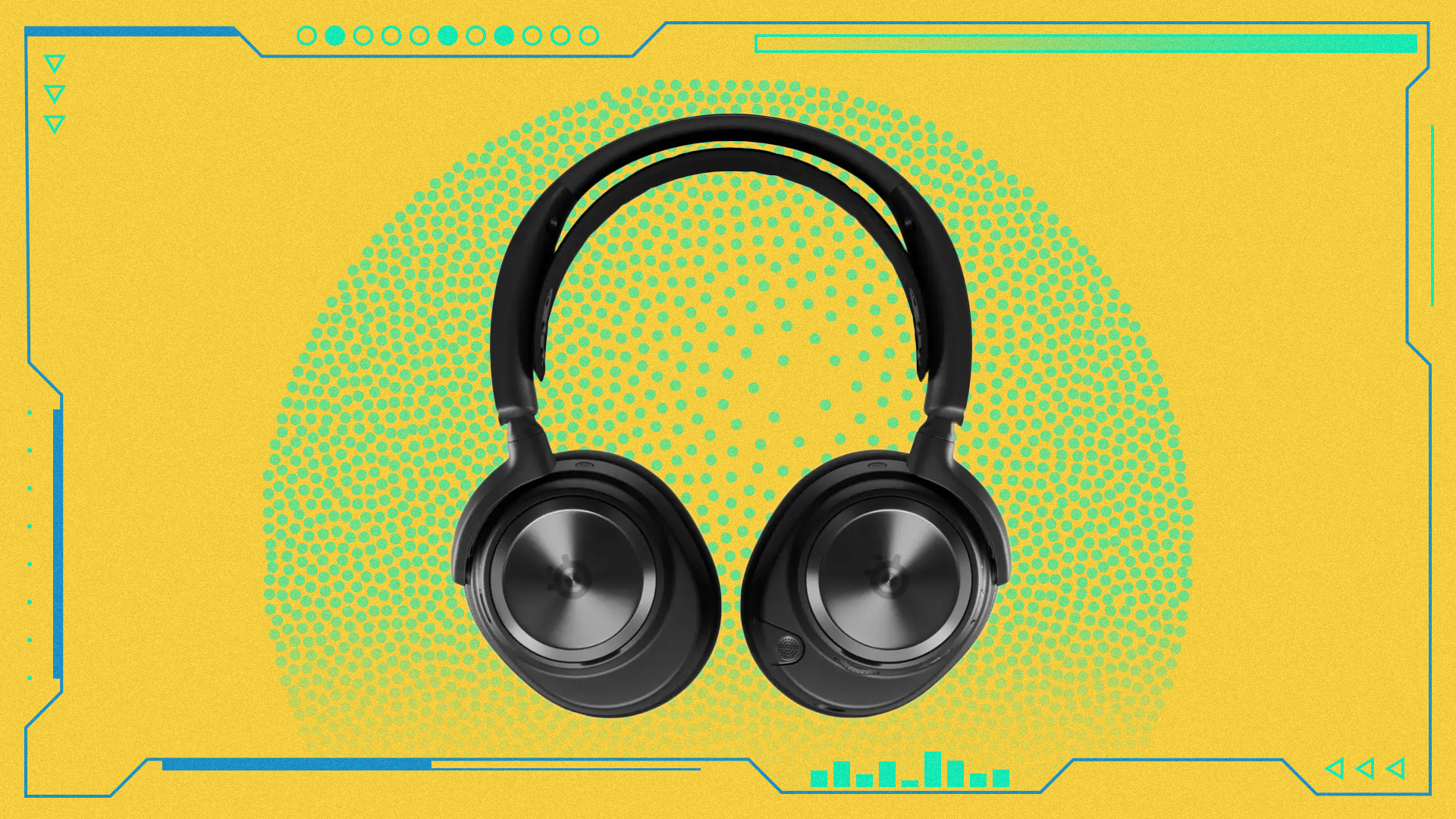
Let's get straight to the point: if you have the money to spend and want the best sound quality, I'm going to tell you to go with the Audeze Maxwell 2. It's like having a home theater strapped to your head, and nothing sounds as good when it comes to gaming headsets. But there's more to picking out a gaming headset, right? Something like the SteelSeries Arctis Nova Pro Omni has a much wider range of features that turns a gaming headset into an all-in-one audio setup for every device you have. Still, not everyone has the money to blow on these state-of-the-art headsets, so I explored many more options below.
I've been reviewing gaming headsets for nearly a decade, putting them through their paces and breaking down sound quality, comfort, and all the other ridiculous features that manufacturers have packed in over the years. That includes my time here at IGN, having written full reviews of the headsets I'm recommending here alongside 120+ hours of additional side-by-side testing for this guide. With that hands-on experience, I've compiled a list of the best gaming headsets for all price ranges, as well as some alternatives, with all the reasons why you should pick one or the other.
TL;DR: These Are the Best Gaming Headsets:
How I Test Gaming Headsets
The time spent with these headsets for this guide is in addition to the time I spent during their initial review periods to make sure I refreshed my memory, determined if they've held up since then, and got more direct comparisons to make sure I picked the right one over another. To paint a more detailed picture of how I made these picks, here's a breakdown of my selection criteria:
- Audio quality – The expectation is a high-end audio experience that is fine-tuned to games with great positional audio and clarity across all frequencies. Music performance needs detailed sound incrementally pushed with higher volumes. A few exceptions can be made at lower price tiers, but it should not compromise an enjoyable listening experience.
- Comfort – Headsets must be wearable for at least four hours without a break; exceptions for a little sweatiness for leatherette earpads. High clamp force is taken into consideration, but this must be offset by padding that holds up for long sessions.
- Additional factors – Battery life, microphone clarity, and intuitive controls (both onboard and in software) are also factors in the selection process where applicable. Extraneous features such as 3D audio, active noise cancelling, scenario-based sound profiles, or simultaneous Bluetooth are considered as well, and could give the edge to one headset over another, but these are not required features for making the selection.
- Price tiers – There are so many headsets to choose from, so breaking them into price ranges helps 1) you navigate this guide, and 2) create an even playing field for the bevy of headsets that are worth their respective price tags. The following are the price ranges I considered for each category of gaming headset:
- Best Wireless/Overall: $300 to $400
- Best Wired: $200 to $350
- Best Mid-range: $150 to $200
- Best Budget: $50 to $120
Regardless of how much you're willing to spend, there's a gaming headset that will match your budget without having to sacrifice much on quality. But how did I come to these conclusions? Well, I tested more than 20 headsets, of which I selected a total of 12 for this guide, and used each for a minimum of 10 hours in-game across three different games to gauge their audio performance in various gameplay scenarios: Counter-Strike 2 ranked matches for positional sound in competitive gaming, Final Fantasy XIV raid instances for a "busy" sound experience, and The Last of Us Part II for cinematic single-player games. I also created a playlist on Spotify to hear how different music genres sound on each headset using the new Spotify premium lossless codec available to paying subscribers. This will give you a holistic perspective to cover the bases no matter what kinds of games (or use-cases) you need your headset for, and it's my basis for which all headsets have been equally tested on.
Best Gaming Headset
Audeze Maxwell 2
It's tough to pick a favorite at the high-end, but if I had to put one feature above anything else, it’d be sound quality; and Audeze is unmatched in this department. After using the original Maxwell as my go-to on PS5 for the better part of a year before moving onto the Maxwell 2, it's hard to go back to other wireless headsets.
No one does sound quality like Audeze, and the Maxwell 2 is a prime example. The 90mm planar magnetic drivers stand out, and although bigger drivers don't always mean better sound, Audeze made great use of their capabilities. Yes, the Maxwell 2 has fantastic sound quality in a tier of its own with clarity and detail in all testing scenarios, but it has a distinguishable spaciousness to its audio profile that other headsets don't have. This also translates to more room for the details of its positional audio to shine. Plucking out distance and direction of sound cues in Counter-Strike 2 is crucial to staying competitive, and the Maxwell 2 doesn't have to artificially boost the corresponding frequencies to help identify these effects in the heat of a ranked match.
While the Maxwell 2 sounds great out of the box, tweaking the frequencies a bit through the easy-to-use Audeze desktop app will help you get a lot more out of the low-end. With a little bass boost, the Maxwell 2 really shines for prestige-style games and music. This was most evident in playing through the opening hours of The Last of Us Part II where scenes had a distinct depth and distance. My lossless playlist sounded fantastic as well, giving the feeling of fullness without sounding artificial (and without needed virtual surround).
The Maxwell 2 outshines its contemporaries in battery life by a long shot, too. Back when I reviewed the headset, I went through an entire week's worth of testing (roughly 40 hours of total use) and only at the end did it dip to about 40% battery leftover. Audeze claims the Maxwell 2 can hit upwards of 80 hours from a full charge, and I'd say that's accurate. That's likely the necessary trade-off for a hulking headset that weighs a whopping 560g, however.
It’s comfortable, despite its weight. The Maxwell 2 is on the heavier side, but that weight is balanced with enough clamp force to keep it in place, plushy earpads that make sure it's comfortable to wear all day, and an extra-wide headband on top to keep the headset in place and alleviate pressure from the top of your head. In my testing, I wore the Maxwell 2 for sessions of about four to five hours at a time, and I never felt like the headset was bothering me or weighing me down. Now, this isn't the kind of headset you'd also use a pair of headphones on the go because of its weight and build, but as a gaming headset, I don't find it a problem. Aside from a slight adjustment around my ears every now and then, I didn't have to think about the fact I was wearing a big ol' headset, and that's a testament to its comfort and ergonomics.
Build quality is top notch. There's very little plastic used on the Maxwell 2 – the frame and the earcups themselves are built with a durable aluminum and I can handle the headset as a whole with confidence. This also contributes to its weight, as I discussed above, but the trade-off is a well-constructed headset that's built like a tank. In my usual flex test to see how much the headband will bend without giving too much tension, I wasn't worried about the structural integrity of the Maxwell 2, and I never felt like I had to be gentle when putting it on or taking it off (although it's an expensive headset, take care of your stuff!).
Connectivity options are solid. The Maxwell 2 comes with a wireless USB-C dongle with a toggle for native PC or PlayStation connections. If you want to use it for Xbox, be sure to get the specific model that's compatible with Xbox's wireless protocol. Otherwise, it can run a wired 3.5mm analog or direct USB connection. It has Bluetooth capability as well, and I've grown to love simultaneous 2.4GHz and Bluetooth of more sophisticated headsets – the thing with the Maxwell 2 is that you can only do simultaneous Bluetooth with it when using a wired connection.
It has a clean and clear microphone with solid noise isolation. From a pure sound quality point, the Maxwell mic offers decent clarity. It won't be mistaken for a standalone mic, but my voice comes out clean and that's primarily what I look for in a gaming headset. The impressive part is its noise isolation, however. Clacking keyboards, chaotic ambience, and what not, the Maxwell 2's mic filters these out extremely well without clipping, severely compressing, or "digitizing" my voice. I tested this by recording myself through Audacity while typing on a mechanical keyboard to hear if 1) it would pick up the keyboard on its own and 2) if it would clash with me talking once it picked up my voice – in the latter case, it was barely a faint tapping from my keyboard. While there are some headsets capable of this as well, I can rely on the Maxwell 2 being that good, too.
Also Great
SteelSeries Arctis Nova Pro Omni
For as much as I sing the praises of the Maxwell 2, it's not without its drawbacks. While that weight didn't bother me much during the testing period for review and this guide, it's something you might want to account for if you think it'd bother you. That also makes it a bit unwieldy and less nimble than most other options (as durable as it may be). For that, I would just as quickly recommend the SteelSeries Arctis Nova Pro Omni, which I would summarize as being more well-rounded and versatile.
It makes the most of its 40mm audio drivers. While its base sound profile isn't as robust as the Maxwell 2, it's no slouch for competitive gaming, cinematic experiences, and music, pushing its 40mm neodymium drivers (which have been remade with magnetic housing to limit distortion) to their limits with hi-res 96kHz/24-bit audio.
It has a multitude of ready-made profiles in the SteelSeries Sonar app, giving it the ability to fine-tune for a specific sound experience at a level I've never seen elsewhere. When pushing higher volumes, the Nova Pro Omni handles bass-heavy moments quite well with a solid low-end and minimal distortion at the high pitches.
The base station offers unparalleled versatility, with line-in and line-out ports for additional audio devices as well as three USB-C ports that let me connect to all my systems simultaneously and swap between them without having to unplug or move cables around. There's no need to get an Xbox-specific model, either – all connectivity is packaged in a single SKU. Maybe having the base station unit isn't quite as elegant to set up in a home theater, but I very much think it's worth the trade-off for the level of control it gives me, especially when I'm using this headset between multiple devices (a credit to true simultaneous Bluetooth as well).
It has a unique swappable battery system that creates an infinite loop of battery life – you never have to plug in the headset, and for me, that's a convenience that puts it above many others. One battery charges in the base station while a second one is in use in the headset, and you can hotswap between them in less than 10 seconds without needing to power the headset back on. I can be a forgetful person – anything from where I put my keys to remembering to plug in my headset when it's not in use, and this battery system solves that self-inflicted wound. I'm sure I'm not the only one who has this problem, but it is genuinely freeing to know that I simply never have to be wired at any point.
Great comfort all around. Across 10+ hours of test sessions for this guide and my initial review, I rarely had to think about the fact I was wearing a headset. It gets a little muggy in there by virtue of leatherette earpads, as is the case with almost all of them. But the cushions offset the slightly tighter clamp force, letting them stay on comfortably the entire time while feeling secure on my head. That's also important for something I'd use when I'm out and about or doing something else around the house when switching to music via Bluetooth.
It's durable despite being mostly made of plastic. Don't get me wrong, the Nova Pro Omni is a robust headset – it does well on my flex test, and can be handled with confidence – I just expect something a bit more premium-feeling at this price point. But hey, at least this keeps its weight down to just a feathery 339g, which feels paper-like compared to the Maxwell 2.
ANC is good, but not exceptional. The Arctis Nova Pro Omni offers active noise cancellation that’s effective at eliminating droning sounds like the whir of a fan, but merely dampens loud sounds, like a vacuum cleaner or blender, rather than eliminating them altogether. It’s not quite as good as consumer headphones designed with ANC first, like the Sony WH-1000XM6, but does a better job than most gaming headsets, if they even have ANC at all.
Best Wired Gaming Headset
Beyerdynamic MMX 300 Pro (closed-back) and 330 Pro (open-back)
Even after my review of the Beyerdynamic MMX 300 and 330 Pro, I've kept it in my rotation for my desktop PC – partially because it's convenient to always have a wired headset at the ready, but also because it's damn near the perfect gaming headset. Beyerdynamic isn't exactly a "gaming" brand and has a long history of audio gear aimed at high-end users and studio professionals, so adopting many of its design principles for the MMX Pro lineup paved the way for one of the best gaming headsets I've ever used.
A studio-grade analog headset has the highest potential in terms of sound quality. You can get more out of the MMX 300/330 Pro by driving it through an amp or DAC (I use a Fiio K7), especially if you're a bass-heavy listener, but even through standard 3.5mm input, it has the same kind of clarity and detail as the coveted Sennheiser HD 598s I used for years leading up to this point.
Spatial audio comes through beautifully with a sort of lightness for distant sound cues and sharply distinguishable directional sound effects that you need for the competitive scene. That's the kind of advantage you should expect from a high-end headset, and this is further emphasized in the MMX 330 Pro, which sports an open-back design. (If you prefer having a closed-back design, the MMX 300 Pro is identical in every other respect.) This is important for analog headsets that might not have the advantage of digital, software-driven processing – getting depth and distance in Counter-Strike 2 was natural with Beyerdynamic's pair. The details of cinematics in The Last of Us Part II's opening scenes came through nicely and I was able to cut through the chaotic soundscape of my dungeon runs in FFXIV.
The open-back MMX 330 Pro offers a spacious sound experience not many gaming headsets offer. Rarely do you see an open-back gaming headset, because while you sacrifice noise isolation, it gives the audio more room to breathe. It's closer to having a proper speaker setup than traditional closed headset designs, which helps with spatial audio cues and the overall sound experience feels less like having audio shot directly into your ear. You can think of it as a more "realistic" sound setup, and this works wonders for the prestige style of single-player gaming as well as the busy sounding games. The MMX 330 Pro is able to cut through the noise and output with clarity and detail that lesser headsets (and headphones) aren't capable of.
This is the closest you'll get to standalone mic clarity on a headset. The microphone is so good that I sometimes just use it when I'm on stream instead of switching to my external high-end mic. Outside of recording voiceover work or podcasting, the quality is nearly indistinguishable and that's almost unheard of for gaming headsets. It's an advantage of going with a wired, analog headset as there's very little "digitization" of your voice. The only real (but very minor) drawback of the MMX Pro series is that the mic is not detachable and can't be tucked away neatly, it's just always sticking out, which isn't ideal.
That sweet, sweet velour padding. Part of why I'm so passionate about the MMX 300/330 Pro is because of its incredibly comfortable earpads – soft and airy cushion wrapped in a velvety smooth velour. The upholstery itself is slightly crimped, which helped improve the seal around my ears and add to its fluffiness. And velour texture is just a lot easier around the ears than a typical leatherette because it doesn't get sweaty and the silk-like material doesn't bother my skin.
The aluminum frame is also built with flexibility in mind. I've contorted and twisted the headset every which way with no effect on its structural integrity. It's super durable, but that flexibility also gives it just the right level of clamp force to feel secure without putting pressure on my head. Every headset I recommend passes the comfort threshold, but hats off to Beyerdynamic because this is damn near perfection in my book.
Best Mid-Range Gaming Headset
Razer BlackShark V3
What I love about the Razer BlackShark V3 is that it doesn't trim much out from the higher-end, more expensive V3 Pro. I can attest to three things about this headset – its competitive sound profile, its long-term comfort, and its build quality. It's an all-rounder that I happily used as a daily driver during my test period, and epitomizes the idea of paying less for something that resembles a premium product.
Positional audio on the BlackShark V3 is fantastic. Razer has positioned the BlackShark line as the one that leans toward competitive gaming (as opposed to the Kraken being a more luxury-style headset). And the V3 is exactly what you'd want from a headset when sound cues can determine winning and losing. In my ranked matches in Counter-Strike 2, I was always able to pick up on footsteps accurately in terms of direction and distance. On several occasions, hearing the reload action of an enemy around the corner tipped me off to peak and get the jump on them. These little details matter, and it proved to me that the BlackShark V3 is more capable than other headsets in its price tier.
It can produce punchy, cinematic audio, too. The 50mm titanium tri-force audio drivers may not be as sophisticated as the bio-cellulose drivers of the V3 Pro, but by no means does that hold back the base model from pumping out booming audio. The BlackShark V3 has a generally neutral sound profile and tuning, but with a little tweaking with EQ settings, I was able to get impactful and clear sound for more cinematic types of experience. Even though I'm not big on virtual surround because of how it can sound artificial at times, its THX Spatial capabilities are strong since it sounded more full rather than like being in an empty concert hall. This stood out most in The Last of Us Part II where the opening cutscenes I replayed for every headset test had more audible depth, and it's impressive for a headset at this price point.
The BlackShark V3 is still built like a high-end headset. The fancy stitched leather headband and woven sports-mesh wrapping of the V3 Pro are nice, but again, Razer didn't skimp out on the base model here. The plushy leatherette earpads sunk around my ears nicely creating a solid seal, and it was comfortable to wear for those longer five hour sessions. One perk it has over the V3 Pro is that it's lighter, and its 270g weight let it rest easily on my head. It doesn't feel cheap because it's still built with the same core design with an aluminum frame and earcups.
Best Budget Gaming Headset
SteelSeries Arctis Nova 1 (wired) and Nova 3 (wireless)
From my experience, it's a bit of a crapshoot once you get far below the $100 price point for gaming headsets, so I'm thrilled to find anything I can recommend with few caveats – and in that respect the SteelSeries Arctis Nova 1 came out on top. It's a wired headset (with a wireless counterpart in the Arctis Nova 3), which limits some of the versatility seen in SteelSeries' higher-end offerings, but it nails the necessities better than anything else: base sound quality, long-term comfort, and strong build quality.
The Arctis Nova 1 rocks the same core design as its high-end counterparts. You'll notice every headset in the SteelSeries Arctis lineup is built similarly, and while the Nova 1 isn't packed with all the fancy technical features of, say, the Nova Pro Omni, trimming it down results in a nimble 236g weight. I love the slim profile since it stays nice and secure on my head, and the sports mesh upholstery gives its foam earpads great breathability.
Build quality is excellent despite its budget price. The headband is sturdy and flexible, and the earpads are soft and bouncy. It might be cheaper on the price tag, but I can attest to it not being cheaply made as I rocked it for the long testing periods in my Nova 1 review and the side-by-side comparisons throughout this guide.
Affordability doesn't mean you have to sacrifice sound quality. Being someone who's picky about his audio gear, I never felt like I was settling for a lesser experience while using the Arctis Nova 1. I was able to pick up on all the important sound cues during my ranked matches in Counter-Strike 2, which impressed me as I don't necessarily expect positional audio to be a prominent feature of a budget-level headset. FFXIV being my stress test for how a headset sifts through a chaotic soundscape, I was surprised to hear all the sound effects not get crunched in the process. Of course, it's not quite as elegant as the headsets above, but I got the clarity needed to identify certain sound cues and enjoy the music at the same time since they didn't blend into a cacophony of noise.
If you need wireless connectivity, the Arctis Nova 3 is nearly identical, you'll just have to shell out a few extra bucks. It rocks the same design, the same audio drivers, and same comfortable earpads, all of which are well-suited for what you pay for. I used the Nova 3 as a Bluetooth headset for a week listening to music, and got decent bass with clarity in the mids and treble, and swapping over to 2.4GHz wireless for gaming on PC worked like a dream. You get a few more customization options in the SteelSeries software, like pre-tuned audio profiles, but the Nova 3 isn't quite as robust in making those incremental differences in audio tuning as noticeable as a higher-end headset. Of course, that comes with the territory of budget-level headsets, but the base-level sound quality kept me competitive in Counter-Strike with tracking footsteps and gunfire in heated moments, and running dungeons and raids in FFXIV without feeling like the bevy of sound effects were grating.
Other Gaming Headsets I Tested
The original Audeze Maxwell is somewhat dated in a few respects, especially with its software support, but its sound quality is nearly on-par with the newer Maxwell 2, it's just tuned in a slightly different way that emphasizes bass a bit more. The thinner headband made it a little slippery on my head, but that's a minor gripe in what is still one of the best out there. You'll also find the original Maxwell slightly cheaper these days, so if you want that audiophile type of experience, but need to stretch your dollar a bit more, this is still an easy recommendation from me.
The Razer Kraken V4 Pro has some of the best 3D audio performance in my testing, but tacks on too many superfluous features like Sensa HD haptics and RGB lighting that add to the price tag without delivering the core sound quality that my top recommendations absolutely nail.
The Sony InZone H9 II is tuned for competitive gaming in a really interesting way – it has a bit of that artificial boost to gaming-related sound cues that can make its approach to positional audio advantageous while still having solid all-purpose sound quality, but if I'm paying upwards of $300, base-level audio performance needs to be near flawless.
The Logitech Astro A50 X offers an innovative input switcher, but it loses out to the Nova Pro Omni and Maxwell 2 when it comes to audio quality.
The higher-end SteelSeries Arctis Nova Elite marries audiophile-level sound quality with SteelSeries' signature gaming features, but its $600 price tag puts it out of reach for most gamers and eliminates it from consideration for this guide. If you have money to burn and want the absolute best, it's an outstanding headset, but most people would be better served by the Maxwell 2 or the Nova Pro Omni.
I'd vouch for the Asus ROG Kirthara without hesitation. I hope the adoption of audiophile-style designs for gaming headsets continues to be a trend, because Asus collaborating with audio company HiFiMan proved to pay off by prioritizing audio performance. It's some of the best audio quality from a traditional gaming brand thus far; the only gripe I have is that the mic isn't detachable, which I find just slightly annoying.
Although not a true "gaming headset," the Sennheiser HD 620S headphones are a good option if we're looking at wired options. Sure, you won't get an integrated microphone, but I think that Sennheiser's "entry level" audiophile HD 620S (which is still $200) gives you many of the advantages you need for sound quality in gaming and music. Like most of the high-end analog offerings, driving these will help you get the most out of them.
The Turtle Beach Stealth 700 is a close second for mid-range gaming headsets, and it's one of Turtle Beach's best when you consider price and performance. This one's a bit bulkier, but to me, it feels constructed like a headset above its pricing tier – a solid aluminum frame wrapped in plushy padding for the earcups and headband. Above all else, I enjoyed the sound of its 50mm drivers.
The Asus ROG Pelta delivers great sound for gaming and has an exceptional microphone (something few wireless headsets at this level have) while managing to be really comfortable with a plushy headband and earpads. My main caveat is having to use the Asus software, which is far too bloated for configuring a headset – otherwise, it's one of the rare affordable gaming headsets that punch above their weight.
The Corsair Virtuoso seemed like an interesting option, and while its sound quality is decent, its earpad design made it uncomfortable for long sessions. The combination of the higher clamp force and the circular design of the earcups means the headset digs into the areas around my ears, and that was a dealbreaker.
SteelSeries headsets are fairly easy to recommend (as you see in this guide), but in the mid-range tier, the SteelSeries Arctis Nova 5 doesn't make quite the same impression. Don't get me wrong, it's a solid headset, but you can scoop up a cheaper option without missing out on much.
The Razer BlackShark V3 X Hyperspeed is another budget headset worth considering given how close it is to the rest of Razer's lineup. At this low of a pricing tier, SteelSeries has the edge with what the Nova 1 and 3 offer, but if you want to spend a little more (but not quite as much for the standard BlackShark V3), I don't think you'll be disappointed at all.
One of my longtime recommendations has been the HyperX Cloud III, and dusting it off for testing in this guide showed me just how much it's held up over the years. It's one of the better-designed headsets out there, with unmatched durability and flexibility, even when compared to others well above its price range. Base sound quality is clean and clear (though it doesn't have much room for tuning its audio profile) and it still stands as having one of the best built-in microphones. The newer Cloud III S launched more recently, but considering this as a budget pick, you can easily find the older Cloud III under $100, and at that point, I have no problem pointing you in its direction.
Another one of my more affordable picks for years has been the Turtle Beach Stealth 500. While I wouldn't necessarily put it on the same exact level as the Cloud III and Nova 1 (or Nova 3) in terms of overall detail and clarity in sound, it's still fantastic for its price. It can be found for even cheaper than any of my other recommendations – and it's wireless! While the flexible rubber-plastic materials may look cheap, my Stealth 500 has endured a lot over the years and can outlast a lot of others since it's meant to take a beating. It's not a pretty headset, but it gets the job done.
Michael Higham is an editor at IGN and has a passion for good audio, which often drives him nuts when picking out headsets, headphones, earbuds, and speakers. He graduated from downloading low bitrate music to seeking lossless versions of his favorite songs at an early age. Having grown up playing Counter-Strike 1.6, and now keeping up with the Valorant competitive scene, he finds positional audio to be just as important as sound quality. But he actually just wants the best and most immersive audio for all the RPGs he plays, especially the ones with banging soundtracks.
