
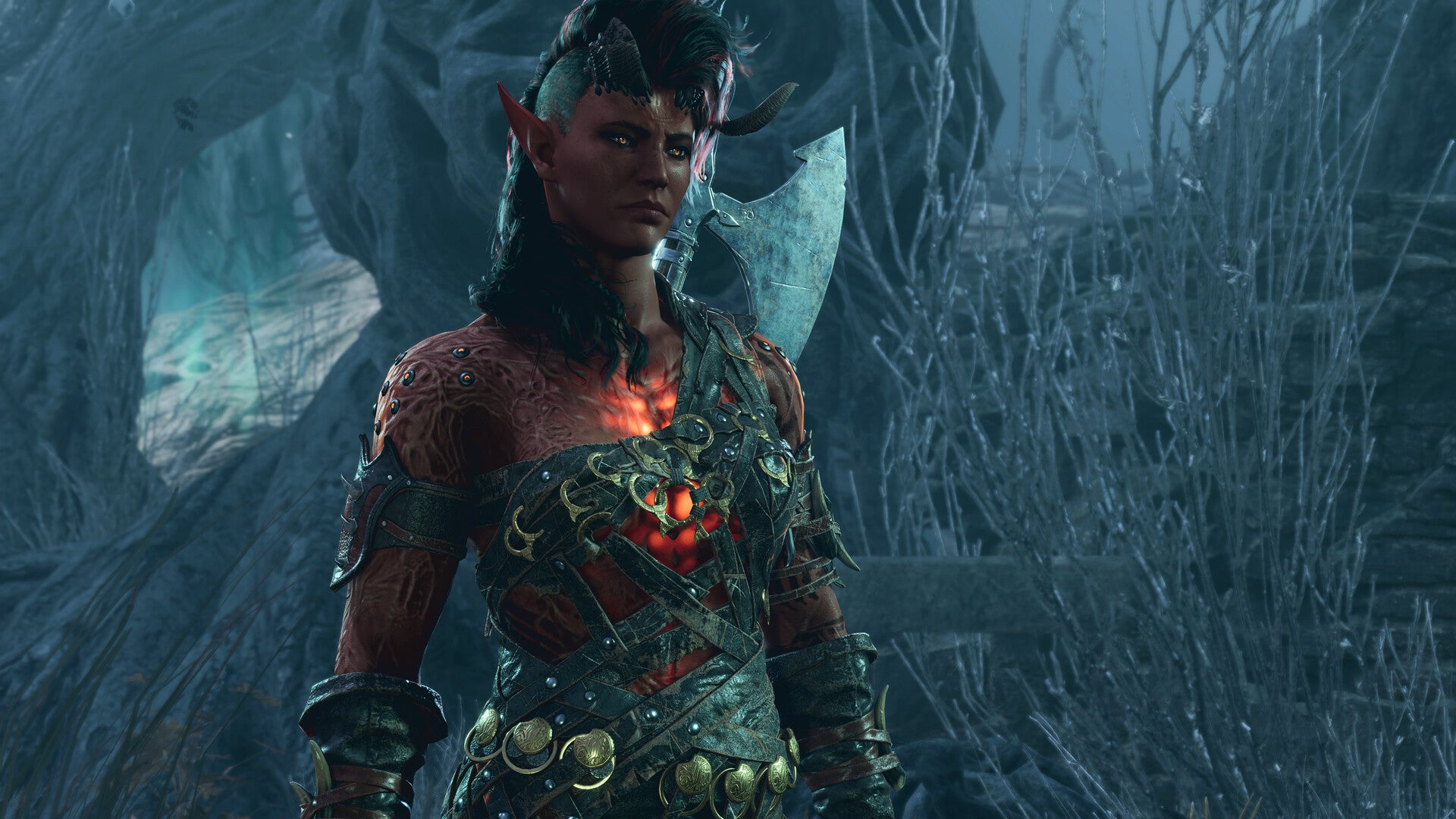
You know that feeling of simultaneous delight and dismay you get when you finally roll the credits on a really good game? Well, a new report claims that that feeling is not only real, but has a name, too: "post-game depression."
According to a new study into the phenomenon, post-game depression (P-GD) is the "sense of emptiness that arises after completing a deeply immersive game," resulting in a sense of "loss, emptiness, or sadness."
As reported by News Medical Life Sciences, the paper claims that while "this phenomenon is widely reported by players (e.g., in social media), little research has been done in this field."
The study, published in January's edition of Current Psychology and obtained by IGN, claims to be the first-ever quantitative measure of post-game depression. The researchers conducted two studies with 373 participants and drilled down into four subscales of the phenomenon: Game-related Ruminations, Challenging End of Experience, Necessity of Repeating the Game, and Media Anhedonia, which is the term given to the inability to experience pleasure from activities that are usually enjoyable.
"Despite the widespread discussion of this phenomenon on platforms such as social media and YouTube, there is a notable absence of scientific investigation," the paper explains. The most comprehensive insight into this topic thus far had been provided by Piotr Klimczyk, who explored P-GD back in 2023 and found those four main aspects related to P-GD.
"The uniqueness was primarily associated with being a one-of-a-kind game that pushed the boundaries of its genre or with the richness of its story and characters, making the experience deeply emotional," the paper explains. "Some felt the ending came too soon, while others struggled to accept that the game actually concludes (experiencing the end of a game-related experience as challenging). Then came the realization that there would never be another first playthrough (being confronted with the impossibility of another first playthrough), and with it, the feeling that the game could never again evoke the same level of tension, joy, or sadness. These feelings lingered for days or even weeks, resulting in media anhedonia – no other video game or form of entertainment seemed capable of filling that void, so to speak."
Those 2023 findings — which measured P-GD, wellbeing, emotional mood, positive mental health, runimation and reflection, as well as the type of game played in one study, and P-GD, depressive symptoms, runimation and reflection, and emotional processing in the other — suggested that the emotional investment we put into games is particularly brutal when we develop "deep attachments to characters who may die within the narrative."
Now, in this latest research, the paper authors concluded that they "found the four-factor version of the P-GDS to be internally consistent and valid" and developed a new scale to help researchers quantify it.
"We observed positive correlations between the intensity of post-game depression and stronger depressive symptoms, tendency to rumination, and disturbances in emotional processing, as well as with lower well-being. Finally, role-playing games have been revealed to evoke stronger post-game depression than other games."
That means, of all the genres sampled by the participants, it was RPGs that resulted in the strongest reactions when the game was finally finished (which, in my view, makes The Last of Us Part 2 very much an RPG!).
"As the first generation of video game users transitioned from children to adults, their emotional needs have evolved," the paper adds. "The development of more serious, mature video game content reflects this shift in the emotional and psychological demands of an ageing player base. Accordingly, video games are not solely designed to provide fun or pleasure.
"Some games evoke deep emotions such as contemplation, sadness, or existential reflection. Others instil fear in players through survival horror mechanics and narratives. Moreover, the 'soulslike' genre introduces frustration and challenge, transforming the gameplay into a demanding experience that ultimately provides a sense of achievement and competence."
Vikki Blake is a reporter for IGN, as well as a critic, columnist, and consultant with 15+ years experience working with some of the world's biggest gaming sites and publications. She's also a Guardian, Spartan, Silent Hillian, Legend, and perpetually High Chaos. Find her at BlueSky.
