
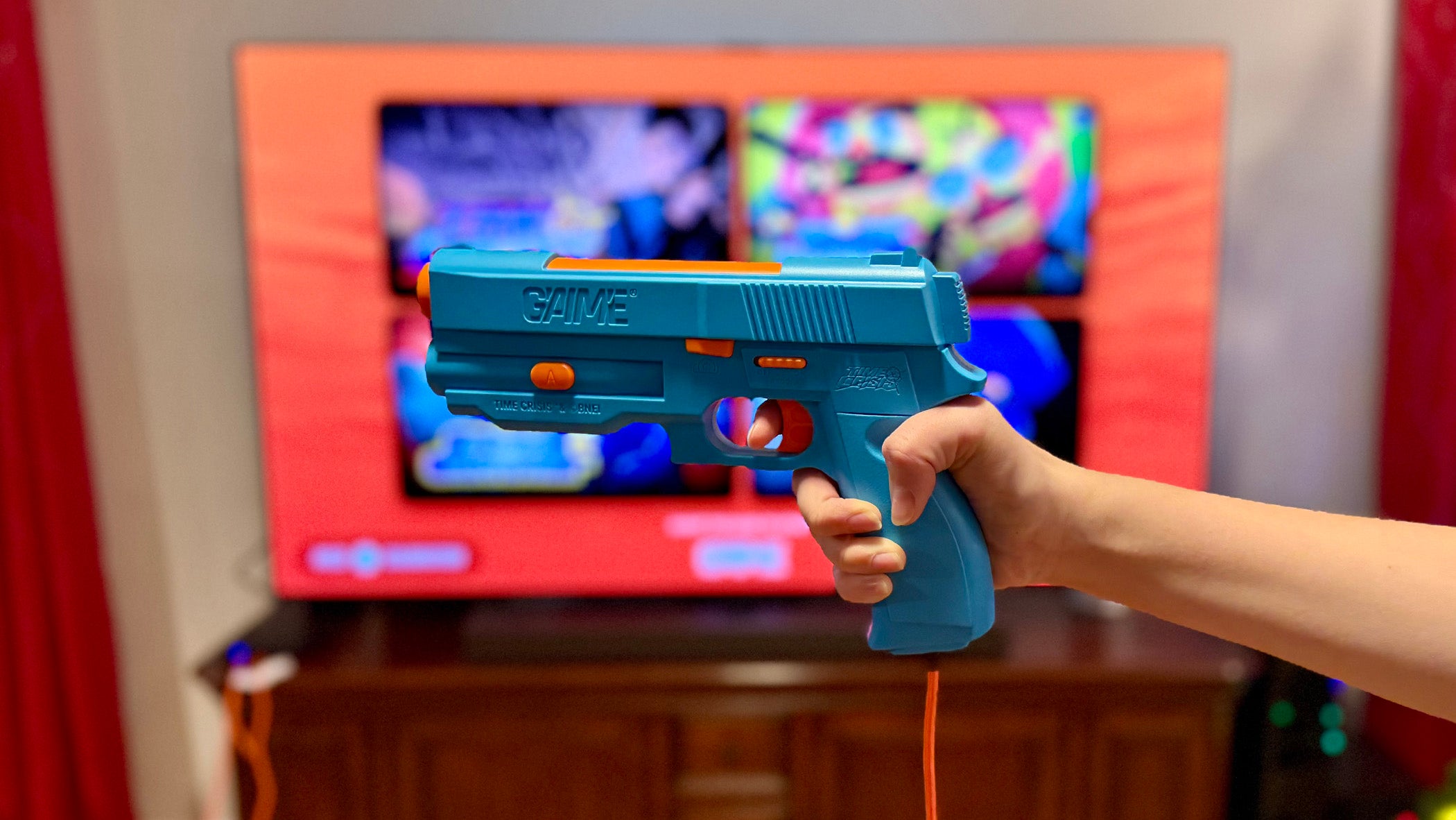
With product branding that's perhaps a bit too contrived for its own good, the G'AIM'E Time Crisis Light Gun from Tassei Denki nevertheless convinced nearly 6,000 worldwide Kickstarter backers it was a project worth supporting. On offer was a plug-and-play light gun console with up to four Bandai Namco arcade games pre-installed, including the titular Time Crisis. While there are several solutions for making light gun gaming work on modern displays, the in-gun G'AIM'E tracking technology uses a high-resolution camera and AI. While this approach may not be the best technical solution for every scenario, it makes a compelling case in terms of ease of use. Just make sure you're not only a fan of Time Crisis, but are also willing to invest in the more expensive bundles that come with three additional games, because that's all you'll ever have access to.
G’AIM’E Time Crisis Light Gun – Light Gun History and Technology
Light guns have been a staple in arcades since 1936 with the introduction of Seeburg's Ray-O-Lite, and would finally come to the home in 1970 with Nintendo's Beam Gun toy. Magnavox would license the rights from Nintendo for use with the first home video game console in 1972, Odyssey. After that, light guns were either included with, or regular options for, many consoles and home computers.
Most home light guns were designed to work with the technology of CRT displays, which drew images by firing an electron beam across the screen, from top to bottom, and left to right, briefly illuminating glowing phosphors. The whole screen would quickly flash when the light gun was fired, as its photo sensor and lens focused on a small part of the screen. Because the console or computer controlled the video signal, it was able to calculate which pixels were illuminated when the signal came back, allowing it to approximate the shot's location.
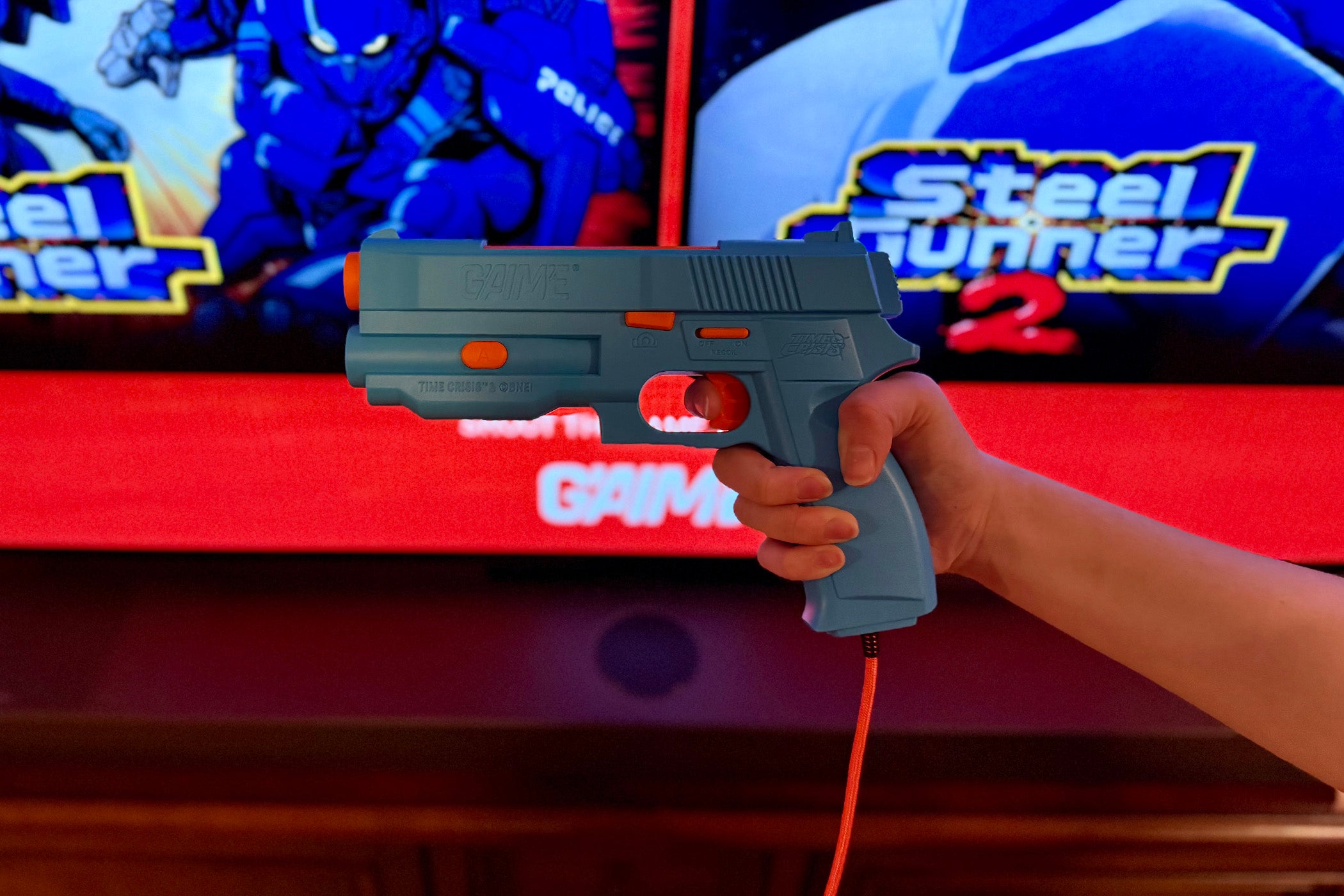
Unfortunately for light gun fans, by the early 2000s, flat-panel TVs, with their lack of electron beams and added latency, started to replace CRTs, putting an end to the viability of that well-worn technical approach. New technology was implemented, including infrared, or IR, tracking, which required a sensor bar or other type of sensor array. It worked well, but was a bit clunky and sensitive to external light sources.
More recently, camera-based tracking, like that found in Sinden's technology, has come into fashion. Unlike IR's limitations, camera-based tracking is self-contained within the light gun and less sensitive to external light sources. While Sinden requires a visible border around the game display, Tassei Denki's G'AIM'E implementation uses AI-powered training data to implement borderless tracking. G'AIM'E also features a 1,920 x 1,080 camera resolution versus Sinden's 640 x 480, and can work with displays or projections as small as 15 inches, all the way up to 150 inches or greater.
G’AIM’E Time Crisis Light Gun – Options and Setup
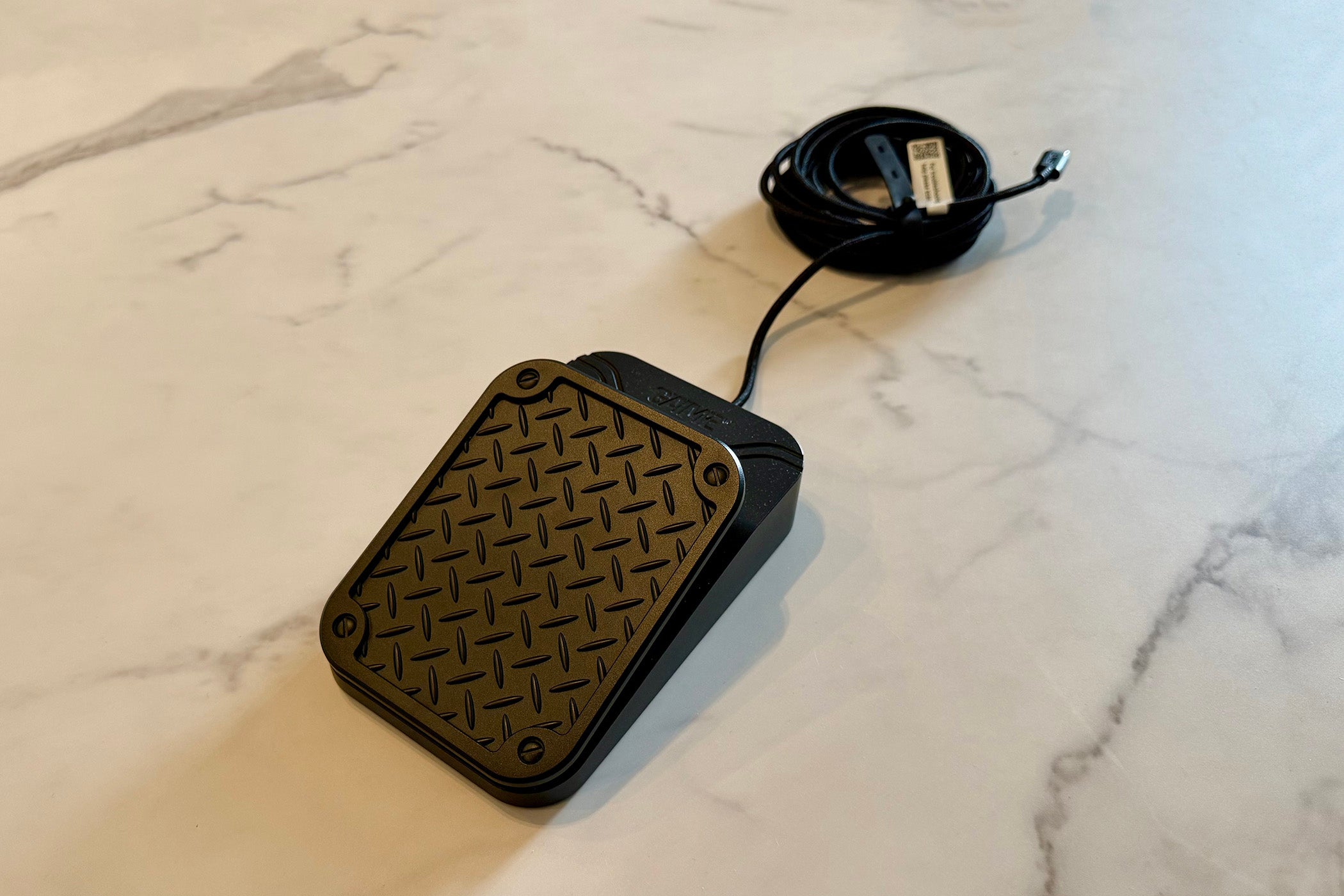
The G’AIM’E Time Crisis Light Gun is available in three configurations: Basic, Premium, and Ultimate. The Basic ($99.99) includes the light gun with a 13.1-foot cable, a mini console with the arcade version of Time Crisis built in, a 3.28-foot USB-C to USB-C power cable, a 3.38-foot HDMI to HDMI cable, and a quick start guide. The Premium ($149.99) adds a foot pedal that works with Time Crisis, a collectible pin badge, and three additional arcade games: Point Blank, Steel Gunner, and Steel Gunner 2. The Ultimate ($199.99) adds a second light gun, a Type-C multi-region power adapter (20W), a keychain, and a collectible acrylic diorama stand. The gun ($69.99) and foot pedal ($29.99) are also available separately.
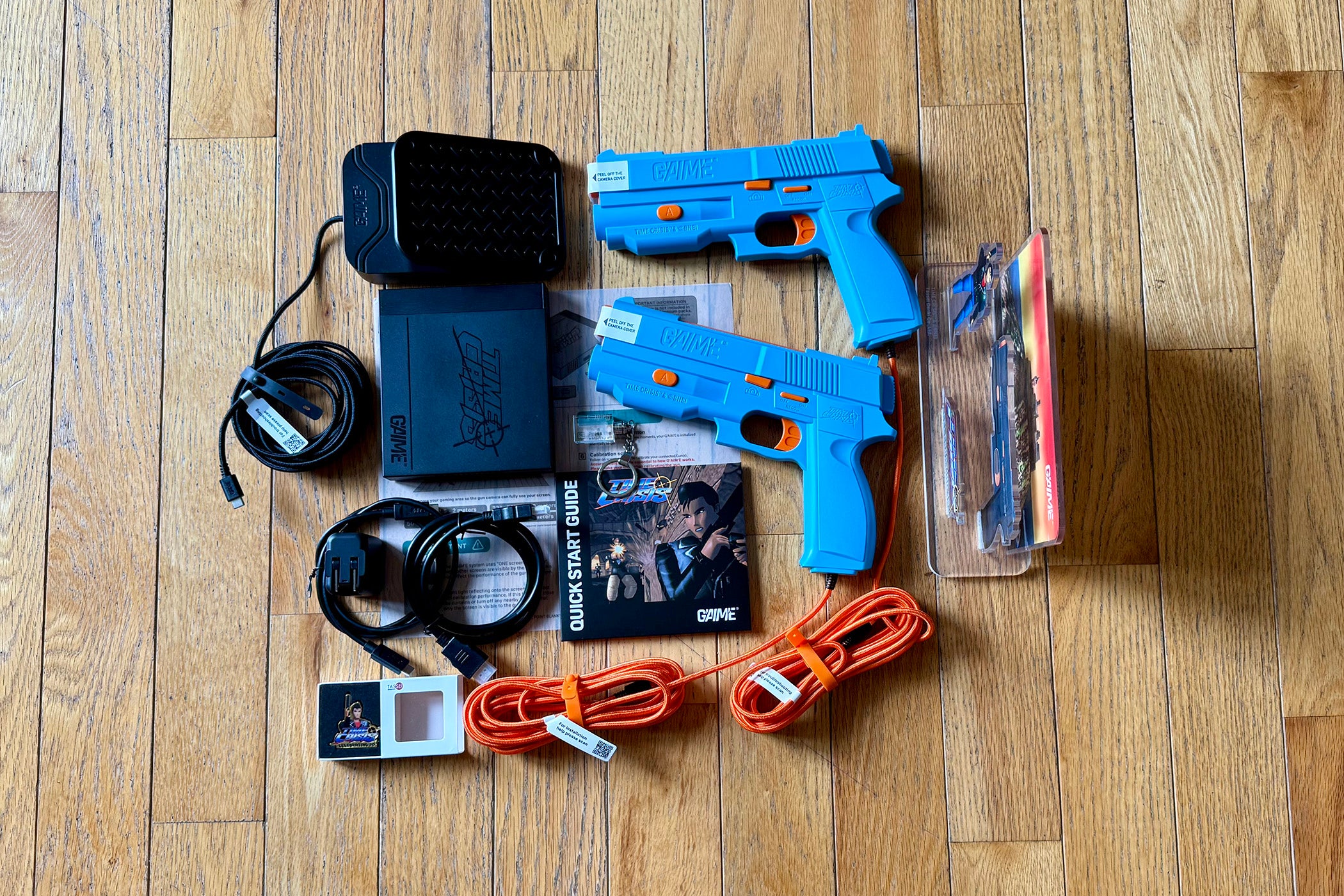
There's no way to add additional games once you have the console, so it frankly makes little sense to invest in the Basic configuration that only includes Time Crisis. While I don't consider there to be much relative value in the tchotchkes or the 20W USB-C power adapter that's included with the Ultimate, I'd argue it's worth the extra $50 over the Premium for the second gun, maximizing each game's potential for two-player simultaneous fun.
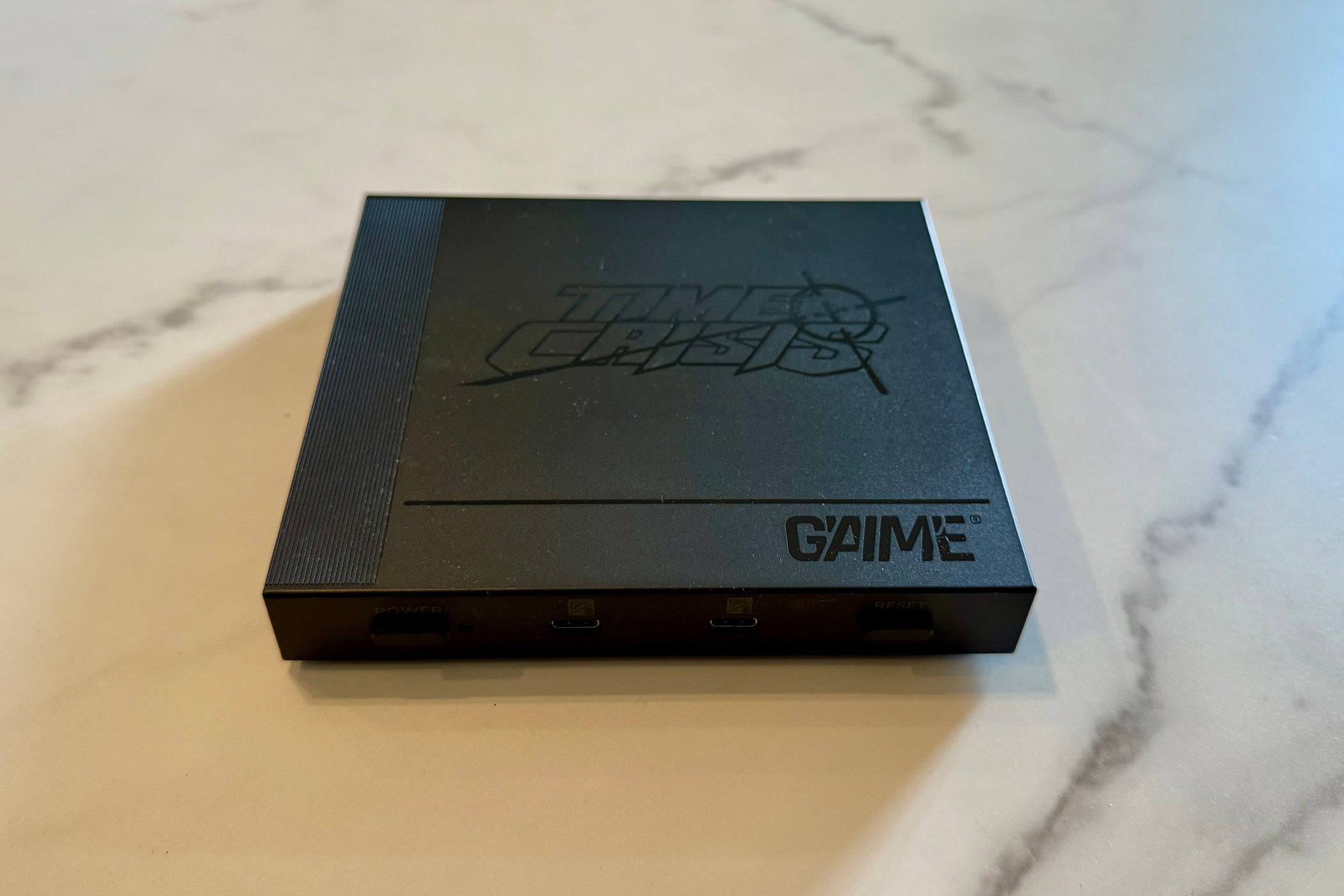
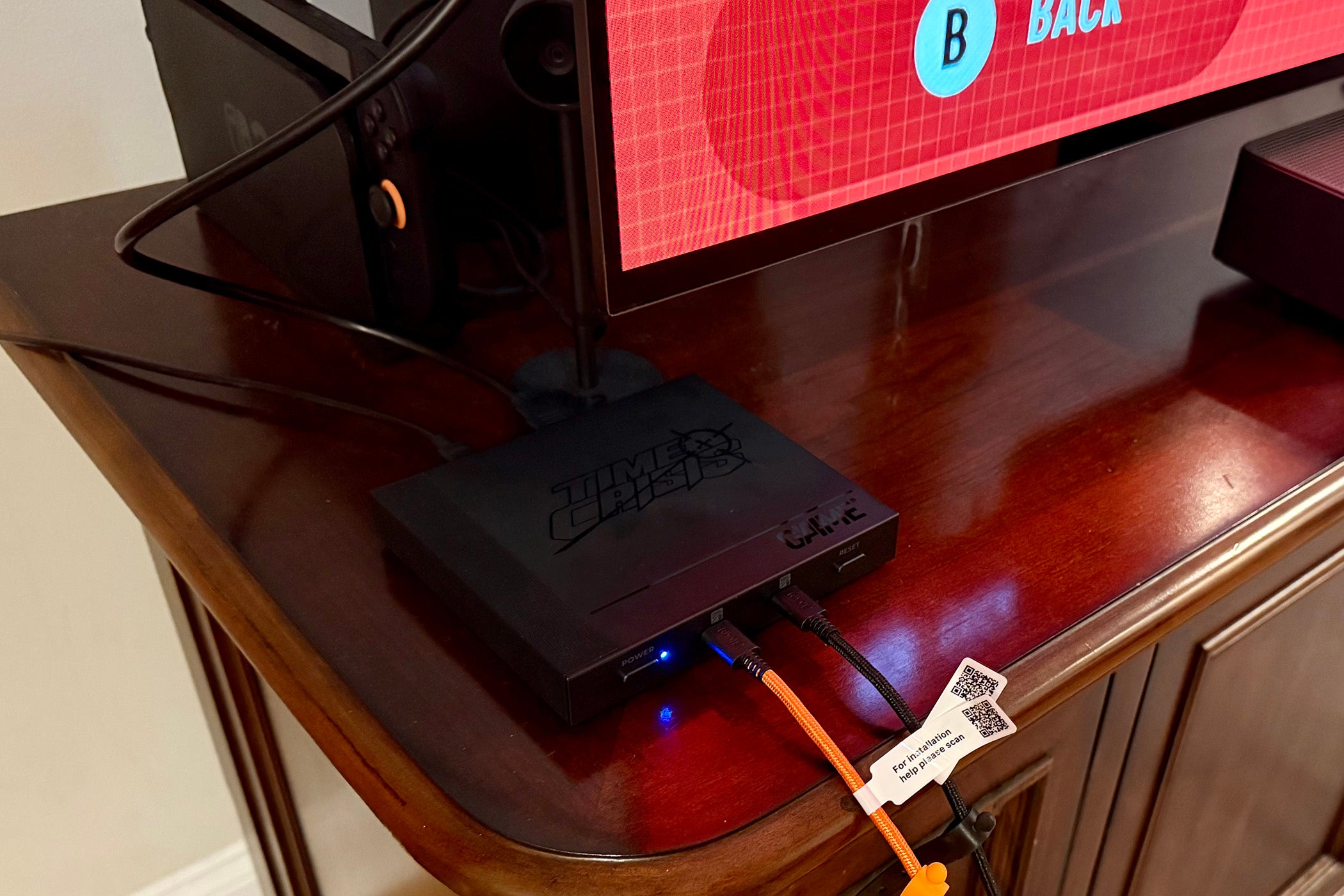
Setup is straightforward. Connect the power cable to the mini console, then to a USB-C power adapter. If you don't have the Ultimate package, the power adapter you use needs to have a minimum output of 5V/3A (15W). The next step is to connect the HDMI cable from your console to your display, then connect your gun or guns, or pedal, to the console. Finally, hold the power button for one second until the blue LED turns on.
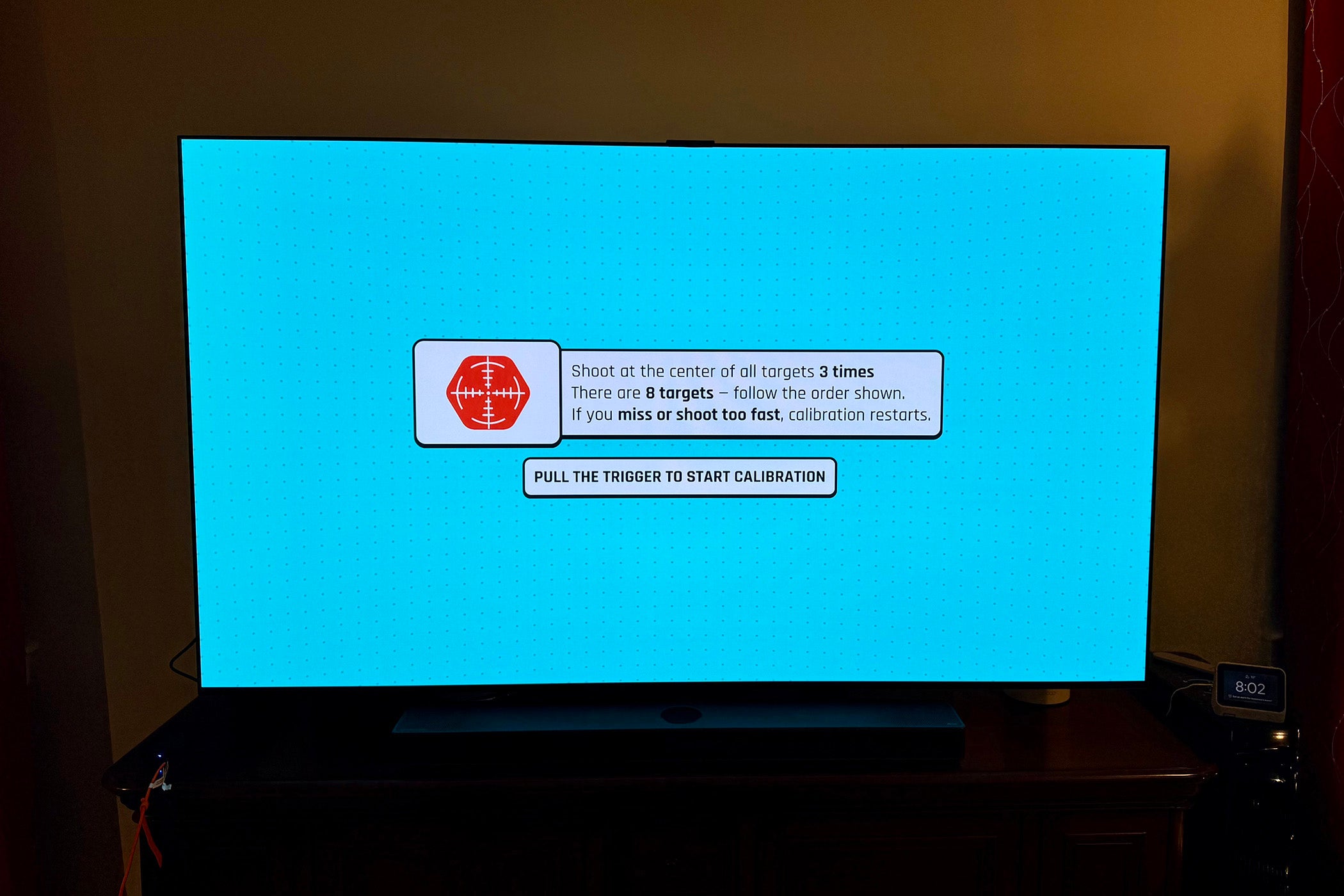
Although Tassei Denki makes a point about its self-calibration technology, there is, in fact, a calibration step each time you power on so that it can learn your play area. Calibration is guided, but it essentially boils down to aiming the gun or guns using both the front and rear sights, taking slow and precise shots, and then staying in the same approximate position while playing that you did during calibration.
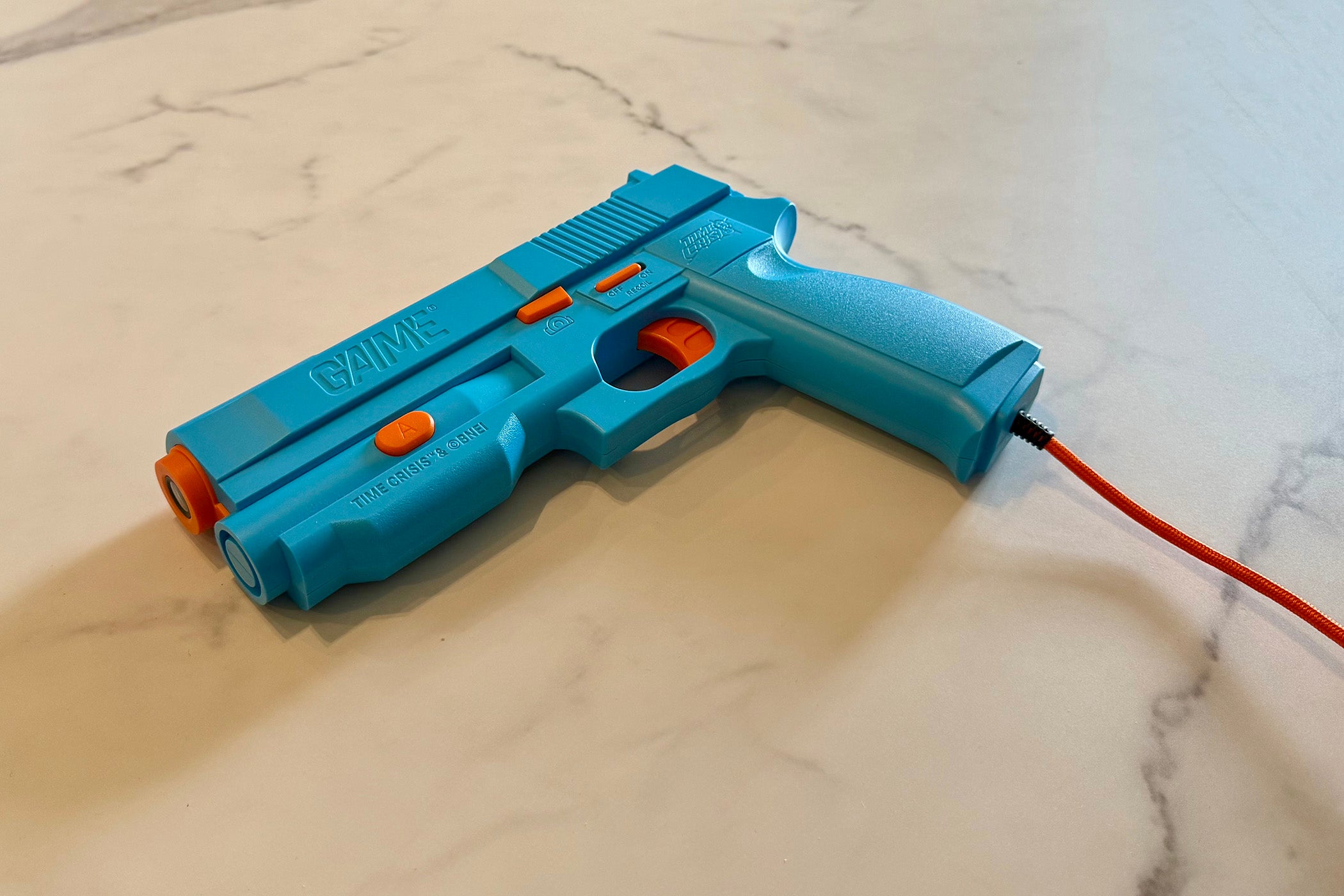
The recommended distance from your display depends on the display's size. For instance, for a 32-inch or smaller screen, you should be at least 1.5 feet away from the display, while 65-inch or greater, you should be at least 13.1 feet away. For projection sizes of around 100 inches, you should be about 20 feet away, while for 120 inches, you should be about 26 feet away. Of course, the included cables only extend so far, so you may have to invest in USB-C extension cables for the best results on particularly large displays or projections.
Since there's no gamepad, every function is controlled from the gun. The trigger button is used for selecting games, advancing to the next screen, and – surprise! – shooting. Short-pressing the pause button pauses the game, while long-pressing restarts the game when paused. Short pressing the Coin Button (Credit) button adds credits, while long pressing returns to the Game Select when the game is paused. The A (left) and B (right) buttons are used for additional actions like standing or reloading during the game, as well as skipping through the calibration screen. Finally, there's a recoil on or off switch.
Besides the power button and power LED, the front of the console features a reset switch and two USB-C ports. Time Crisis is only a one-player game, so you plug a gun into one port, and, if you have it, the foot pedal in the other. Otherwise, the other three games support up to two players and no foot pedal, so you can plug a gun into each port if you have two. Port order is ignored, so whatever light gun gets plugged in either port first becomes player one.
While not unexpected, it's important to note that there's no headphone or Bluetooth audio support. Considering the audible trigger (and recoil if you have it on), it would be difficult to have a private listening experience anyway.
G’AIM’E Time Crisis Light Gun – Games and Gameplay
Each of the up to four games, including Time Crisis, Point Blank, Steel Gunner, and Steel Gunner 2, plays just a bit differently from each other, but they are all straight-up shooters. While it might have been nice to include the Sony PlayStation console ports for some of the games, there's something to be said for the consistency of play and overall quality of the arcade originals. Of course, that's no excuse for not including even more games, like Point Blank 2 and 3, for example, but what's there is still a good representation of 1990s-style light gun gaming.
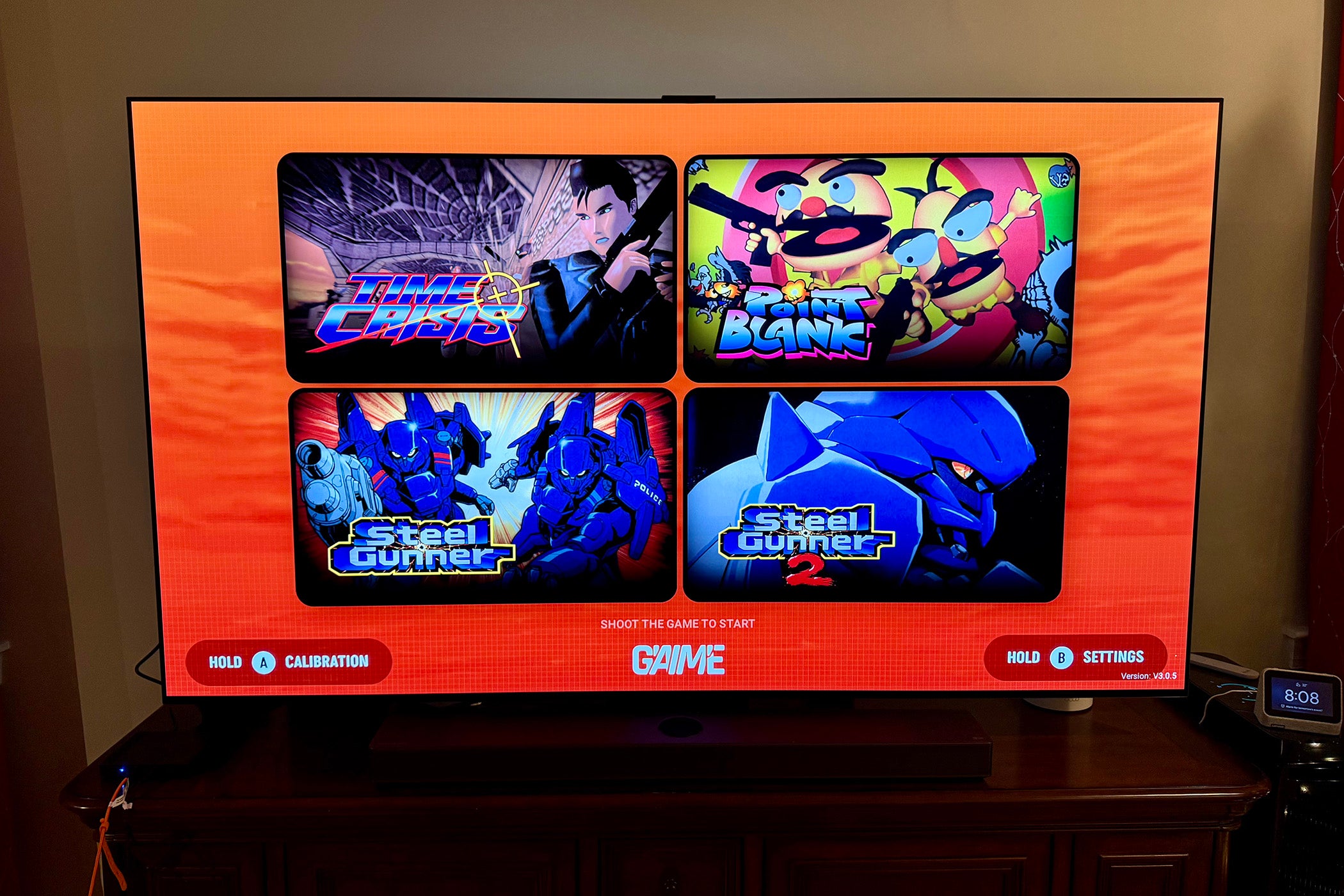
It's also important to note that you're talking arcade games with native resolutions as low as 288 x 224 pixels. There's only basic upscaling and filtering here that's not adjustable, so your HD or 4K display shows every chunky polygon and pixel from the original game. It's also in a square, rather than widescreen, format, so you'll have black bars (pillarboxing) on the left and right of your display.
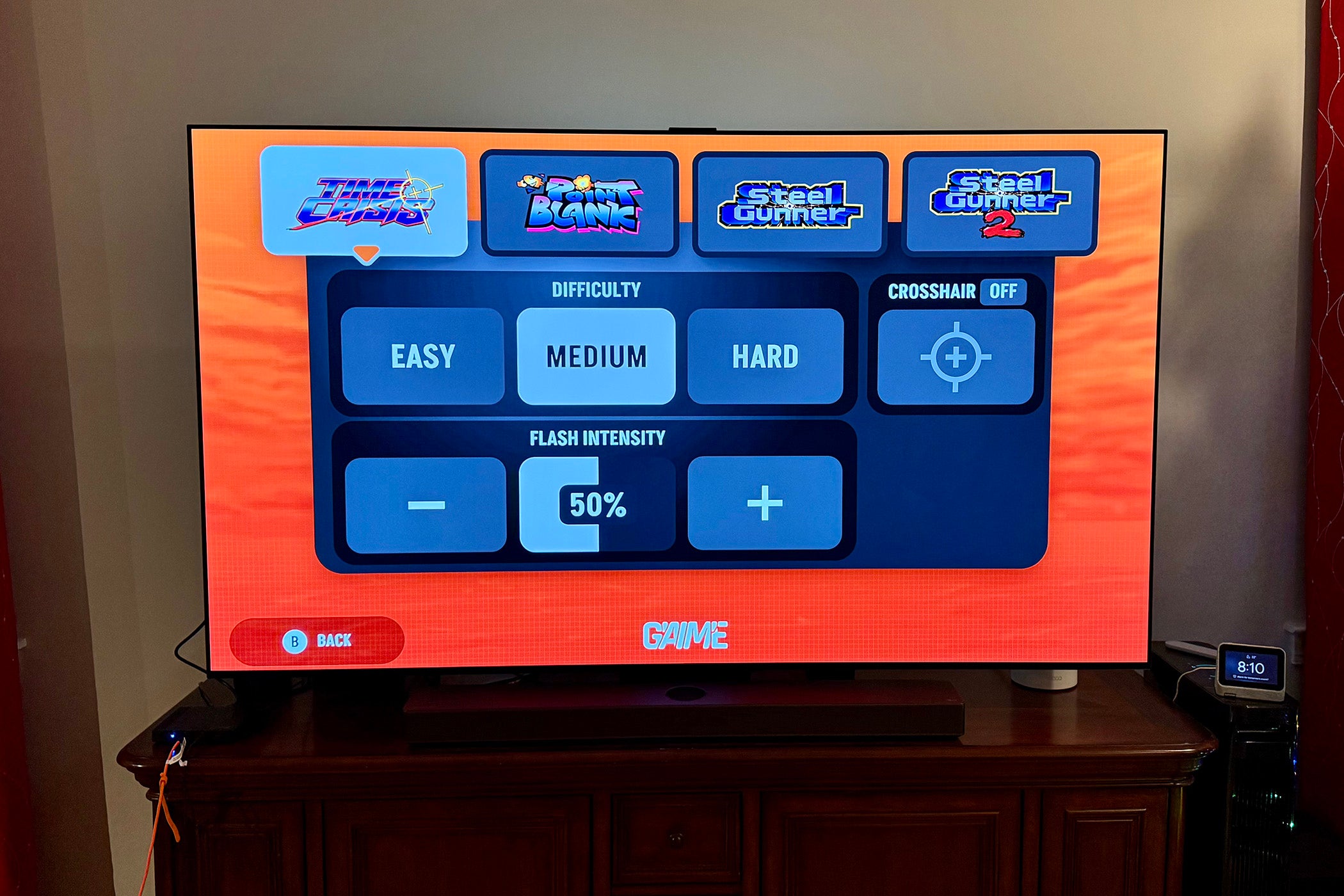
Finally, each game can be adjusted in the Settings menu between Easy, Medium, and Hard, providing less time and fewer lives with each difficulty increase. Time Crisis specifically allows for the gun crosshair to be turned on or off. It's off by default.
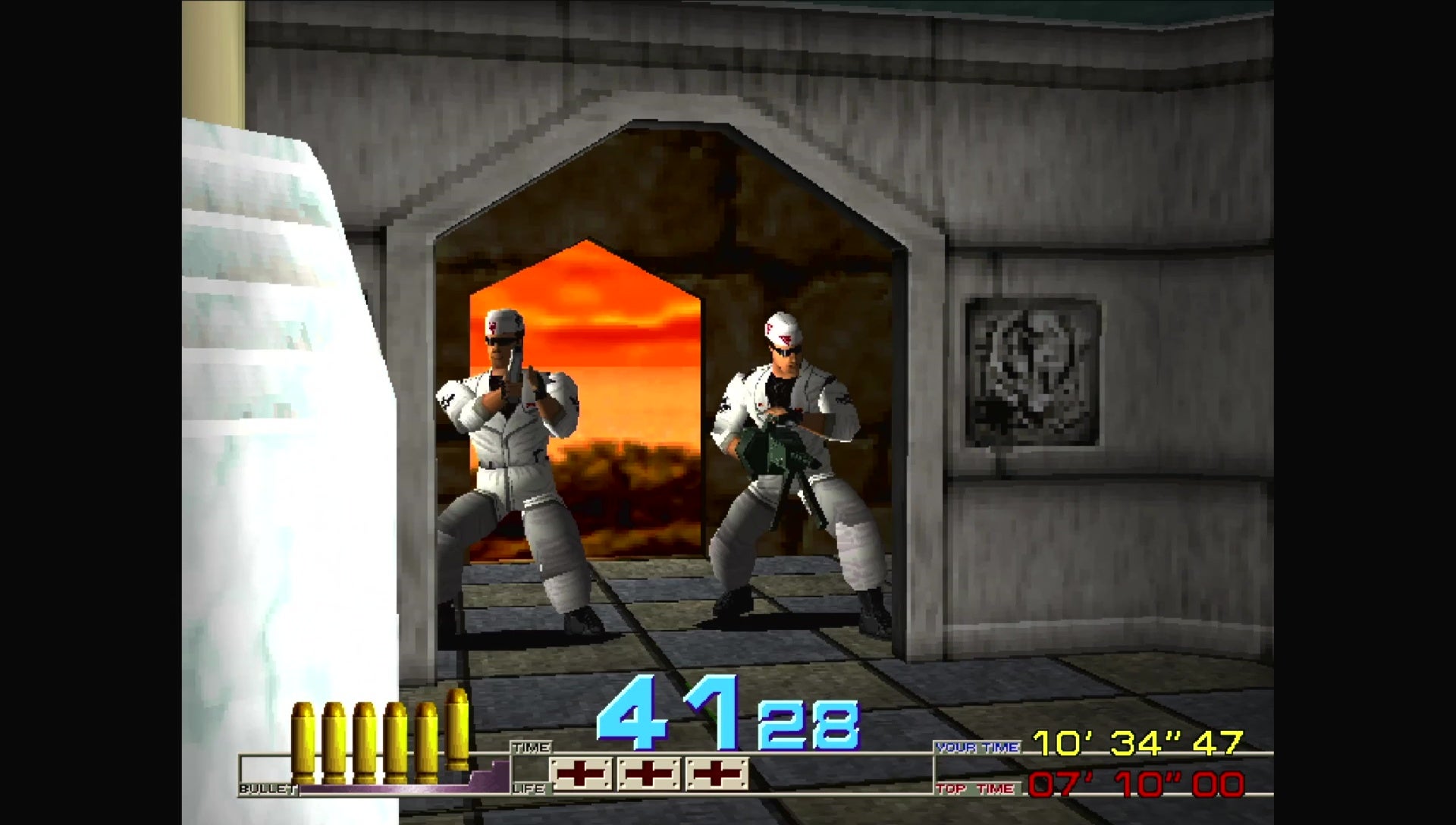
Time Crisis (1995)
Play as VSSE (Vital Situation, Swift Elimination) agent Richard Miller, tasked with rescuing the President's daughter, Rachel. She's been kidnapped by the Garo family, who seek to reclaim rule of the Republic of Sercia. You have to infiltrate the castle, defeat all enemies, and save Rachel before sunset. It's an on-rails shooter where you have to strategically use cover and reload before blasting the enemies. This is a single-player-only title.
Although the foot pedal is optional, I really love using it to reload and remove myself from cover. The A or B button is arguably quicker, and they're required in other games, but the independent action of the foot pedal adds a little extra depth to the experience.
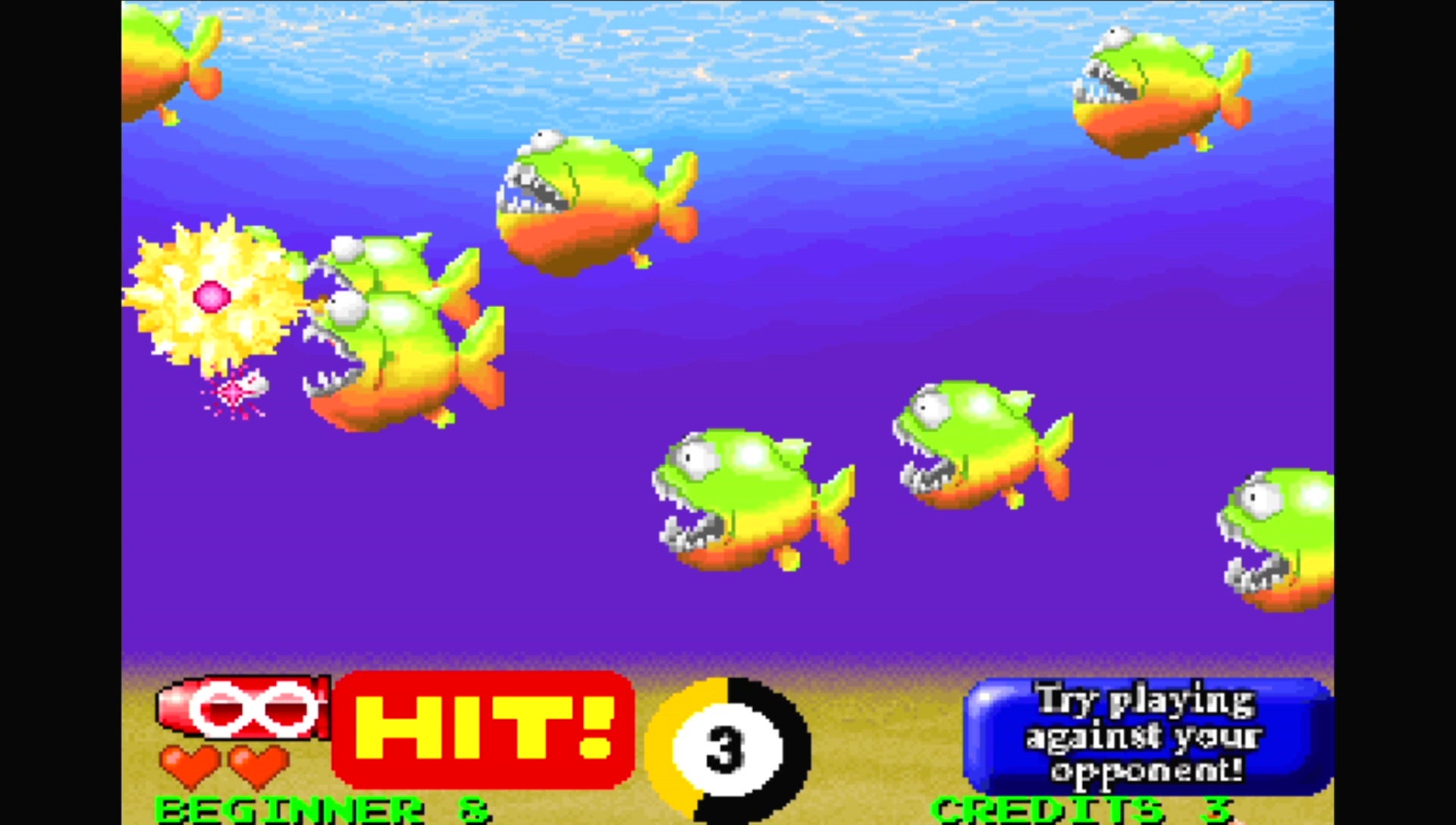
Point Blank (1994; known as Gun Bullet in Japan)
Blast targets in shooting gallery mini-games. You'll be ranked on accumulated points, lives remaining, and how many continues were used as you complete the Accuracy, Intelligence, Memory, Simulation, Visual Acuity, and Speed stages. Up to two players can play at the same time. This is the only (mostly) non-violent option of the four games and is a nice change from the others due to the relative variety of mini-games and often comic nature.
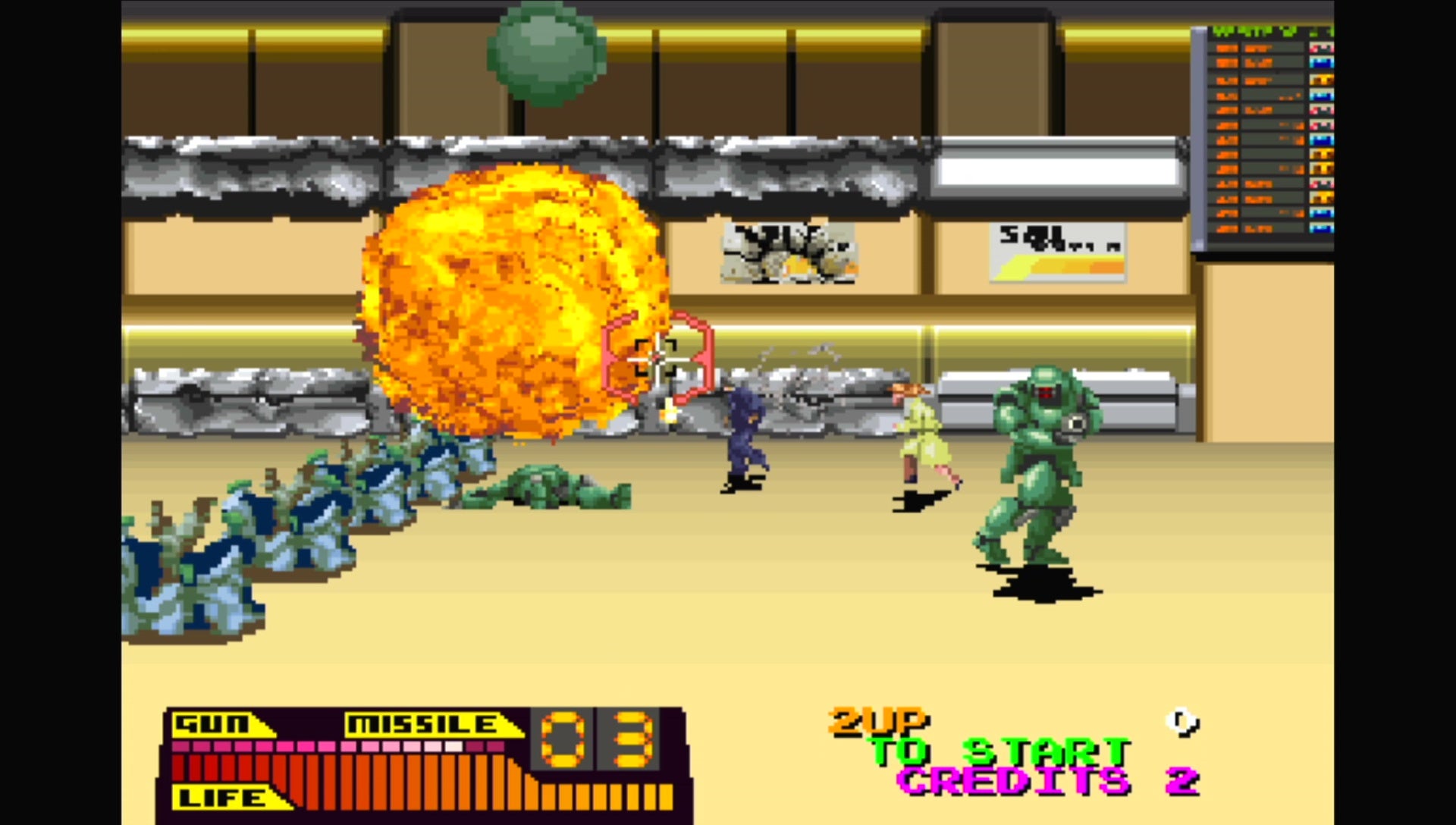
Steel Gunner (1990; Namco's first light gun game)
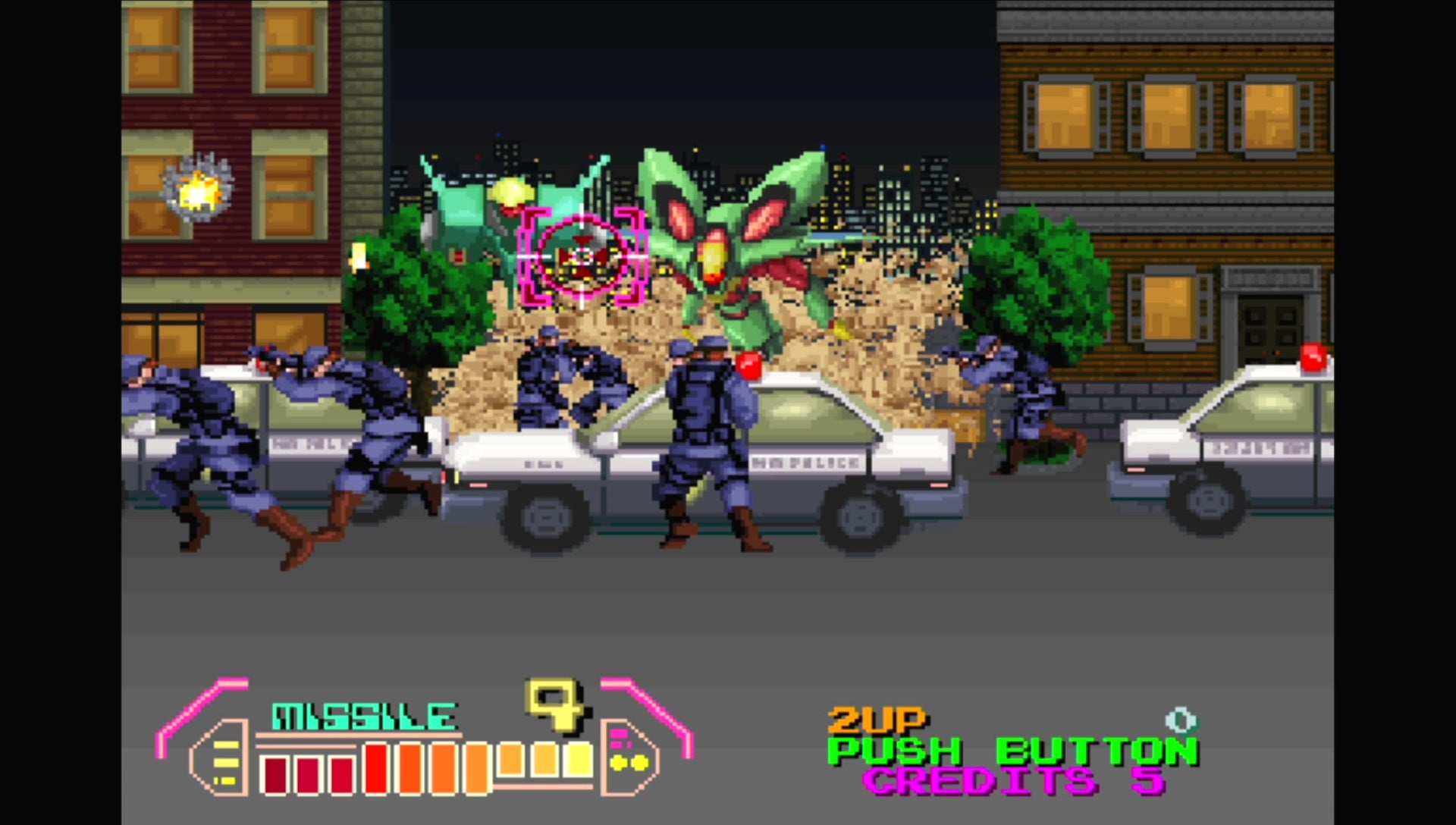
Up to two can play as future cops Garcia and Cliff, who pilot "Gargoyle" suits to fight the terrorist group, STURM, that's attacking Neo Arc City. You need to rescue kidnapped scientists and ultimately stop the superweapon. Like Time Crisis, it's an on-rails shooter, but it plays at a faster pace, emphasizing rapid, continuous fire over precision shooting. You can shoot anything on-screen, but lose energy if you accidentally (or otherwise) hit civilians. A limited number of missiles can take out more enemies, but they also run a higher risk of hurting civilians.
Steel Gunner 2 (1992)
Just like the first game in the series, up to two can play as future cops Garcia and Cliff, but this time you're fighting the terrorist group, Vanguard. This sequel is considered better in just about every way over its predecessor, including for its audio-visuals and longer story, and I'd have to agree. Still, I'm glad the first game is available as another fast-paced option, particularly for two players.
Light Gun Quality and Overall Gameplay Impressions
The quality of the light gun makes or breaks an arcade shooter like this, and I'm happy to say that these mostly feel arcade quality. It's a little front-heavy, but overall well-balanced. The buttons are clicky and responsive. The recoil is a nice touch, but it's more like vibration with a slight pushback rather than a true recoil. That's particularly disappointing since the light guns are wired and therefore should have been able to receive enough power to drive a more powerful feature. And while I do appreciate the generous 13.1-foot USB-C cable length, that also means it tends to get tangled when stored. Wireless would have been much more convenient. Still, lack of a wireless option or proper recoil aside, I have no complaints about the build quality or overall accuracy.
Speaking of accuracy, Tassei Denki continuously warns about light sources on or near your display. I actually had some pretty aggressive light sources as part of my testing and can report no significant issues with accuracy. While I would still try to heed any and all warnings – and there are ways to confuse the camera – it's good to know that they err on the side of caution rather than strict need. If you do have an issue, however, a firmware update is available that allows you to tweak the display border for your room conditions, although you’ll need a Windows computer to install it.
Along those same caution lines, one of the challenges might be getting to the recommended distance depending upon your display size. Fortunately, I found that being closer than recommended still works well. For instance, with my 77-inch LG C4 OLED, I was only about 10 feet 7 inches from the screen, rather than the recommended 13.1 feet or greater. Similarly, although I'm not sure of the actual projection size from my Xgimi MoGo 4 Laser Projector (I couldn't fill the 100-inch screen area), there's no way I was near the recommended distance. It still worked fine. The only display I was able to use the recommended distance with was an Arzopa M3RC 32-inch 4K 144HZ Gaming Monitor, where I was easily able to achieve the greater than 1.5 feet and experienced no issues with overall accuracy.
Manufacturer guidelines aside, based on my varied usage, you really don't have to have an enormous room to play in if your display is on the larger side, as long as you ensure the light gun is able to see the entire display area at once. And of course, don't forget to set your display to Game Mode or equivalent to minimize lag for such a timing-dependent experience.
Finally, it's a shame there's no way to add more games. What you buy is what you get. The only option would be additional consoles as game packs. I doubt that's going to be an option, so consider the four games – and you really should only purchase one of the two options with the four games – as all you'll ever get. For me, it's enough, because there's sufficient gameplay diversity between the four games, and they all play so well. And opposed to something like Arcade1Up's Time Crisis Deluxe Arcade Machine ($699.99), which features the same games and overall accuracy, you're not tied down to one spot in your home or limited to the 17-inch white-bordered LCD screen required by the Sinden light gun technology.
Bill Loguidice is a contributing freelancer for IGN specializing in video game and computer hardware and accessories. He has several decades of experience and has written for a wide variety of publications. Bill has authored a dozen mass market books and was a writer and producer on a major feature film documentary on the history of video games.
