
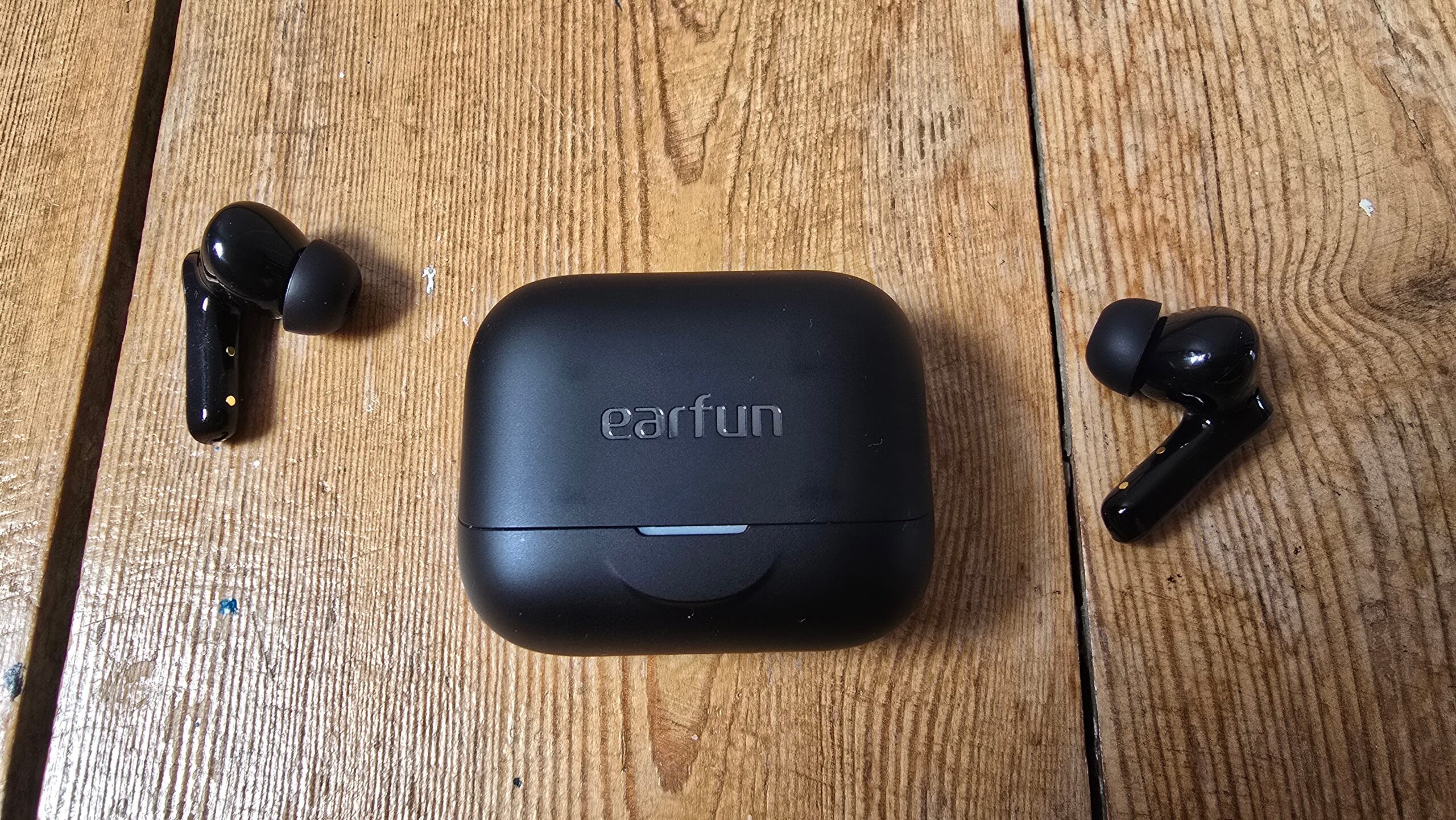
Are the EarFun Air Pro 4 Plus the best sub-$100 earbuds around?
These new buds, an upgrade to the Pro 4s from 2024, have got rave reviews and they're certainly bursting with more Bluetooth tech than any other $100/£90 earbuds I've tested, including a dedicated gaming mode, dual device connection, LE audio, Auracast and LDAC codec support. They're also regularly on sale: as I write this they're a bargain at $76/£63.
As you'd expect at that price they're not without drawbacks – so is the compromise worth it? And how are they for gaming?
EarFun Air Pro 4 Plus: Vibrant Audio for Gaming or Music
The EarFun Air Pro 4 Plus buds aren't specifically designed for gaming. Dedicated gaming earbuds use a low-latency wireless dongle rather than laggy Bluetooth – that's absent here but they do have an impressive "game mode" that aims to reduce latency when you're playing on PC or Bluetooth-ready console. I've tried similar modes on other buds and it's never made a massive difference, but here it does.
Without game mode I could feel the long delay between inputs and audio. With it, that delay virtually disappeared and I couldn't notice it unless I really paid attention. Gunshots in Marathon felt like they boomed as soon as I clicked my mouse, for example.
I wouldn't recommend them as your go-to audio for competitive gaming, partly because of the inherent latency of Bluetooth, partly because of their mediocre mic, and partly because their directionality is relatively imprecise. In Marathon I could tell the rough direction of shots and footsteps but I couldn't pinpoint their exact location or distance the way I could with a regular headset.
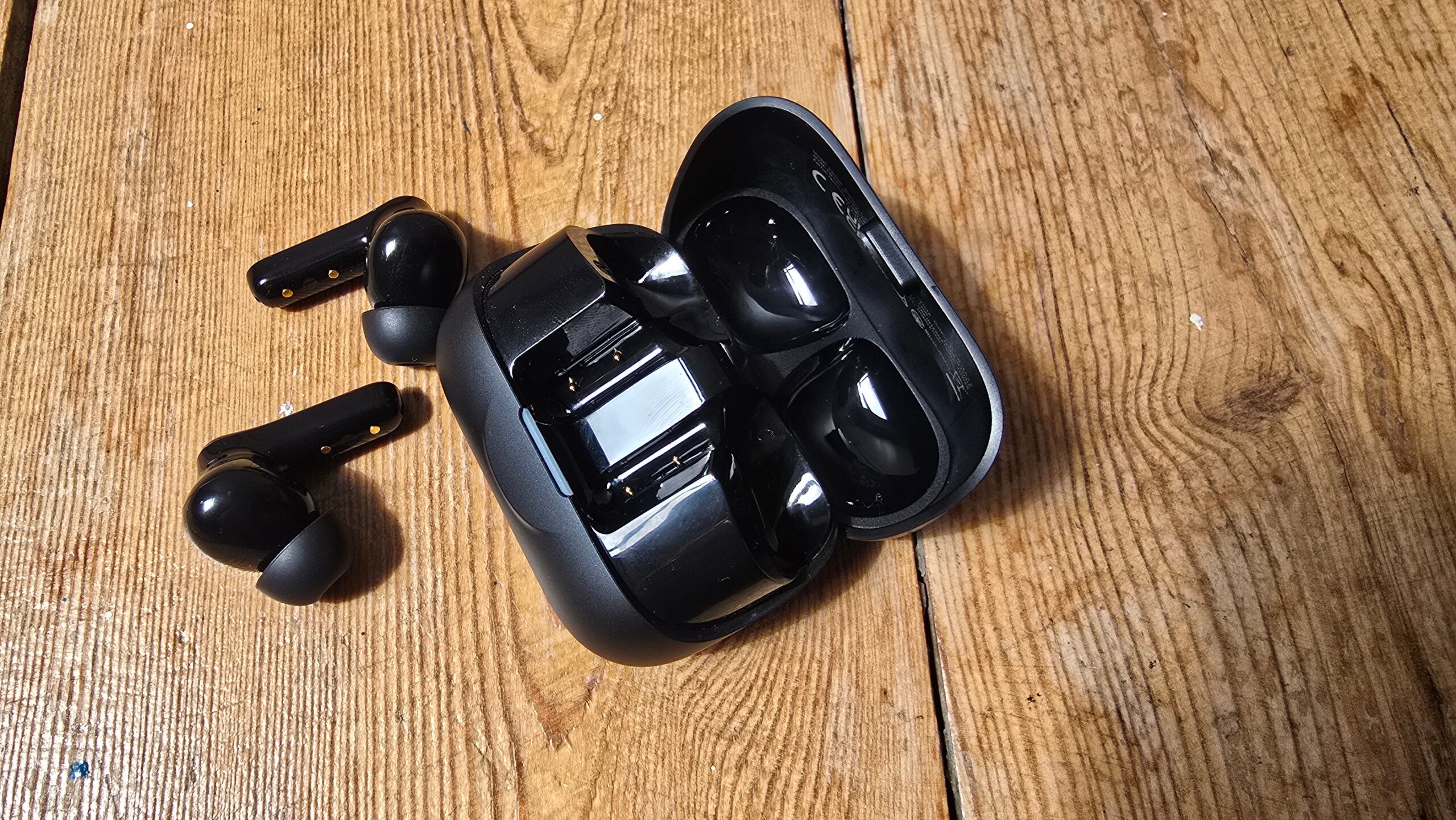
Still, they'll work for multiplayer in a pinch – I used them a lot in Fortnite, for example, and they worked well – and for more casual singleplayer gaming on a Steam Deck or Switch they're perfect. I loved cruising around GTA 5, listening to the radio stations and bathing in the world's buzz.
It helps that they sound vibrant and detailed. In GTA 5 and 4 (I've been on a Rockstar kick recently) I could pick out the individual city sounds: the thrum of my car engine, the horns of traffic, conversational chatter on the streets, and the boom of hip-hop on the radio. It felt atmospheric.
Music sounds rich and bright outside of games too. Bass, mids and treble are balanced and I could distinguish individual instruments from one another, such as the three guitars in Oasis' Some Might Say. I enjoy the default bass setting, too. It punched in Dave's 100M's and Busta Rhymes' Break Ya Neck without feeling artificial or overpowering.
They're not audiophile grade, of course – you can't expect that at this price. Vocals are occasionally drowned out in complex, layered songs such as 12:51 by The Strokes, and in some tracks, sibilant sounds – that is, hissing consonants and cymbals – sound particularly harsh. N.E.R.D.'s Lapdance felt far too busy, for example.
But I feel like I'm nitpicking there, and in every case I could find a preset EQ that corrected it instantly, such as a treble reducer or vocal enhancer. For 95% of songs, the default EQ is warm and vibrant.
You also get far more features than I'd expect at this price, delivered through a pretty intuitive app.
Most notably they support high-quality Bluetooth codecs, including aptX adaptive, aptX Lossless and LDAC. With the right hardware (iOS doesn't support LDAC), and the right streaming platform (Spotify launched lossless audio last year), you should theoretically get the best available sound. Keep in mind you can't really get truly lossless audio over a Bluetooth connection – you'll need a wire – but you do at least get the tech here to get the highest-possible streaming quality, and that's a boon for budget earbuds.
You also get power-efficient LE audio, or Bluetooth low energy. This also enables Auracast, an emerging technology that lets multiple devices connect to the same source: imagine a phone broadcasting to multiple sets of earbuds. Both LE Audio and Auracast are far from ubiquitous – you'll need an Android phone for LE, to start with – but it's good to know these buds can support them in future.
EarFun Air Pro 4 Plus: Stripped-back Design and Solid Battery Life
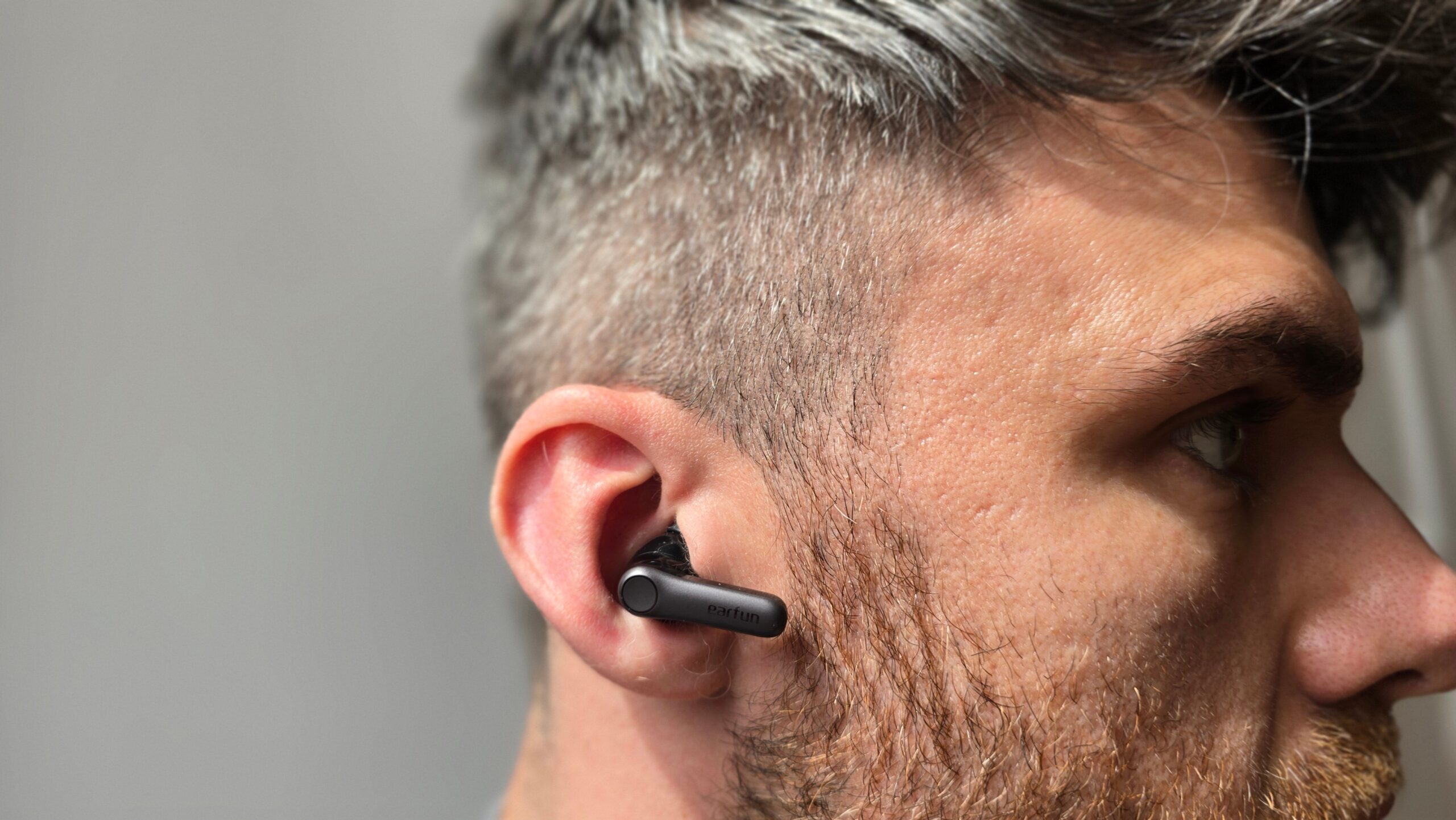
The EarFun Air Pro 4’s impressive sound and feature list is matched by their comfort.
The buds weigh just over 5g each. You'll find lighter earbuds – the 4.2g HyperX Cloud Mix Buds 2 remain my go-to recommendation for ultra-portable gaming earbuds – but these are light enough to make me forget I'm wearing them. Their simple shape and rubber tips made them comfortable for long gaming sessions, trips on the train, or for sweaty workouts (they're IP55-rated, so a bit of moisture is fine).
They're not ugly but I don't like their two-tone look – all black except for the outside of the stem, which is a greyish-purple. I also wish the touch control portion was bigger than the small circle at the top of the stem. It made adjusting the volume or pausing music feel fiddly.
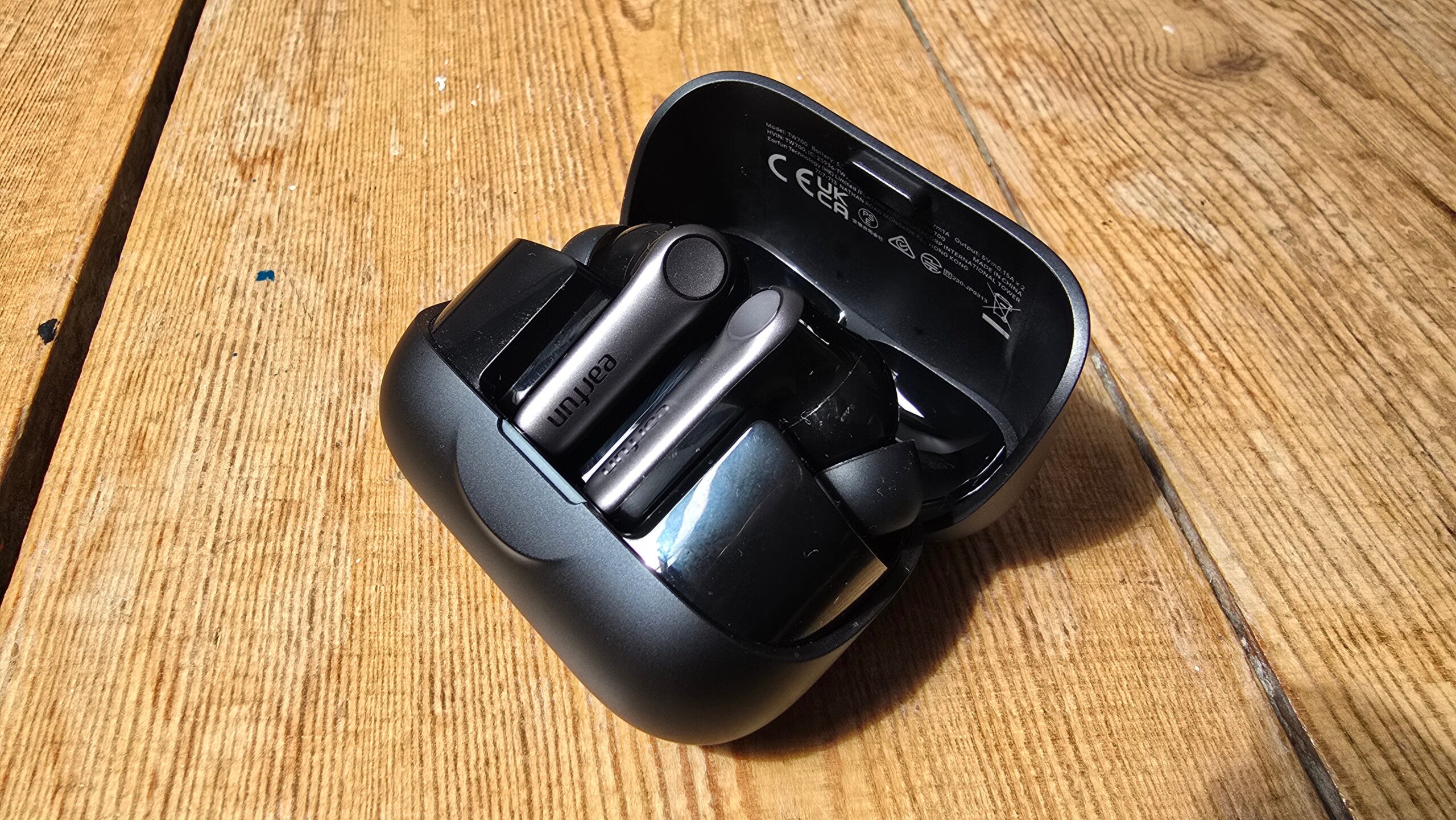
They are at least solid and sturdy. The curved case feels compact, holds the buds tight, and snaps securely.
EarFun says they'll last 12 hours with active noise cancelling (ANC) turned off, and that the case gives you an extra 42 hours before it needs plugging in. Those are marathon numbers that eclipse most earbuds – but in practice, you probably won't reach those heights. Between game mode, ANC, dual connection and a few other settings toggling on and off, I got between six and eight hours on a single charge. Strong but not spectacular.
EarFun Air Pro 4 Plus: Mediocre Noise Cancelling
Active Noise Cancelling is about what you'd expect at this price: it will dampen incoming noise but it won't blank out loud sounds. I could sit in a cafe and work without a nearby conversation disturbing me but at the gym I could still hear the occasional clink of weights in the background. On the London Underground, the screech of the Victoria Line made it difficult to hear what I was listening to.
As well as being mediocre, the ANC is overcomplicated. There are four different noise cancelling modes: AI Ear Adaptive ANC, AI Environment Adaptive ANC, a Manual mode with a slider, and Wind Noise Cancelling. After reading the descriptions I can't really tell you the difference between the first two, and I didn't really feel any meaningful auto-adjustments from them.
Ambient sound amplifies noise around you and is equally fine. It has two settings, one more hissy than the other. Both allowed me to hear traffic noise when I was walking but neither were powerful enough to clearly hear somebody talking across the room while I was listening to the buds.
Whether these middling features are a dealbreaker depends on how you'll use them. If you work out in a busy gym or travel on a busy commute and need top-tier noise cancelling, you might want to look elsewhere.