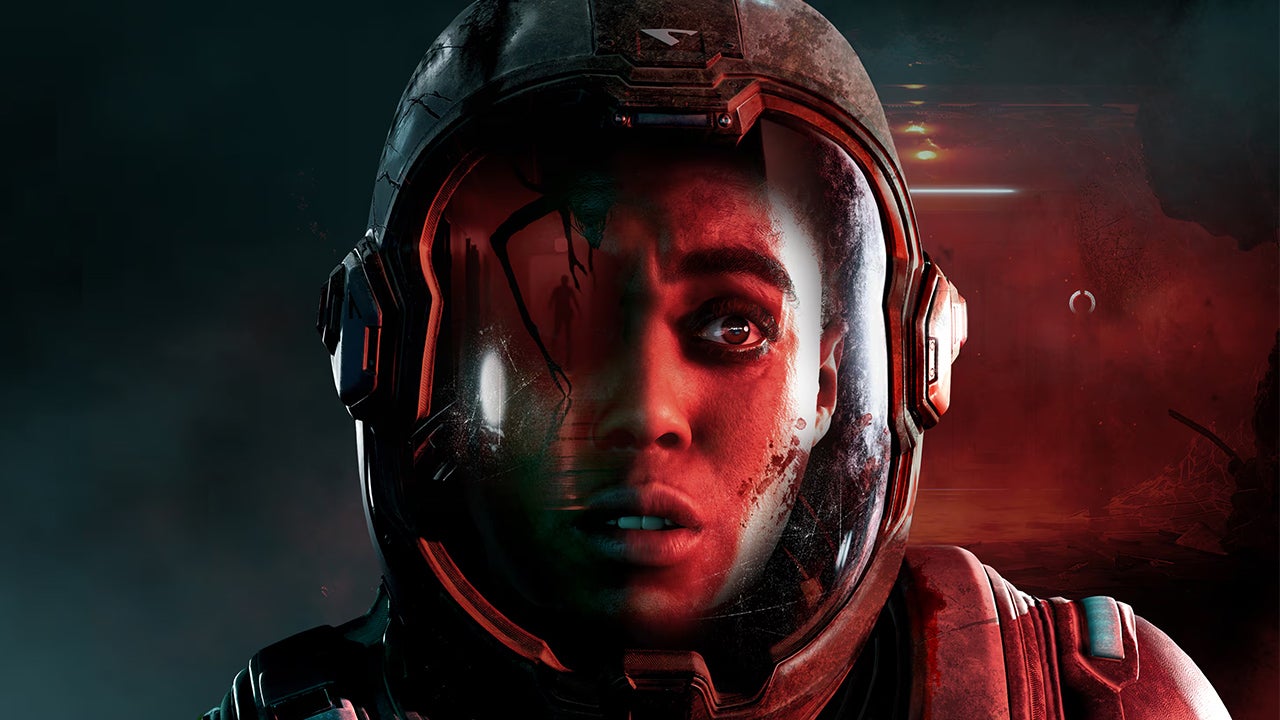
Making the leap to space feels like a big departure from the usually grounded horror of the previous games in Supermassive's Dark Pictures anthology series. But Directive 8020 reminded me that the sense of isolation, living in a bubble surrounded by forces hostile to human life, makes the dark beyond a great fit for this genre. Kicking off the second "season" of these self-contained tales of terror, the four-year hiatus after 2022’s The Devil in Me has brought a number of much-needed technical improvements and gameplay tweaks – though some of them are more well-considered than others.
Directive 8020 follows the suspenseful journey of the Cassiopeia, a sleeper ship sent to scout for humanity's first exoplanet colony. This is framed to the crew as humankind’s last hope to escape a dying Earth, though clever little hints start to add up that suggest the company line might not be entirely truthful. There's a lot of crawling around in vents and trying to get critical systems back online after unexpected crises arise, with both the art and the plot wearing their love for films like Alien and The Thing proudly on their space suits.
The Cassiopeia itself is an interesting mix of Ridley Scott retrofuturist aesthetics and a cleaner, more modern look that sometimes made me think of the Todd Howard-ism "NASApunk." There are little homages to classic space horror, like terminal loading screens that look like they could have been downloaded right off of the Nostromo, but it's not quite as grimy or hard-edged. When the mysterious threats finally take center stage – which I'm not going to spoil too much about for obvious reasons – it doesn't just look like someone copied H.R. Geiger's homework.
It's really hard to say much more than that, since slowly discovering the nature of what’s trying to kill you is a big part of what I loved about this story.
The writing is pretty sharp from bridge to stern. Across eight episodes that took me around 10 hours to complete the first time, the crew is put through a harrowing “choose your own adventure” gauntlet of paranoia, corporate conspiracy, simmering tension, and eventually adrenaline-pumping terror. There's a big twist that didn't feel obnoxiously obvious, but also didn't come out of nowhere. I was able to figure it out ahead of time by being a thorough explorer and connecting the dots, so it felt like I earned that, not like it was fed to me, and that's always a tricky needle to thread. Other theories I had ended up being incorrect, so the writers managed to surprise me regardless.
The characters are endearing, memorable, and complex. And they're all brought to life by Supermassive's impressive performance capture tech, which has been among the best around for a while now. In certain lighting, the models do have a little bit of an uncanny valley feeling to them, though, as a side-effect of this being the highest fidelity game the studio has ever put out.
Like previous Dark Pictures games, you can improve traits like Serious or Playful for certain characters through dialogue choices, which eventually leads them to unlock one of two mutually exclusive Destinies, cementing what kind of person they become for the rest of the series. I found this had mixed results this time around. In cases where it simply served as a culmination of a character's emotional arc, I enjoyed it. But there were a few times where it locked me off from being able to make a certain story choice – perhaps the obviously correct one – and I didn't love that. If a trait like Serious or Professional can have negative consequences on a high-stakes space mission, that doesn't seem like something I could have figured out based on smart thinking. I just guessed wrong. How would I have known that could be a bad thing?
There's also not a lot to do for some of the crewmembers in the back half as a byproduct of the branching story. By the time you get to the last couple episodes, practically anyone could be dead already based on your decisions. This results in a handful of conversations where it feels like there are five people in the room but only three of them get to talk. It's probably a small price to pay for how many different permutations are possible – after one playthrough, the menu said I had seen only 58% of the possible scenes, to give you some idea – but it is a bit awkward.
The big new mechanic for this flashy return of The Dark Pictures is active stealth sections that have you trying to avoid a prowling enemy using cover, darkness, and distractions. It's nothing revolutionary, but it does help Supermassive's formula not feel like so much of a visual novel with quicktime events and limited exploration. That being said, I did find by the end that it's maybe a bit overused. Most of the sections involving mortal danger default to this sneaky routine rather than using the other tools in the Dark Pictures toolbox.
There are a lot of difficulty and accessibility options in Directive 8020, which is nice. If you don't like life-or-death quicktime events, you can adjust them to be much more forgiving. There's a "parry" mechanic that can allow you a cooldown-based free getaway if caught in a stealth section, which I think basically trivializes them on the default setting. But you can tweak that, too. The big choice is between Explorer mode, which allows you to rewind to any previous scene, and Survivor mode, which forces you to keep playing and live with your decisions. And that opens up a whole can of worms.
I chose to play through the first time on Survivor, but even when you have that mode active, you can open the menu at any point to see a new scene tree which details all of the possible paths and their unlock requirements. It even contains some pretty big spoilers if you're not careful. Now, I know you could simply not look at that screen. But even glancing at it once to see how an episode is structured, which is trivial to do and doesn't come with any kind of spoiler warning, was more information than I would have wanted about how the sausage is made.
It kills some of the tension to know that there are certain scenes where death isn't a real possibility, whereas previous Dark Pictures games had me on edge and ready to hit those QTE buttons at any second. And there's really no going back from that. I would highly recommend resisting the urge to look at this screen at all, at least for your first playthrough. I wish I hadn't, and I wish there was a way to disable it completely.
That said, once you have finished the story, this tree does become a useful tool for going back and seeing what other paths you could try out. It's the only way to find out there are a total of 44 different unique character deaths to witness, if you're into that kind of thing. There are even some Easter eggs that require the rewind feature to find, which is neat.
The audio in Directive 8020 is a little hit or miss. The voice acting is clean and crisp and the sound effects themselves are excellent and effective. But on my surround sound headphones, the directional audio was always kind of imprecise and the mix was a little bit off no matter how much I tried to tweak the settings both in-game and on the hardware side. This is merely distracting when someone's voice doesn't seem to be coming from where they're standing on screen, and potentially deadly when you can't really hear where a threat is coming from.
The needle drops at the end of each episode are great, though, with a variety of ethereal, emotive tracks that help set the mood. I was disappointed by the fact that you're not greeted by Pip Torrens' mysterious Curator to introduce the story, though. And I missed the phenomenal Khemmis cover of O' Death that served as the first season's theme song. I don't think that framing device is entirely gone, thankfully, but I'll let you figure out what I mean by that yourself.