Lego Batman: Legacy of the Dark Knight marks a 40 year milestone for DC’s Caped Crusader. Across four decades, Bruce Wayne has been the hero of countless video games. And, as we’ve explored across two chapters already, Batman’s video game history is as varied as his rogues gallery. But now, we study the moment that changed everything. The era when Rocksteady created the superhero experience that redefined an entire genre. The Batman game that re-wrote The Dark Knight’s rulebook.
The story of Batman’s greatest video game starts a little earlier than the launch of Arkham Asylum, though. Rewind the clock a few years, and we find ourselves in a time when Batman as an IP was still licking its wounds after a movie duology where the Batsuit had nipples. It would take a visionary new director to restore Batman to his rightful position as the essential superhero.
The Dawn is Coming (2005 – 2008)
Christopher Nolan’s Batman Begins was quietly confident. The film was key to repairing the franchise’s reputation, which had collapsed during the era of Joel Schumacher’s Batman & Robin, and building a bridge to the future. Among the movie’s modest merchandising was a video game tie-in from EA and Eurocom that offered a tantalizing glimpse into Batman’s digital future.
Batman Begins looks good and sounds great, with some nifty ideas like gadgets and interrogations and picture-in-picture cameras in the grounded stealth vein of Splinter Cell. Most notable is the emphasis on generating fear, stalking rooms and spiking enemy heartbeats as Christian Bale growls threats at them. It’s a genuinely forward-thinking use of a characteristic that hadn’t been exploited in games before, and clearly foretells the pants-soiling terror Batman would inflict in the coming years as he prowled the halls of Arkham Asylum and the streets of Arkham City. It was clear that Batman games were building towards something– after a brief detour through the toy aisle.
LEGO Batman is a lovely mashup of all things Batman, with music and minifigs pulled from all corners of the canon and a refreshing indifference to continuity. It plays like every other Lego game, which is to say it’s fun, accessible, and designed to be beaten by six-year-olds. It was also a massive hit, prompting Warner Bros. to buy the studio and greenlight LEGO Batman as its own subfranchise, complete with two open-world, fully voice-acted sequels and its own utterly charming movie, an adaptation of an adaptation of other adaptations. We’ll return to the Danish delights of Lego soon enough, but we’re about to hit the turning point for Batman, a seismic arrival that immediately split the history of superhero games in two.
Arkham and Everything After (2009 – 2015)
Batman Begins was a modest success, but the movie didn’t really set the world aflame. Its 2008 sequel, on the other hand, earned a billion dollars and became a cultural institution. The Dark Knight is a top contender for the greatest Batman movie ever made– and it never got a video game.
It wasn’t for lack of trying. Pandemic Studios spent years trying under the auspices of EA, but a disastrous development led to the game’s cancellation. Defeated, EA let the Batman rights lapse. Eidos Interactive snapped them up and hired London based Rocksteady Studios to create a brand new concept. Without a movie or show to anchor the project, the team needed a source of truth for the new Dark Knight it was about to create from scratch, so it turned to the folks who had done it best before. Rocksteady hired Paul Dini, a driving force of Batman: The Animated Series who co-created Harley Quinn, along with actors from the show to reprise their roles for some of their final performances.
2009’s Arkham Asylum is clearly built around the core of the TV show, which raises a fair question: did Rocksteady truly create its own unique take on the Batman, or is it just BTAS with better graphics? Things certainly diverge story-wise, but the games feel like a natural extension of the DCAU, just with a sheen of Unreal Engine sweat and heavy Batsuit armor.
Gotham’s rogues get the biggest glow-up, finally fulfilling their video game potential as the bosses they were born to be. Their new designs were dirty and lived-in and dripping with character as they taunt and belittle Batman’s defeated corpse while the life drains from his eyes. Refreshes like Harleys would ripple beyond gaming, but Arkham’s biggest impact was on the industry itself.
For one thing, it proved that licensed titles didn’t have to be linked to a multimedia event. The talent and technology had progressed to the point where an iconic IP alone could sustain an adaptation custom-tailored for the digital medium, even though Batman games had spent thirty years proving the opposite. Every Batman title to this point had been derivative by design. From Mortal Kombat to Monkey Island, virtually all the Batman adaptations before Arkham borrowed their grammar from other games, but Arkham Asylum was the first to lend its language to others.
Rocksteady’s freeflow combat system– snapping to enemies and smacking them to a brawling beat with chained combos and telegraphed counters in scored encounters– became a new baseline almost overnight. Like Resident Evil 4 turning every third-person-shooter into an over-the-shoulder affair, Arkham Asylum created a new template for 3D melee combat that developers spent the next decade copying wholesale. The same could be said about the sandbox-y, stealth-focused Predator Rooms and especially Batman’s Detective Vision, the augmented-reality UX innovation that infected the industry like it was airborne.
If you’ve read our previous chapters on the history of Batman games, it should be abundantly clear that the Arkham series stands cowl and shoulders above the dozens of Batman games that came before it. The only real question is: which Arkham is the best of the best?
Many purists prefer the 2009 original. Arkham Asylum traps Batman in the titular looney bin for the second-worst night of his life, a stripped-down John Carpenter premise that perfectly suits the lean, deliberately contained experience. Hunting down the Asylum’s colorful occupants is a linear affair, with straightforward progression in a tightly-controlled map, pointing Batman down the path towards the final brutal framemogging.
However you prefer to diagnose its greatness, Arkham Asylum immediately established itself as a new franchise. It sold four million copies on the strength of its excellence alone, with nary a Hollywood star or viral new villain in sight. Warner Bros, which published the series and eventually purchased Eidos, wanted more. So did the fans, and they were about to feast like Dick Grayson in the Batcave fridge.
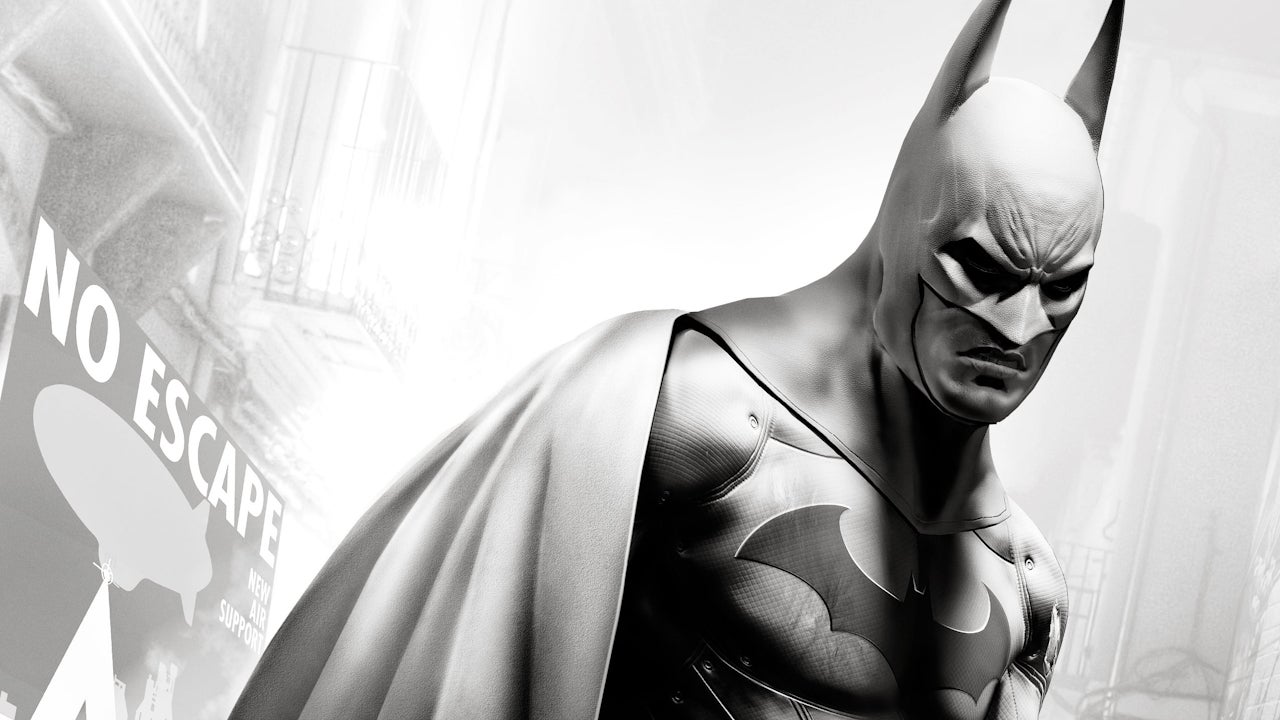
Arkham City tripled its predecessor's sales and then some, bathed in so many critical accolades and game-of-the-year awards that it plastered them all over its infamous white cover art. Freed from the asylum’s walls, Batman is finally free to stalk the streets he’s spent his life protecting– or rather, a cordoned-off section of the city turned open-air supermax prison. It’s not quite Gotham proper, but the wider scope and limited space create a dense urban playground just big enough to make brilliant use of Batman’s new traversal– gliding from rooftops, divebombing your terrified prey, and grapple-boosting back up to the gritty black skyline. The confines of Arkham City create the biggest little open world ever made, free of bloat and packed with so many secrets and surprises that not even the hunt for two hundred and forty Riddler trophies feels like a chore.
Catwoman and Robin join the playable roster and even more villains jump in the fray, with a bigger-swinging story starring Ra’s al Ghul and a dying Joker out for one last laugh. For a lot of players, Arkham City was the Batman game they’d always wanted, and the only one they’d ever need again. It lacked the surprise impact and more intimate scale of Asylum, but if there’s a number 1 and 2 among Batman games, both of these titles are still fighting for the top spot.
This Bat-revolution probably wouldn’t have mattered much if all you owned was a Wii or a DS. The mainline Arkham games wouldn’t appear on Nintendo hardware until the Switch era, and the best those players had was a cheerful sidescroller based on the golden-age inspired Brave and the Bold– fun on its own terms but cold comfort for anyone desperate to defeat Hugo Strange.
Demand for Arkham was high enough that Warner Bros. ordered a spinoff without Rocksteady at the wheel, commissioning WB Montreal to produce a stopgap prequel while the A-team took their time on the third game in the trilogy. The result is Arkham Origins, an extremely iterative re-skin of City that nonetheless has genuine merits of its own. Set on Christmas Eve, there’s a $50 million bounty on Batman’s head and a murderer’s row of costumed assassins coming to collect. Boss fights are an improvement over the previous two games, and encounters with Deathstroke and a DLC mission against Mister Freeze are remembered fondly to this day. The game suffered from a buggy launch that was a stark contrast to Rocksteady’s rock-solid polish, and the combat timing was off just enough to betray our built-up muscle memory, but it’s still an enjoyable romp through a lavishly-produced Arkham game, and we don’t get many of those anymore.
What we do have plenty of are side-scrolling Metroidvanias, including one starring our very own Caped Crusader. The existence of Arkham Origins: Blackgate, developed for the 3DS and PlayStation Vita by former Metroid Prime staff, is an oddity in the modern age– a spinoff of a spinoff, designed for the limitations of handheld consoles in a throwback to the strange, small scale Batman gaidens that once drained the batteries of our Lynxes and Game Gears.
The 2.5D search-action shenanigans of Blackgate weren’t exactly the second coming of Symphony of the Night, but it and Origins were enough to keep the lights on until Rocksteady’s last ride was as ready as it was ever going to be. The time was ripe for Arkham Knight– and the beginning of the end.
Batman R.I.P. (2015 – Now)
Rocksteady spent the four years following City creating the biggest, best-looking Batman game ever made. We would finally have free reign of Gotham City proper, rendered in jaw-dropping, rain-slicked detail. Everything is seamless: gameplay blending into cutscenes, gliding bleeding into jumpscares, the Joker’s mind game warping your perception of reality without ever breaking the flow.
Navigating a world five times larger than its predecessor meant it was finally time to give gamers the keys. The Batmobile is always a risky proposition in Batman games– it has a long history of feeling obligatory at best– but Rocksteady heard that Batman liked quality of life features and smooth controls, so they pimped his ride to make it one of the most intuitive vehicles ever controlled. Summoning it anywhere in an instant and leaping out at full speed is an absolute joy… until it’s not.
At a certain point Arkham Knight begins to resemble an arcade tank simulator– less pedal to the metal, more Metal Slug– and not as minigames or breather levels but as a significant chunk of the critical path. The final boss fight is a tank battle, and the only way to reach the real ending is to find every Riddler trophy and complete his incredibly aggravating Batmobile challenges. Give up before you get all 243 and you’ll never see Batgirl and Robin get married.
Arkham Knight feels like the opposite of a wedding, a bleak funeral for a franchise that literally begins with Batman’s eulogy and only gets grimmer from there. The Dark Knight is dying throughout, poisoned from within by the also-dead Joker’s infected blood. The much-hyped plot twist was obvious to anyone who's been on Tumblr since 2010. It’s all kind of a bummer. Batman: Arkham Knight tries to be Metal Gear Solid 4 and winds up as the Seinfeld finale of gaming: a high quality, impeccably-crafted sendoff that doesn’t really end where you want to leave things. Batman has been more or less dead ever since.
At least, in his own games. He’s essentially the star of two cinematic DC epics from NetherRealm, cast in the Injustice series as the reluctant conscience of a fascist Elseworlds universe. The Dark Knight has appeared in some MMOs and certainly hasn’t been a stranger to Fortnite, but Warner Bros. has seemed oddly hesitant to follow Rocksteady’s act, and you can’t entirely blame it. Telltale, at least, deserves credit for trying.
Rather than competing with Arkham on its own terms, Batman: The Telltale Series and its sequel The Enemy Within carved out a quieter lane with an all-new alternate canon molded to its traditional point-and-click adventure formula. Thomas Wayne turns out to have been a ruthless crook, while Bruce strikes up an unlikely friendship with a sympathetic John Doe on his slow, sad journey toward Jokerdom. They’re an interesting diversion that at least tried something different than the two VR games that try to tap into Arkham’s waning spark with mixed to “that’s kinda neat” results.
The Bat-Signal went dark after Arkham Knight. Movies and animated series, once the engine behind an unreasonable number of video games tie-ins, had stopped generating them entirely. Warner Bros. just seems too intimidated by Arkham’s shadow to step back into it.
So they killed him. Twice!
2022’s Gotham Knights opens with Bruce Wayne’s death and thrusts you into the grieving boots of his proteges as they prowl the streets in a grindy, co-op heavy crusade against the Court of Owls. Poorly executed, barely marketed, and roundly rejected, Gotham Knights limply came and went, an embarrassing stumble, but surely not an indicator of the future success of future Batman-related games. Then Rocksteady itself finished them off.
After Knight, rumors abounded of Rocksteady’s next project. Years of silence were followed by the deflating announcement that Rocksteady would return to the Arkhamverse for an online looter-shooter starring the Suicide Squad, a popular antihero team with some Bat-villain experience who had begun to seriously overstay their cultural welcome by the game’s original release date of 2020. When the game finally flopped out of development hell in 2024, it had already lost the room.
Harley Quinn shoots Batman point-blank in the head. It’s a summary execution after an okay boss fight with little pomp or circumstance, just a stern lecture and a see-you-later for the character Rocksteady had spent a decade building. In terms of so-called “disrespectful” sendoffs, it makes The Last Jedi look like Logan, especially considering it was released after the untimely passing of forever-Batman actor, Kevin Conroy. A retcon, buried in Season 4’s final content update and delivered in static comic panels thanks to cuts at Rocksteady, revealed that the Justice League we’d been killing were actually clones. This was surely little comfort to the few who were still playing the $200 million failure.
Most of the people who made Arkham had long since departed from Rocksteady. We would never get a proper Arkham game again, and the character that survived Joel Schumacher, screaming about Marthas, and the ZX Spectrum had now been killed twice in two consecutive years across two separate games. If you want a live Batman, you’re gonna have to build him yourself.
Lego Batman: Legacy of the Dark Knight isn’t a reinvention, but it’s not a retread either. Instead it’s a celebration, a rapturous balloon parade dedicated to the past eight decades of Batman– and it’s a lot more fun than killing him off. Batmen of all eras are rendered in cheerful plastic with an encyclopedic roster of suits, vehicles, and setpieces to serve them. Based on the more substantial systems Traveler’s Tales debuted in Lego Star Wars: The Skywalker Saga, Legacy won’t play exactly like an Arkham game, but the open world evokes everything we loved about exploring Gotham in Rocksteady’s classic series.
But a lovingly curated museum isn’t going to solve the long-term problem. Arkham got a Batman right, but it didn’t get the Batman because there is no one singular Batman to get. There are untold multitudes to the character that have never been explored in gaming, lost somewhere between the movie-based sidescrollers and Arkham setting the standard. Frank Miller’s cranky old Dark Knight has never been in a video game, and neither has Grant Morrison’s time-tumbling, Darkseid-slaying master of prep-time. Where’s the axe-swinging character action game starring Scott Snyder’s Absolute, butlerless Batman? Where is our Batman RPG? We’re 85 years into Batman and the games have barely scratched the surface.