
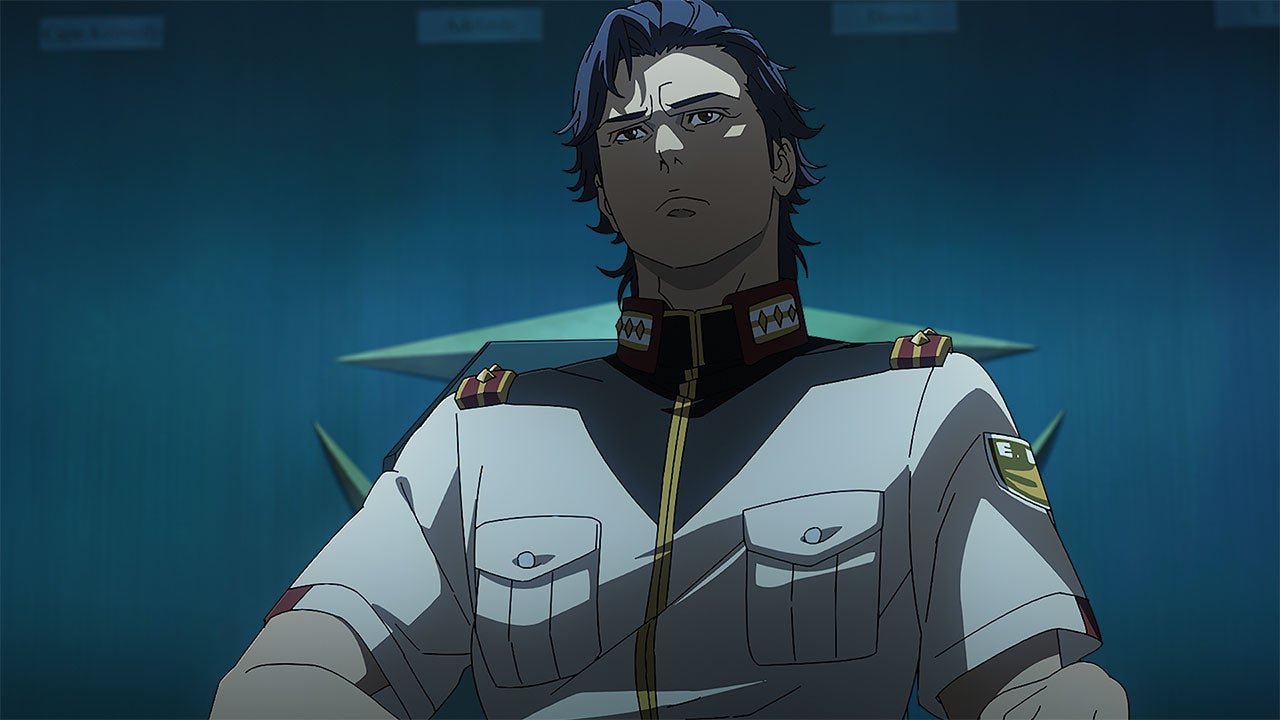
Mobile Suit Gundam Hathaway: The Sorcery of Nymph Circe will be released in U.S. theaters on May 15.
Mobile Suit Gundam Hathaway: The Sorcery of Nymph Circe is the second part of a trilogy, a movie that takes place immediately where the previous film (Mobile Suit Gundam: Hathaway) left off. Because of that, The Sorcery of Nymph Circe feels incomplete, lacking a beginning and an end. Still, as the middle chapter of a planned trilogy (the movie is based on a trilogy of novels), this is a fascinating character-driven story that occasionally features some incredible giant robot action.
Few franchises have had as much of an impact as Mobile Suit Gundam, and to get into this franchise is no small task as it encompasses multiple timelines and dozens of shows. The Hathaway movies are relatively self-contained from the original Gundam show, but they are heavily dependent on prior knowledge of the 1988 film Mobile Suit Gundam: Char's Counterattack. The impact of that movie can be felt throughout The Sorcery of Nymph Circe, from Hathaway Noa’s arc as the leader of the terrorist organization Mafty to his complicated feelings toward the mysterious Newtype, or psychic, Gigi Andalucia, and even in the way the film recreates scenes from the 1988 movie.
Noa and his relationship with Gigi is the core of The Sorcery of Nymph Circe, and in a way this is a movie split in two. The first half is Noa’s story: his return to the Mafty base and his preparations for an upcoming attack on the Earth Federation conference in Adelaide. The other half of the story centers on Gigi and her struggles with her role in the conflict, as well as her feelings toward both Noa and Earth Federation Forces officer Kenneth Sleg. Of the two parts, Gigi’s is by far the most compelling; though the newest character, Gigi already feels like an integral part of the Gundam franchise – determined, motivated, flawed. Her privileged, safe life is contrasted with the harshness that Hathaway experiences, even while the film is striking in how it also draws similarities between them as they both yearn for a life they don’t have.
Of course, it wouldn’t be Gundam without some poignant political commentary, and this might be the most timely title in the franchise since Gundam 00. This movie doubles down on the first’s portrayal of the Earth Federation’s policies of inequality and its oppression of minorities, but the scenes here of the military violently rounding up immigrants hits differently in 2026 — even if the original book was written in the 1990s. Where past Gundam stories focused more on what happens when conflicts escalate, that this movie looks at the tensions and immoralities that lead to revolts in the first place makes it stand out as a unique and fresh part of the franchise.
If this makes it sound like there’s barely any robots in this giant robot movie… well, you’d be right. There are but a couple of fight scenes, with the narrative focusing instead on the character study of Hathaway and Gigi as things build up to Mafty’s planned attack on the Federation leadership. Still, when the mobile suits do show up, it’s spectacular. The film meticulously portrays the sheer size and might of the giant mobile suits and makes them terrifying war machines that leave devastation in their wake. The Sorcery of Nymph Circe opens on a battlefield seen from the ground, with the towering robots annihilating everything in their path. This is no exciting robot duel with laser swords, but a harrowing nightmare from which there is no escape.
The animation is similar to a Makoto Shinkai movie, using photorealistic backgrounds with 2D characters that makes for an interesting contrast while highlighting the grounded nature of the story. Likewise, the 3D employed for the mobile suits works well. Perhaps most impressive is how this movie recreates scenes from Char’s Counterattack, seamlessly blending the look of that movie with the new art style. Unfortunately, the film (like its predecessor) suffers from the choice to set most action scenes at night in very dimly lit environments. This makes it hard to follow the action and takes away from the spectacle of the story.
Lastly, it’s important to note how essential Hiroyuki Sawano’s score is to the film’s success. Anime fans might be familiar with his work from shows like Attack on Titan or Solo Leveling, and as with those shows, Sawano’s music cues elevate the emotion of both the big action set pieces as well as the smaller character moments. Arguably what’s most surprising this time around is the inclusion of needle drops featuring SZA in the title sequence. The big musical highlight of the film, however, is the use of Guns N' Roses’ “Sweet Child O’ Mine” at the very end of the film. Though it might feel bizarre to hear a rock anthem like that in a Gundam movie, the lyrics actually fit surprisingly well with the final scene, underpinning Hathaway’s story.
You may need to do a lot of homework to fully understand what Mobile Suit Gundam Hathaway: The Sorcery of Nymph Circe is going for, but the second chapter in this trilogy delivers a satisfying character-driven story that builds on nearly 50 years of context.