
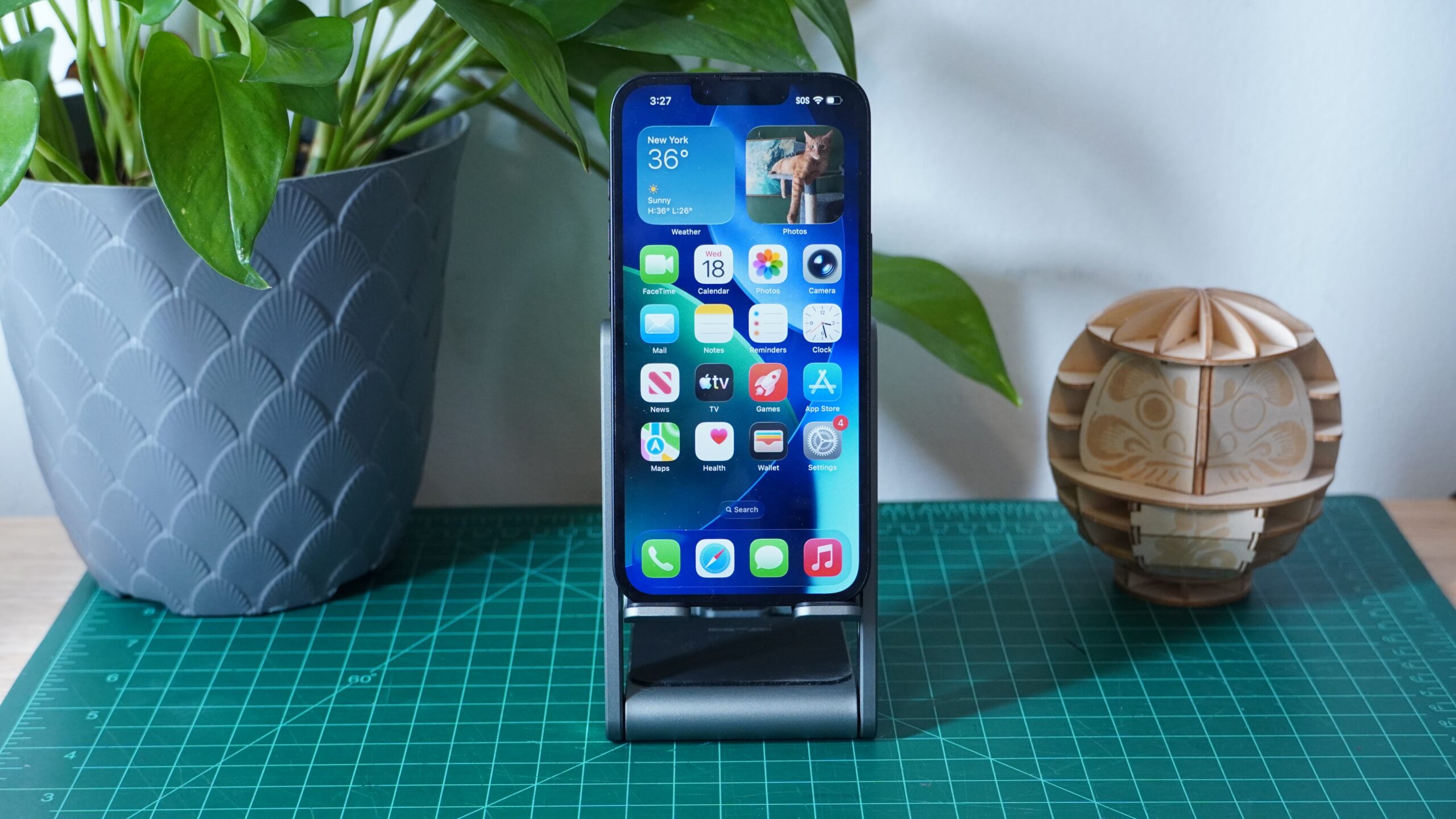
Apple doesn’t release discounted, mid-range devices every year, but this year sees the introduction of the iPhone 17e following hot on the heels of 2025’s iPhone 16e, and it comes with a more appealing package. The price hasn’t gone up, so you’re still looking at a $599 starting price, but Apple has put in more storage, more durable parts, and the latest A19 chip. Those factors make for a very promising midrange smartphone that should handle everyday needs with ease. So let’s have a look at how it holds up.
iPhone 17e – Design and Features
The iPhone 17e isn’t a particularly striking new addition to Apple’s lineup. It plays a simpler game, offering little excitement or luxury in the name of being more affordable. Unlike phones with bottom-of-the-barrel price tags, the iPhone 17e doesn’t quite cut everything, though.
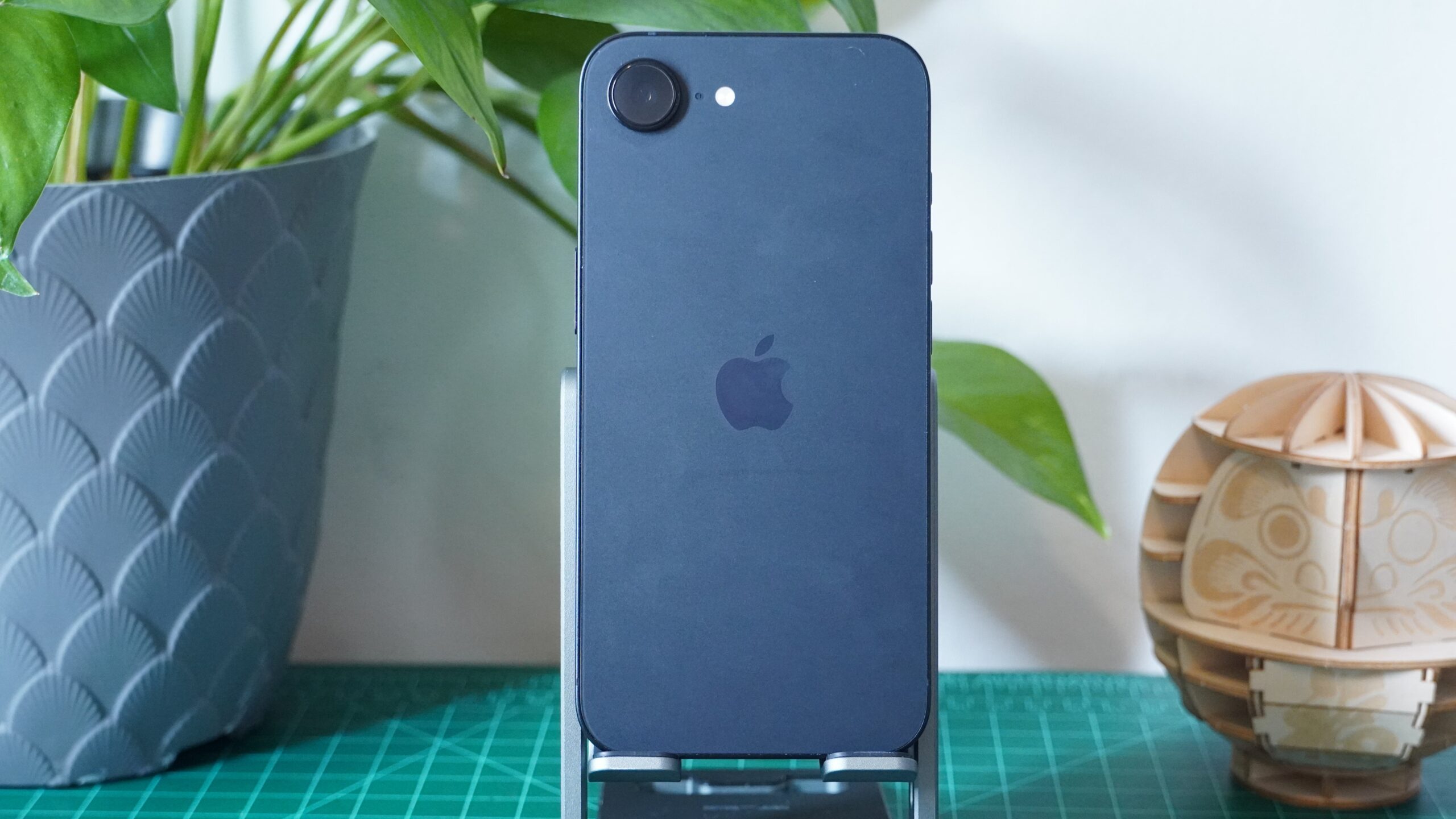
Where a discount Android phone might have a lower-quality cover glass and plastic rear, the iPhone 17e still gets a premium bill of materials that hews close to the mainline iPhone 17 devices. It has an aluminum frame, glass back, and Ceramic Shield 2 front, just like the iPhone 17. That’s great news for the durability of the display, with the screen showing no visible blemishes after my time testing it – a fair bit better than the first-gen Ceramic Shield on my iPhone 16 review unit fared. Even with the metal frame and tough glass, I wouldn’t treat this phone like its bulletproof. It’s water resistant, though, and can handle submersion in deep enough water (6 meters for 30 minutes) that recovery would likely be more of a worry than water damage.
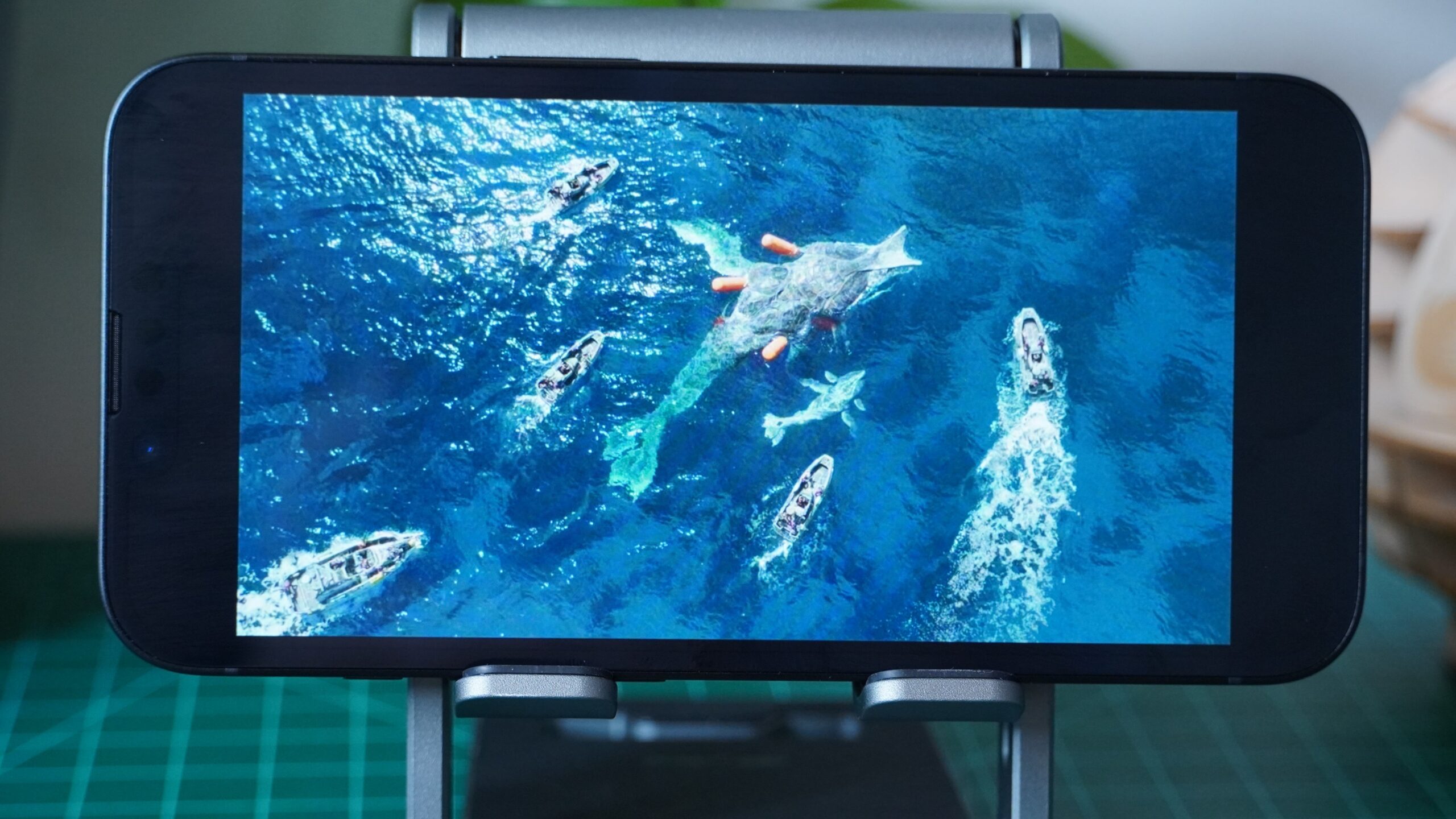
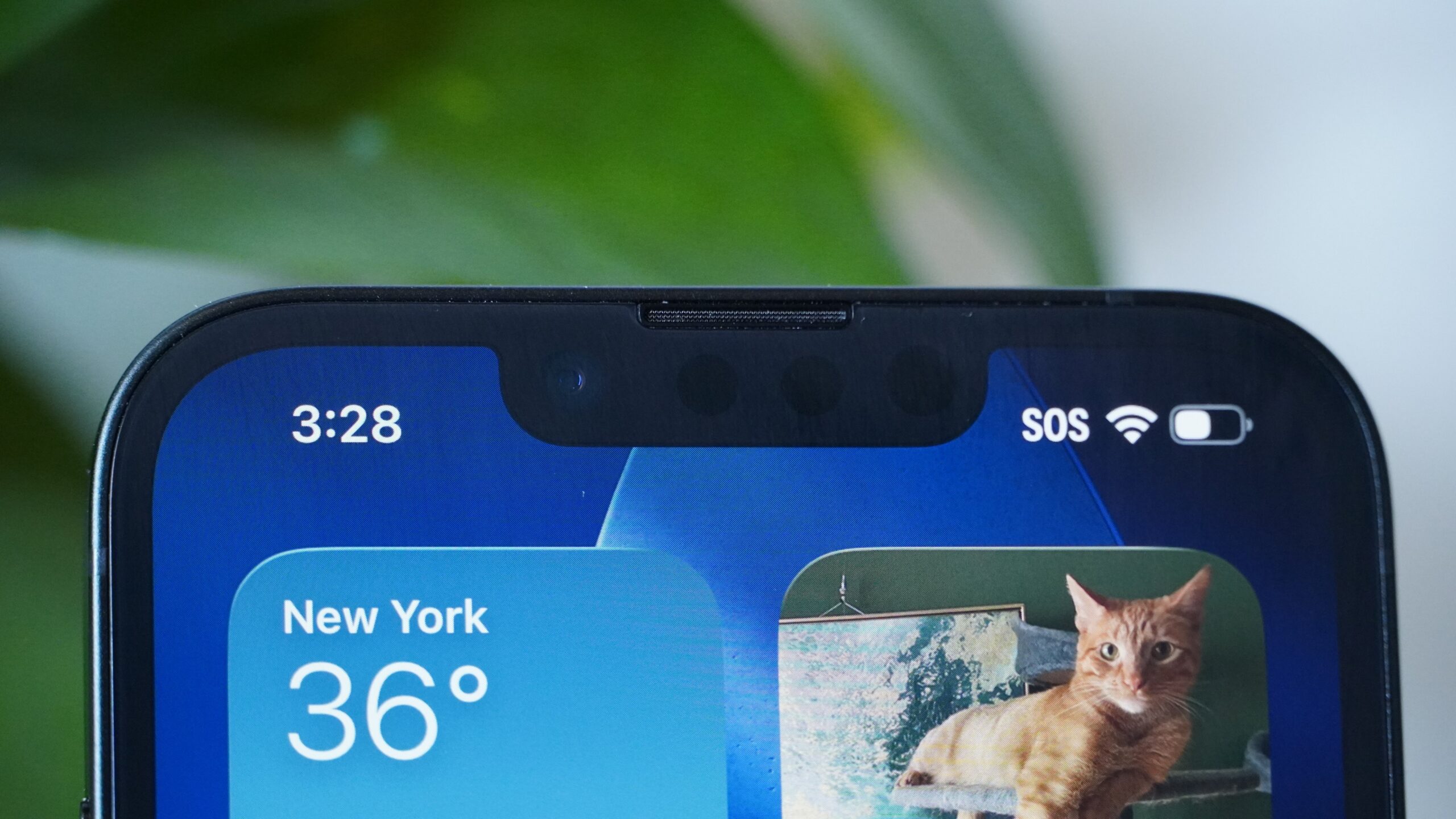
The front of the iPhone 17e is where you’ll see how it lags behind the latest models. It fits a 6.1-inch display that’s the same as what Apple built into last year’s iPhone 16e and even the iPhone 12 from 2020. It’s a great-looking OLED display that’s sharp and plenty bright, reaching up to 1200 nits. Sadly, it doesn’t bring along a 120Hz refresh rate for smoother visuals. It also lacks the smaller notch for the Face ID and selfie camera that newer models have gotten.
The display pairs with stereo speakers. The speakers hold up well when pushed to their limit, letting me listen to a podcast while working out on a rowing machine, doing some dishes, and taking a shower. There’s some harshness at full volume and the bass is meager as is typical on small devices, but the speakers are still a good complement for the display.
By sticking with the smaller display, the iPhone 17e proves a fairly easy phone to hold. It’s still a wider phone than I’d expect from one with its screen size, proving just about as wide as the Google Pixel 10 Pro despite the latter having a 6.3-inch display. Even then, it’s quite light and has a good balance in the hand, never feeling like it’s trying to fall over the top of my grip.
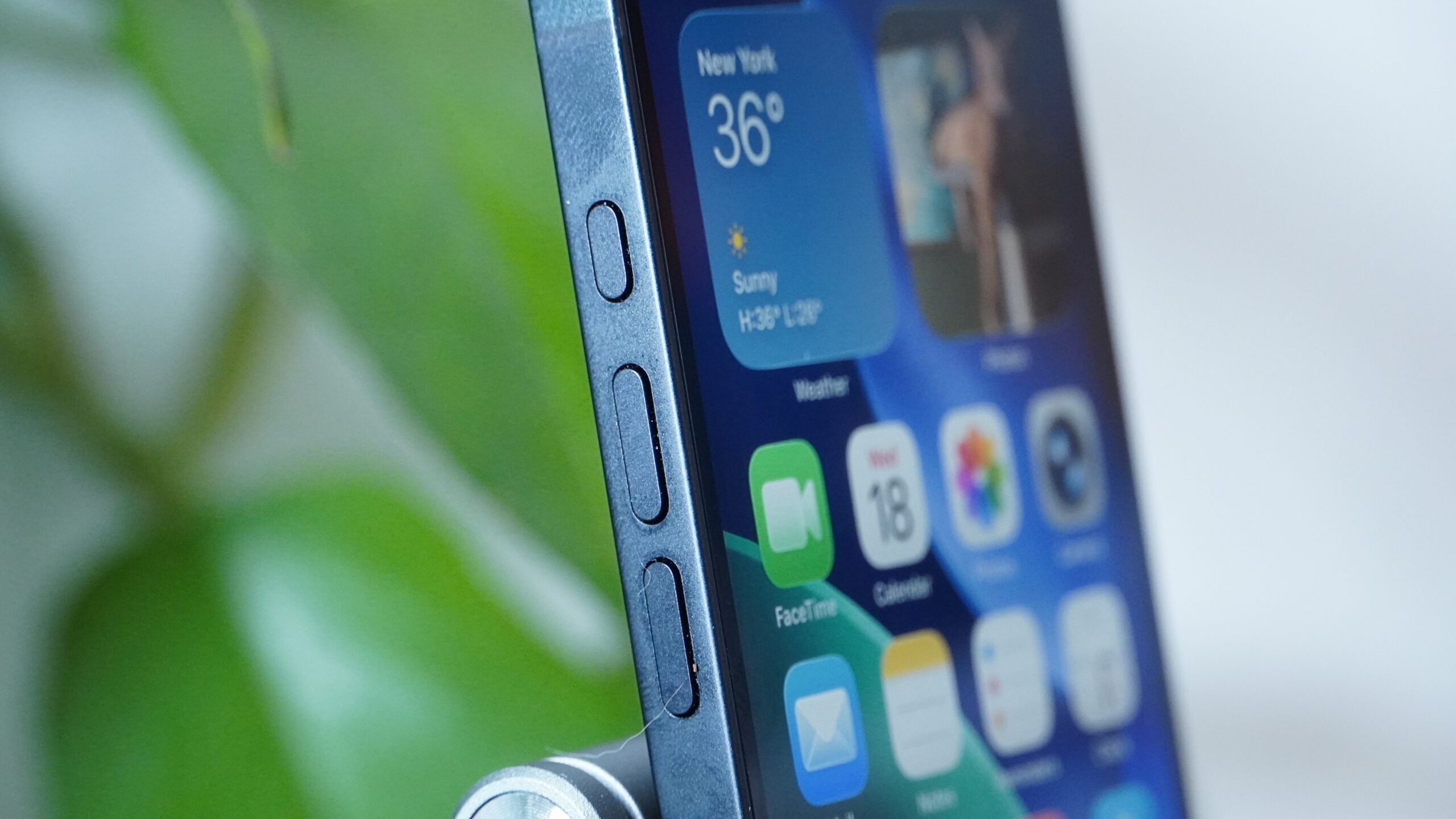
The iPhone 17e charges over USB-C, but in a big get over the 16e, it also supports MagSafe for fast wireless charging and compatibility with the wide assortment of magnetic accessories out there. As far as data transfer, though, that USB-C port is stuck at disappointing USB 2.0 speeds. The phone also gets the Action Button, providing a quick shortcut to specific apps, the camera, or different features depending on what you assign to it. I find myself accidentally hitting it instead of the volume, but it’s still nice to see a handy, user-assignable button.
You won’t find a SIM card slot on the iPhone 17e. Like Apple’s other phones, this one has ditched it in favor of going fully eSIM. While eSIM can be handy for getting set up on a new network without waiting for a physical SIM card to show up, I’ve found that convenience is mirrored by a fussiness trying to transfer an eSIM from one phone to another – a difficulty I’ve never run into with a physical SIM card.
iPhone 17e – Software
The iPhone 17e comes running the latest version of iOS, iOS 26. And while Apple may not be making any specific promises about long-term software support, it has perhaps the best support in the business. iOS 26 is available for devices all the way back to the iPhone 11 from 2019, and the fact that the iPhone 17e comes with the newer A19 chip rather than saving money by going for an earlier chip suggests it will see support as long as the standard iPhone 17.
One feature Apple plugged with the new phones was Visual Intelligence, which is one of the features you can assign to the Action Button. I gave it a shot, asking it to help me identify some things, and it was thoroughly wrong, misidentifying a Pixel 10 Pro as a Pixel 8 Pro (at least on brand), a GameSir controller as an aged Xbox 360 controller (at least it had the right control scheme, and an old Nissan Sentra as a Mercedes based on the logo (a logo that clearly proudly said Nissan in the photo). It did correctly identify a case of Icebreakers Sours from a photo of the lid, which had the name in bold print, but I’d hardly say that makes up for its lack of reliability elsewhere. There’s still a lot of room for improvement.
iPhone 17e – Gaming and Performance
The iPhone 17e may not be pushing boundaries with its design, but it has a lot more to offer in the performance department, particularly for a $599 phone. The phone includes Apple’s A19 chip, much the same as the standard iPhone 17. This means some serious CPU performance. Unfortunately, the 17e gets a trimmed back GPU which has four cores instead of the five in the iPhone 17.
General performance is excellent, though. The A19 chip in the iPhone 17e does serious work. It has some of the best single-core performance we’ve seen at 3620.5 points in Geekbench 6, nearly keeping pace with the Snapdragon 8 Elite Gen in the RedMagic 11 Pro and actually pulling ahead of the iPhone 17 Pro Max in my testing, albeit by a small margin. Its multi-core performance is also excellent – 9,229 points in Geekbench 6. That’s good enough to get out ahead of the Snapdragon 8 Gen 5 in the OnePlus 15R and within 2% of the iPhone 17 Pro Max and the OnePlus 13. That said, the Snapdragon 8 Elite 5 in the Redmagic 11 Pro still leads the way at 11,248.5 points.
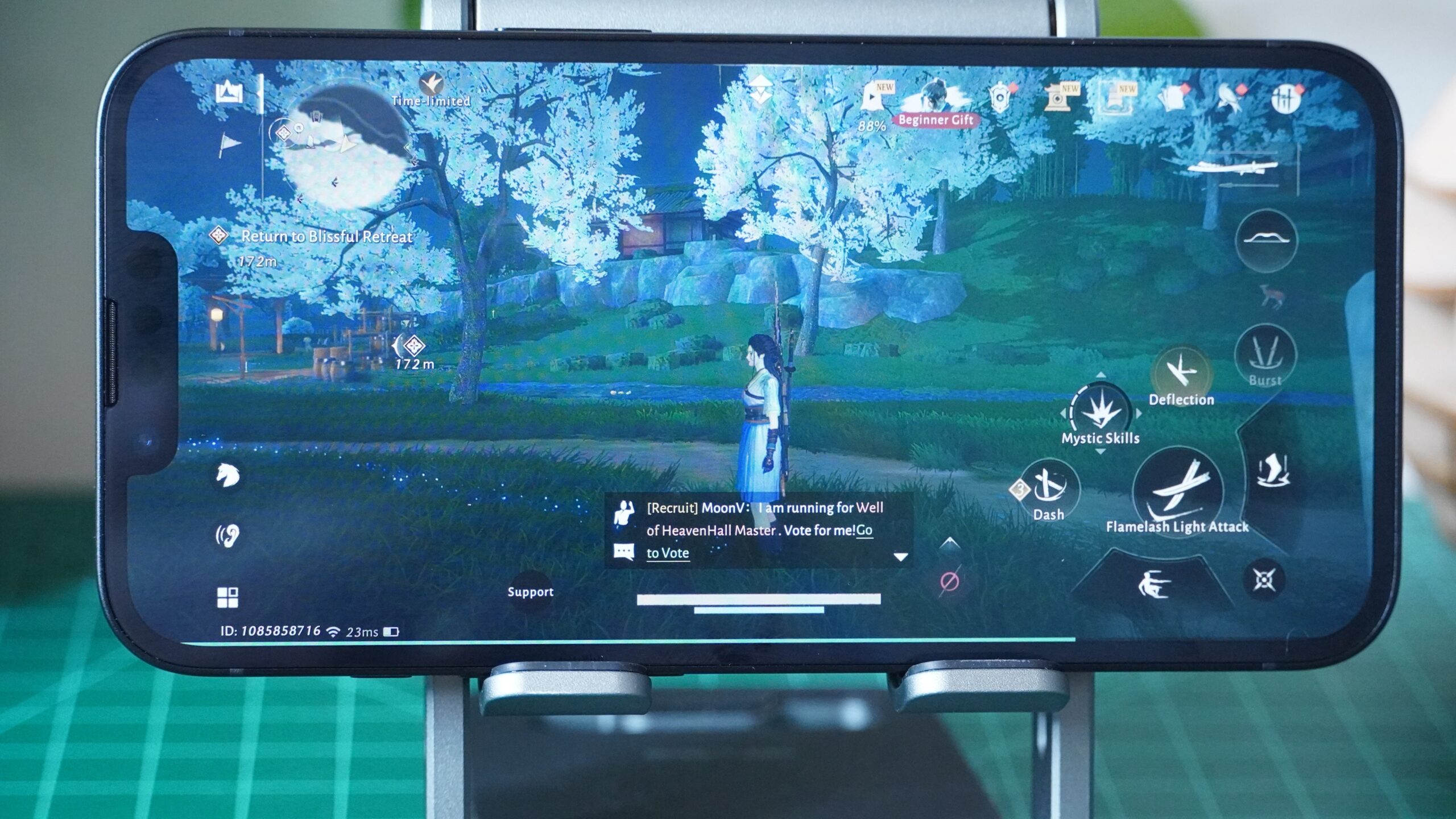
That CPU performance translates to smooth everyday operation. Launching apps and navigating the phone isn’t liable to get bogged down anytime soon. But if you’re a big gamer, the GPU setup isn’t as promising. The iPhone 17e could run Where Winds Meet stably, and it was able to use the Ultra graphics preset, but the frame rate menu topped out at High (leaving Ultra, Extremely High, and Supreme all locked). From the look of it, that’s a 30fps cap, and it’s a surprising limit given the Pixel 10a also provide Ultra graphics and a High frame rate setting but has considerably less graphical horsepower. Heat doesn’t seem to be an issue for the iPhone 17e though, as even after a half hour of Where Winds Meet, the phone was barely warm.
In benchmarks, it lagged behind Android phones running recent Qualcomm chips like the OnePlus 15R with the Snapdragon 8 Gen 5, which led it by double digits in 3DMark’s Wildlife Extreme, Steel Nomad Light, and Solar Bay benchmarks. The Redmagic 11 Pro only pulled away further, with the iPhone 17e averaging between 39% and 47% less graphical performance in these benchmarks. Even the OnePlus 13 with the older Snapdragon 8 Elite 1 led by a considerable margin.
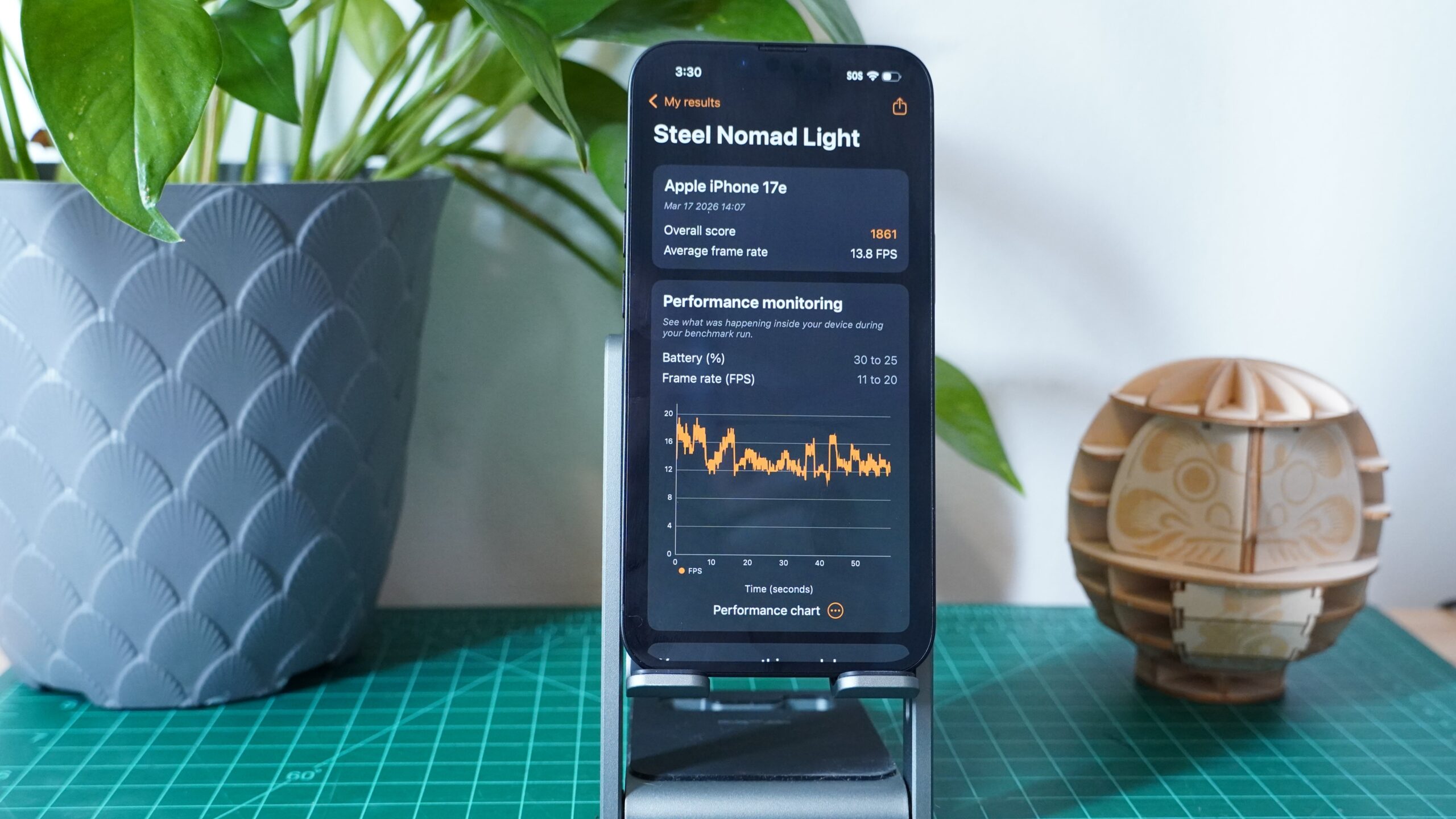
On the flip side, the iPhone 17e readily clears the performance of more affordable phones like the $499 Pixel 10a or $379 Nothing Phone 3a. This puts the iPhone 17e in a good position to be a performance-value contender, but that’s only for the $599 base model. If you want 512GB of storage, the iPhone 17e’s price leaps up an absurd $200 to $799, and that price opens it up to competition from devices that deliver far more. The RedMagic 11 Pro is a gaming beast with a gorgeous display and fun design, and it also costs $799 for 512GB of storage. I’ve seen remaining stock of the OnePlus 13 with 512GB of storage going for $799 as well, and it has a lot more to offer in most regards – battery, camera, overall performance, display quality.
The iPhone 17e’s inclusion of satellite-connected features may give it an edge over its competition, but that comes alongside two steps backward: Wi-Fi 6 and Bluetooth 5.3. As more of the industry moves towards the faster and more advanced Wi-Fi 7 and Bluetooth 6.0, the iPhone 17e will be lagging behind. It also lacks ultrawide-band and mmWave support, so it won’t offer precision finding with Apple Find My devices like Airtags nor benefit from the incredible speeds of mmWave 5G networks, rare and inconsistent as they may be.
Battery life is promising for the iPhone 17e. Streaming Avatar: The Way of Water on Wi-Fi with the display at full brightness and Bluetooth headphones connected, the phone only dropped 13% after two hours. That puts it on track for almost 16 hours of video streaming and doesn’t account for the fact that lower brightness levels would offer even longer runtimes. A 30-minute gaming session in Where Winds Meet also only took 6% off the battery with the display around 50% brightness, so lengthy gaming sessions are also well within the cards. All-day battery life in general use won’t be hard for most users to achieve.
iPhone 17e – Cameras
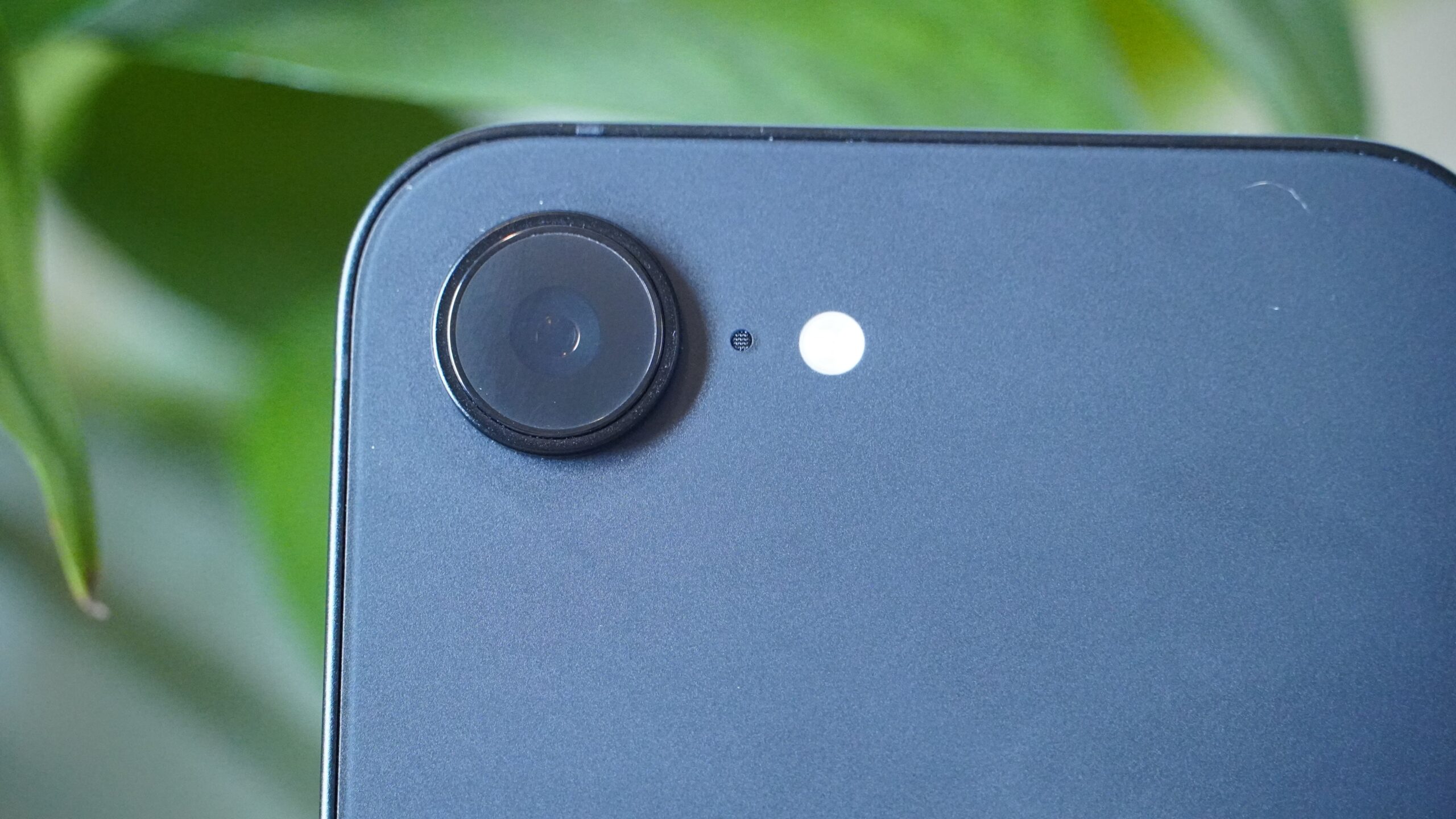
The iPhone 17e lacks a robust camera system, fitting in just one rear sensor and one front-facing sensor. Neither camera onboard is among Apple’s best, either. The selfie camera, for instance, doesn’t get the new 18MP Center Stage sensor with auto-rotating and cropping. And the rear sensor may be 48MP, but it’s not the same as what’s featured on the iPhone 17, lacking some big features, like sensor-shift stabilization. Here’s what the iPhone 17e packs:
- 48MP Wide, f/1.6, OIS
- 12MP Selfie, f/1.9, auto-focus
The main sensor does a decent job overall. Its wide aperture and wide field of view can capture a good deal. For close-ups, it gets a satisfying background blur. For larger shots, it can get plenty into the frame generally. Not having an ultra-wide sometimes hurts, as it can be hard to get large objects in without needing to back up, but those are rare cases.
What hurts more is the lack of meaningful zoom. The phone will punch in digitally, and bumping up to 2x offers some improvement to the image quality compared to simply cropping into a photo after the fact. But it’s a very minor improvement.
Even with the f/1.6 aperture, I noticed the iPhone 17e struggling a bit in darker environments. If it’s snapping a still subject, it does great. But if there’s movement, it doesn’t seem to prioritize freezing that movement. I struggled to get clear shots of my cats and friends in dimmer settings. In very bright settings, the camera could also suffer surprisingly. Some very strange sharpening artifacts showed up when I snapped some photos of birds in a sunny patch of grass. When viewed at full size, the grass looked like wrinkled cellophane. These cases suggest that the processing of the photos is not always up to snuff. Thankfully, most of the time, it’s at least pretty good, and many cameras fare much worse in dim environments.
The selfie camera can face similar struggles. It has a wide viewing angle good for getting a few friends into frame, but it can also fall short on crisp focus in dimmer settings. In bright settings, it looks great, offering crisp visuals. Though it also introduced a curious artifact, adding distinct patterns, almost like a fingerprint, to my backpack straps that are not present at all on the real article.
Apple has some AI tricks for the camera, but one of its highlights – the object-erasing “Clean Up” feature – failed to impress. It could remove objects and people well enough if they were on a simple background, and it would even try to tidy up shadows and reflections. But even little complications to the shot would result in bizarre-looking edits in my experiments, often warping the area around the moved object.
