
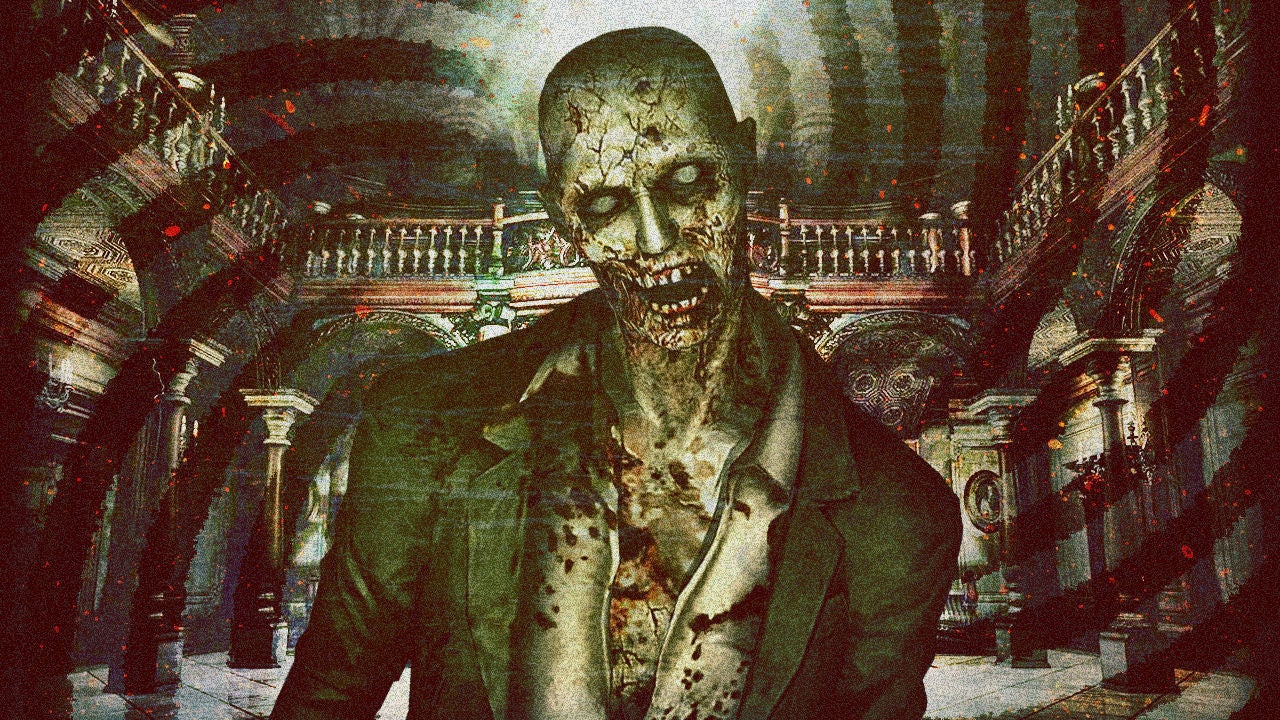
1996 was a red-letter year for the art of speedrunning. Four years after Doom sparked the scene and months before Quake turned it into a global community, Resident Evil arrived to reward dedicated players for a different kind of virtuosity, one that valued planning, routing, and a deep understanding of the mansion’s layout.
Unlockable rocket launchers weren’t the only incentive to clear the intimidating, labyrinth-like Spencer Mansion as fast as possible. In an era where memory cards cost extra, plenty of people tackled this haunted house in a single sitting out of necessity, learning speedrunning without even realizing it. You had to find the most efficient route to beat the game before your folks needed the TV to watch Suddenly Susan.
Optimization reveals a lot about level design– it separates the signal from noise and exposes the creators’ true intentions. That’s according to developer Chris Pruett, who mathematically dissected the Spencer Mansion to reveal the expansive spiral at its heart, a phenomenon he called “recursive unlocking.” Pruett analyzed a 90-minute, 100% completion speedrun of Resident Evil: Director’s Cut and recorded every room transition with timestamps, unveiling the pattern behind the game’s progression.
The mansion’s map begins fairly limited. You scamper around available spaces searching for progress and trying not to get killed. A new key can open six or seven doors, creating a larger but still finite space to find the solution that unlocks the next hotspot. Spencer Mansion almost always widens the activity area and rarely cuts you off from the old, expanding simultaneously in forward and reverse. There’s new stuff to explore, but some revelations will return you from whence you came.
Backtracking has become a bad word in gaming discourse, but few do it better than Resident Evil, and not as often as you’d expect. Pruett’s data found 116 unique nodes in the original game, and that the optimal path visits 213 of them in total, most of which are passed through only twice. Nearly 40% of the game’s screens required just one visit, and 19 rooms can be skipped entirely. There are some exceptions, but as designed only a few spaces are absolutely necessary to revisit multiple times.
The average player’s path will, of course, be anything but optimal. You’ll stumble into skippable rooms in search of items and answers and get lost figuring out aggravating puzzles. But along the way, you’re committing the mansion to your mind, filing away every fancy keyhole and askance weathervane you were forced to limp past, ready to exploit them whenever you acquire the next thingie.
Initial playthroughs won’t always look alike as decisions lead to different experiences. Playing as Chris Redfield equips you with a frankly pathetic fanny pack that necessitates brain-draining logic puzzles with every venture from a safe room, while playing as Jill Valentine provides you with a lockpick that bypasses entire sections Chris must solve with keys.
If games are a series of interesting choices then the Spencer Mansion is positively stuffed with them. Think you can make it out there with a bunch of chemicals in your inventory instead of fresh mags and first aid sprays? Or would you rather deal with Plant 42 the hard way? Is Richard really worth using some special serum to save? How far would you go to bring redemption to Barry Burton or keep Rebecca Chambers alive? Generally, though, you end up in the same place by the end. Eventually, you’ll stop going through the wrong doors and retracing your steps to dead ends, cursing your mistakes as you realize halfway through a loading screen that you’ve only brought one of the jewels you need to stuff in a large feline’s eye socket. You’ll learn which spaces are worth cleansing of monsters, the crucial shortcuts and connections you’ll return to time and time again. Pruett’s data found that even in a perfect run, the winding Northeast corridor that connects to the courtyard requires eight separate visits. It’s the most frequented room, but there are plenty of other natural aorta and ventricles to keep you circulating throughout Spencer Mansion. Soon, you’ll know these passages like the back of your beret.
The mansion changes as you progress. Around the halfway point you return from a long excursion away from the main edifice and return for a second big loop of the space. Upon arrival we’re shown that the slow lumbering corpses to which we’ve become accustomed have been replaced with nasty green Hunters. Your first major backtrack to familiar territory comes with drastically raised stakes, and paths once thought mastered now demand new respect. Director Shinji Mikami himself noticed how much players relied on the East Wing Storeroom and personally placed two Hunters there to mess with you, specifically.
Then comes the last circuit. After getting the Helmet key, killing the giant snake, and finding the last doodads needed to access the laboratory, you face one more trek across the infested mansion to reach the underground entrance. The entire map is open to you now, crawling with the deadliest threats the game can muster, but by this point your mind has achieved dominion over its halls. It’s your last lap through a house that hates you, only now it feels like home.
Survival Horror shares a lot of the above design principles with Metroidvanias: progression locked behind impassable barriers as we search the map for the various goobers that open the way. A key difference is that in Survival Horror, the tools that unlock the critical path don’t really level-up our avatars. There’s nothing that will make Chris Redfield morph into a ball that climbs up walls, and there’s no way for Jill Valentine to turn into a sentient mist, even in Arrange Mode.
Instead we find keys and crests and fake keys and fake crests and fake guns and cranks and arrows and Stone and Metal Objects, none of which do us any favors beyond taking up precious space. Our empowerment is mental rather than mechanical, the hard-won spatial literacy that the house beats into us.
