
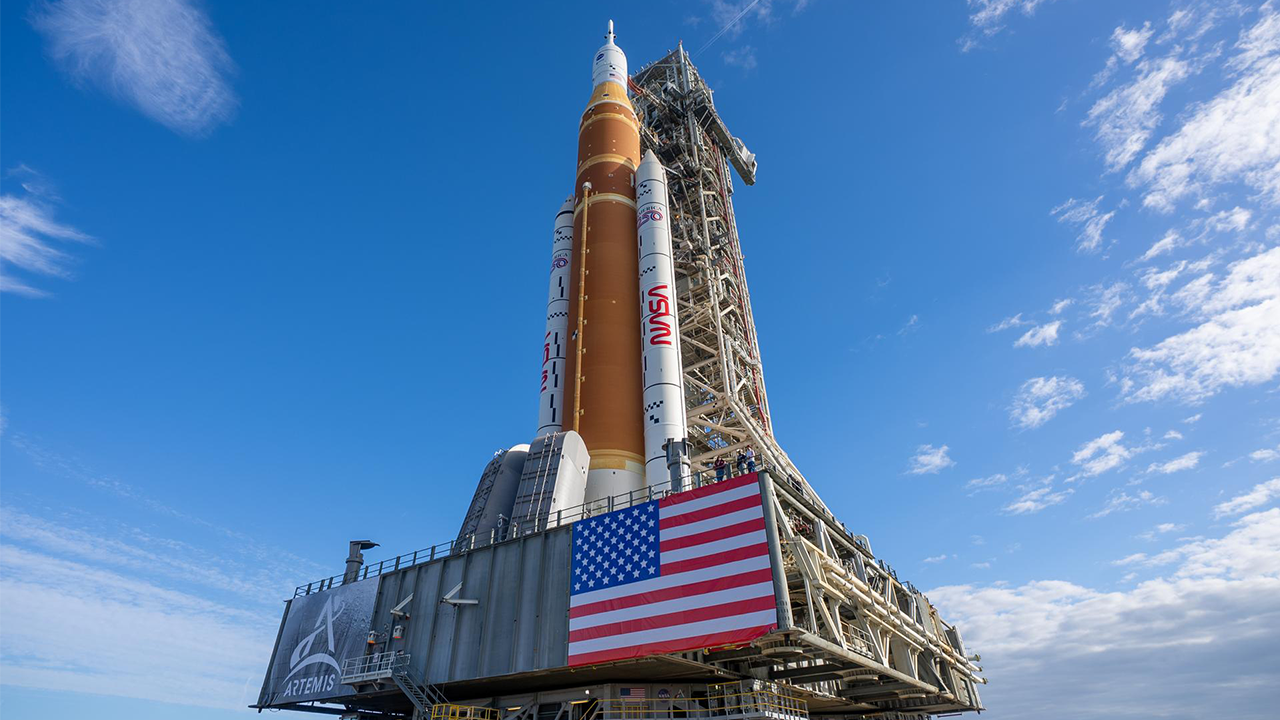
On April 1, NASA's Artemis II is set to embark on its 10-day mission to not only bring the first people around the moon and back in over 50 years, but also to take humans farther than they've ever gone before in space.
To ensure you don't miss this momentous occasion, we're here to provide everything you need to know about how to watch Artemis II's launch, what you can expect, who will be aboard, what it means for the future of space travel, and more.
When Is the Artemis II Launch?
The Artemis II is currently scheduled to launch from Kennedy Space Center in Florida on Wednesday, April 1, at 3:24pm PT / 6:24pm ET / 11:24pm BST. That translates to 10:24am AEDT in Australia.
How to Watch the Artemis II Launch
NASA will begin broadcasting Artemis II's launch on its YouTube channel at 7:45am ET, where it will share live views and audio commentary of tanking operations as teams load propellant into the SLS rocket.
Full coverage of the launch scheduled for 6:24pm ET will also be available on NASA+, the agency's free streaming service, beginning at 12:50pm ET. NASA's X/Twitter, Facebook, and Twitch accounts will also be streaming the biggest moments.
You'll also be able to follow along with the biggest updates from Artemis II and its crew on NASA's official blog.
What Is Artemis II's Mission?
NASA's Artemis II is one giant step toward a long-term return to the moon and future missions to Mars, as it will see three Americans and one Canadian travel around the Moon and back. This mission marks the first time humanity has flown to the Moon since NASA's Apollo 17 went there over 50 years ago.
While the crew won't be landing on the Moon, they will be flying around it and traveling roughly 250,000 miles into space, which would surpass the previous record of 248,655 miles set by Apollo 13 in 1970.
Artemis II will be in space around 8 1/2 minutes after launch, and the first day will be spent orbiting Earth and testing life-support systems. It will then spend the next four days rocketing toward the Moon with a planned arrival on April 6, where it will be roughly 6,000 miles above the lunar surface.
It will then circle the Moon and head back to Earth over the next few days, and it plans to splash down in the Pacific Ocean near San Diego on April 10.
This test flight will be NASA's first mission with crew aboard the SLS (Space Launch System) rocket and Orion spacecraft, and is a very important one on its way to land on the moon again in early 2028 with Artemis IV.
Later in 2028, NASA is also planning to land its Artemis V spacecraft on the Moon and begin building its base for future missions.
Who are the Astronauts Aboard Artemis II?
The Artemis II mission will have four people aboard as it travels to the Moon and back, and it will be led by Baltimore-native Reid Wiseman. He will serve as Commander, and was previously a flight engineer aboard the International Space Station.
California-native Victor J. Glover will serve as Artemis II's pilot, and this will mark his second flight into space. He was previously the pilot on NASA's SpaceX Crew-1, a flight engineer aboard the International Space Station.
Michigan-native Christina Koch is Artemis II's mission specialist, and this will be her second flight to space. She was previously a flight engineer aboard the International Space Station and set the record for the longest single spaceflight by a woman.
Last but not least, Ontario-native Jeremy Hansen will be another mission specialist aboard Artemis II, and he will be the first Canadian to ever venture to the moon. He previously was a crewmember of NEEMO 19, where he lived and worked on the ocean floor for seven days in the Aquarius habitat off Key Largo, Florida, to simulate deep-space exploration.
For more, check out NASA's full Artemis II reference guide, an animated version of its flight path, and NASA's Watch Party Planning Guide.
Adam Bankhurst is a writer for IGN. You can follow him on X/Twitter @AdamBankhurst, Instagram, and TikTok, and listen to his show, Talking Disney Magic.
