
Spider-Man is ultimately a story of class, and in 2021, Spider-Man: No Way Home ended by taking our favorite wall-crawler back to those basics, with the help of a very important cameo. No, not Tobey Maguire, and not Andrew Garfield either. Not Dafoe, no; close but no dice. No, we’re talking about the unseen landlord we hear speaking just off screen: “Rent is due first of the month, don’t be late!”
Marvel’s fourth Spidey movie, Brand New Day, finds an anonymous Peter Parker living poor and alone, and fighting crime in a DIY costume. It’s a far cry from how he started out in the MCU, when he was recruited by billionaire playboy Tony Stark in Captain America: Civil War, becoming Iron Man’s protégé and de facto successor. But starting from the bottom is perfectly in line with Spidey’s history, both in the comics as well as in the Sam Raimi-directed movies in the 2000s, which nailed the everyman aspect of the character originally intended by co-creators Stan Lee and Steve Ditko back in the 1960s.
In fact, it may not be a stretch to say that where Peter lives, and how he struggles to make ends meet, is vital to his story, which is why some of the best and most effective versions of him also feature an important supporting character — a kind of person that many of us have to deal with at one point or another. That’s right; the landlord.
A Spider in 1970s New York
First published in 1962 in a brightly-colored landscape of gods and monsters, Spider-Man quickly became the quintessential working class superhero. Created by writer Lee and artist Ditko — New Yorkers who grew up in the Great Depression — Peter Parker was an orphan raised by his hardworking aunt and uncle in Queens, New York. But it wasn’t until 1965 that Peter moved out and went to college in Amazing Spider-Man #31, first living with his wealthy friend Harry Osborn, and then on his own at his notorious Chelsea apartment in Amazing Spider-Man #139.
This was a few years after Lee stopped scripting monthly comics, but the opening narration from writer Gerry Conway summed up the character’s original credo: “The end of summer… As for our web-slinging hero, well, when you're worrying about as many things as HE is, you hardly have time to even notice the season.”
Amazing Spider-Man #139 hit shelves in 1974 — the same year that New York passed its major rent-stabilizing legislation, the Emergency Tenant Protection Act, after unregulated rent rose nationwide. Conway, then a 21-year-old writer living in New York, seemed to be responding to those same forces, which shaped the world around him. The city’s ballooning costs led to an uptick in drug use and violent crime through 1977, which also gave us a lot of iconic and violent ’70s New York cinema like Taxi Driver and Death Wish. But where our New Hollywood anti-heroes were consumed by fear and paranoia, the comics took a different approach with a certain friendly neighborhood Spider-Man.
When he wasn’t in costume, Peter could be any other supporting character in the margins of those New York movies, struggling to keep his head above water as his new landlady, Mamie Muggins, knocked on his door to demand rent. Poor Pete was always behind, because balancing college, family, a social life, and a job at the Daily Bugle was a tall order to say the least. In Spidey’s own words at the time (from ASM #139): “That's the one thing wrong with this superhero biz… there's no money in it.” This was also just a few months after the death of Peter’s true love, Gwen Stacy; the loss definitely still lingered, which was of course relatable, but he was trying to rise above it… because that’s what makes him Spider-Man.
Mean Mamie Muggins
While the next few hundred issues would pit Peter against his usual villains — Mysterio, Hobgoblin, Kingpin, and so on — Muggins would show up every once in a while, usually for a page or two, as a reminder that Peter had to juggle crime fighting with real responsibilities and all while maintaining a secret double life.
The pressure bears down on Peter from all sides; while he pulls long hours and all-nighters, his friends Ned and Betty manage to settle down and get married. Meanwhile, his milk goes bad and Muggins even mistakes him for an intruder, beating him with a broom, all in the same issue. The comic even makes sure to compare every other character’s (much nicer) home to where Peter lives, just so you know he’s near the bottom rung of the city’s economic ladder.
Another key aspect of the comics at the time was that Peter, like many New Yorkers, could rely on his community for help. When he doesn’t have the time or money to furnish his apartment, his friends all chip in to buy him furniture as a surprise. And as mean and impatient as Muggins is, she becomes part of his supporting cast as well, going back and forth between being a curmudgeon and a friend. As the years went on, Muggins became a more complex comic relief character who constantly berated Peter for having “strange” and kinky women around the apartment building, like masked femme fatale Black Cat.
She’s most likely the blueprint for a character we’d meet in Raimi’s trilogy, Peter’s landlord-slash-building manager Mr. Ditkovich (seemingly named for Spidey co-creator Steve Ditko). Muggins even has an attractive blonde niece, Candi, who lives in the same building and seems to have inspired Ditkovich’s daughter, Ursula. There are plenty of comparisons, but there were still 30 years between Muggins’ debut and Ditkovich’s arrival on the silver screen, and a lot happened in the meantime, both in the comics and in the real world.
The ’80s Boom… and Beyond
By the 1980s, comics like The Amazing Spider-Man and its sister series — Peter Parker, The Spectacular Spider-Man — even shifted focus to tackle issues plaguing New York at the time. DC’s Green Lantern/Green Arrow series from the previous decade is usually credited with pushing superheroes into the real world by tackling issues like racism and addiction, but the Spider-Man comics picked up that baton in a way those stories couldn’t. Green Lantern was a space cop and Green Arrow was a billionaire, and while it was important for them to observe and acknowledge real people, Peter Parker was one of the rare mainstream heroes actually living a real life.
In 1983, his neighborhood’s severe drug addiction ends up spilling into the lobby of Muggins’ building, but Peter approaches the addicts more as people to be helped than an evil problem to be solved. By 1986, Chelsea had also been dealing with gentrification — a term first applied to New York just a few years earlier — which led to a story in which Peter and his neighbors organize to fight off landlord greed through collective action. It wouldn’t be long before Peter was faced with eviction himself.
However, in keeping with the city’s Wall Street Boom that decade, Peter’s marriage to supermodel Mary Jane led to him finally moving out and living in a fancy, spacious SoHo loft for the next ten years. This would end his tryst with housing insecurity for quite some time, at least in the comics. He would go on to live in Avengers Tower after his home was bombed, and then eventually — after his marriage was magically erased in the soft reboot story, “One More Day” — he’d find himself in five star hotels and a luxurious Tribeca apartment after landing a high-paying scientist job in 2010.
But by this time, Spider-Man had already exploded in mainstream popularity thanks to the movies directed by Sam Raimi, and the image of Peter Parker in the public consciousness had been defined by actor Tobey Maguire, who perfectly embodied the character’s working class origins.
The Raimi Film Trilogy
While Peter doesn’t get his own place until Spider-Man 2, the original 2002 movie is steeped in issues of class in ways that subsequent versions of the character kind of swing over. For one thing, Peter’s blue collar uncle starts the movie having been laid off after the dotcom boom, while the movie’s tech-centric villain is a billionaire CEO. For another, the spaces we’re shown constantly hint at this economic contrast; where Harry and Norman Osborn come from money and live in luxury, everyone else from the Parkers to Mary Jane can be seen in far more worn-out surroundings in their humble neighborhood. This contrast becomes a thematic throughline when Spidey and the Goblin come face to face, with a souped-up Norman touting his exceptionalism. Ultimately, Peter identifies with everyone else in New York City, and by the end of the movie, he’s fighting alongside the common person against a wealthy villain who thinks he’s above them.
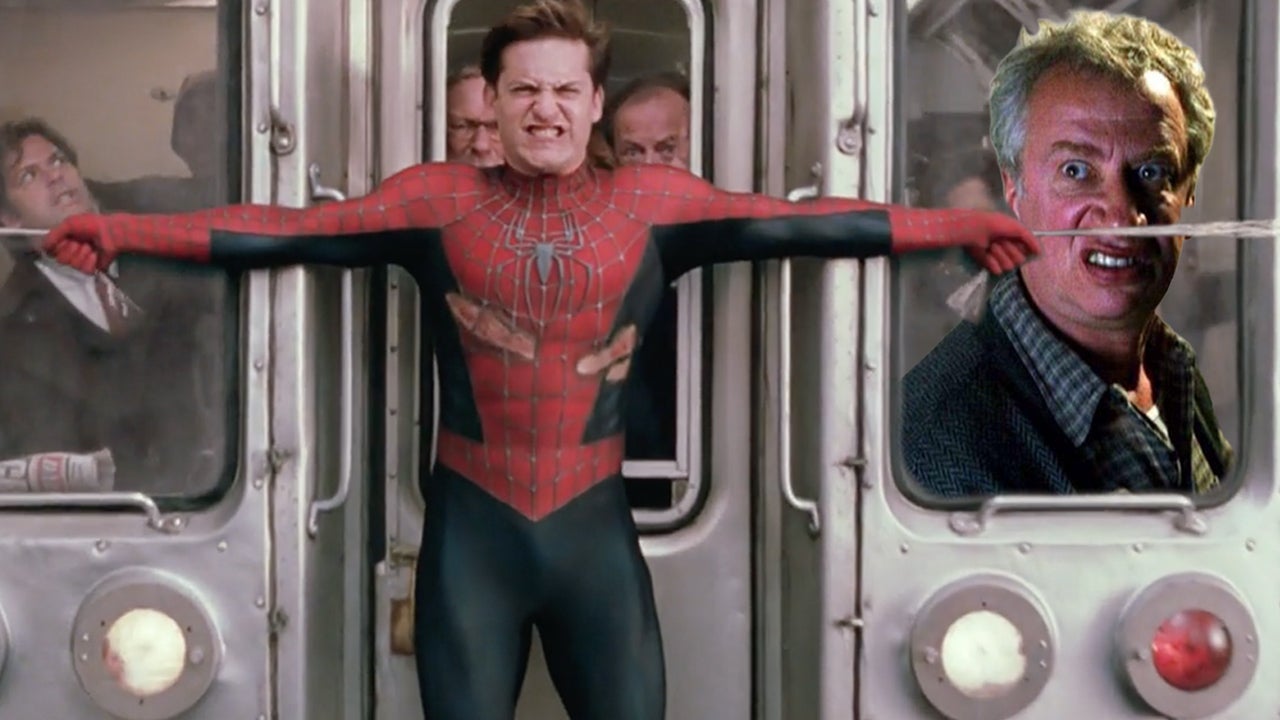
But it’s really in Spider-Man 2 that Peter’s struggles as an everyman take center stage, right from the opening scene, where he balances delivering pizzas with superheroics while also trying to earn his college degree. Aunt May even faces foreclosure, but she gives him some money for his birthday anyway, and by the time he gets back to his cramped and crumbling studio apartment — which doesn’t even have its own bathroom — his last twenty is snatched out of his hand by everybody’s favorite superintendent, Mr. Ditkovich, played by Latvian actor Elya Baskin.
The character is a perfect fit for 2000s New York, at a time when people from the former Soviet Union were one of the city’s largest immigrant groups. And while the US saw immense growth in the 1990s, this also resulted in rising prices which increased the wage gap and made things far more difficult for the average person. Peter is very much that average Joe — just like MJ is the average Jane; her place isn’t fancy either — but he gets a glimpse of what might be possible if he can manage to balance his science career with his love life when he spends the day with Otto Octavius and his wife at their spacious loft. These are two characters who have, somehow, made things work, which is all Peter wants — and, spoiler alert, eventually gets, which is a nice touch in the recent films.
By Spider-Man 3, Ditkovich and daughter Ursula take a more central role as people who observe Peter every day. And while the movie is extremely overstuffed — it doesn’t really need the Venom symbiote to speed up the emotional arc that’s already happening — it remains aware of the series’ class dynamics. The Sandman, for instance, is driven by financial desperation, which is something Peter recognizes when he eventually forgives him for killing Uncle Ben.
But while the Raimi trilogy remained class conscious, subsequent versions of the character would end up growing, well… class agnostic, to put it nicely.
The Marc Webb Movies
If the rapturous response to his return in 2021’s Spider-Man: No Way Home was anything to go by, most people think Andrew Garfield is a perfect Peter Parker. That’s true in isolation, but he was unfortunately saddled with a story that simply recycled the basic beats of Raimi’s trilogy, aping its texture without really figuring out what made those movies tick.
In the first Amazing film, Uncle Ben and Aunt May’s home is pretty spacious and well-furnished compared to their older, more frugal counterparts, whose appliances and decorations felt decades out of date. And while the villain, Curt Connors, lives in a spacious, modern apartment, there’s really no underlying class dimension to his conflict with Peter, which is all about trying to…um… turn people into lizards. You don’t get a good enough look at Gwen’s place either, and while it seems kind of nice, there’s never any acknowledgement of her and Peter belonging to different social classes.
The Amazing Spider-Man 2 is a slight improvement in this regard, but it’s also way too scattered to put these pieces together. Aunt May is trying to pick up more shifts at her waitressing job, but these scenes are shot with a whole lot of comfy space compared to the more cramped apartment the older version of May moved into after Ben’s demise. Harry has a big mansion, and Electro’s death is briefly covered up by shady corporate forces, but Peter is usually preoccupied with the mystery of his father’s disappearance rather than trying to make ends meet. And what’s standing in the way of his romance with Gwen isn’t a lack of time on his hands, but a promise to her late father. There’s a whole boardroom conspiracy element that doesn’t really overlap with Peter’s story either, so it may as well be a different movie. By the time Spidey was rebooted again just a few years later, things moved in a very different direction.
The MCU Mini-Iron Spidey
When the Spider-Man saga shifts into the MCU, we only briefly see Aunt May’s nondescript apartment in 2016’s Captain America: Civil War, and while the movie hints at Peter tinkering with retro tech, the subsequent films… don’t really let him do that. In fact, his solo arrival in the Marvel Cinematic Universe — 2017’s Spider-Man Homecoming — has him in an Iron Man-like suit fitted with fancy gadgets and an A.I. companion, which is regifted to him by the end of the film. By this point, Iron Man was central to this shared continuity and to pop culture at large, so the series kind of molded Peter in his image as a young successor, but without the whole sciency “tech-savvy” thing that defined not only Tony Stark but previous versions of the character.
With no DIY aspect to Peter, you’d think there’d be something else that makes him feel like a working-class kid, but throughout Jon Watts’ trilogy, this is never really the case. His apartment with Aunt May is just kind of nice, and she doesn’t seem to have an actual job; in fact, the only thing we ever see her do is volunteer, which is actually more than Peter does in terms of work.
Unlike the Amazing Spider-Man films, there is kind of a class aspect to Homecoming, but Spidey fits into it weirdly to say the least. The Vulture and his construction crew resent Stark and the Avengers for both dropping skyscrapers and robbing them of the contracts to clear them up, so they end up turning to arms trade… not unlike where Stark started out. But this is a theme shared entirely by the Vulture and Stark, who don’t actually meet, while Peter just kind of serves as Stark’s teenage proxy. Sure, in the movie’s fiction, it’s unambiguously good that Spidey stops the villain from getting away with even more weapons, but you have to admit that it’s kind of funny that his big act of heroism is protecting a billionaire’s toys.
By this point, Spider-Man’s iconography couldn’t be viewed in a vacuum, which is why Marvel chose not to retread the character’s origins for a third straight time. But there are still other story beats that visually echo the previous films while ignoring their underlying meaning. Take Flash Thompson’s convertible… no literally, take it. There are no downsides when Peter takes Flash’s car, and it makes for some comedic comeuppance; Peter actively benefits from it, since it helps him catch the Vulture and earn his suit back, while the movie never frames any kind of dynamic between him as a working class kid, and Flash having an expensive ride. Why should he have any feelings about this? Well…
In the original film, it was coveting Flash’s fancy car that led Peter down the path that got Uncle Ben killed in the first place — a guilt he carries with him into the sequel. Of course, the MCU films don’t have to do the exact same things, and the situations are a little different. But in Peter’s introductory film in that universe, he never suffers lasting consequences for anything he does, and there never seems to be any context where he feels the pinch in his wallet, or where his selfishness leads to blowback. In fact, all he wants is to be the next Tony Stark — the next big fancy Avenger, which he turns down for unexplained reasons. What does all this have to do with apartments and landlords? Nothing on the surface, but absolutely everything beneath it, especially in comparison to the comics and previous films.
When Peter gets into hot water in the sequel, Far From Home, the late Tony Stark looms so large over him that his ghost practically gets him out of trouble with a private jet and a high-tech costume-making machine. By the time we get to the third film, Peter has the option of hiding out at Happy’s expensive bachelor pad, filled with Stark’s old gadgets. Even the camerawork re-enforces how little the series cares to make him a poor, working-class Spider-Man. For example, there’s a long take that lasts almost two minutes and snakes around the entirety of Peter and May’s apartment, and while it’s dynamic to look at, it also tells us that these characters live pretty comfortably. In contrast, the only similar shot in Raimi’s movies goes all the way around Peter and keeps the entirety of his apartment in view, making it feel claustrophobic. The only time in the MCU films that anyone’s home really says something about them is the one scene set at Ned’s — where the furnishing is a bit of a throwback as in Raimi’s movies — but that scene has a bit of a different focus.
While Tom Holland’s Peter does eventually suffer a profound loss, nothing he ever faces stems from living in a world where class is really a factor. That’s probably the biggest downgrade from one reboot to the next, as the ultra-wealthy go from villains pushing people to their limits, to shady background characters, to allies that make things instantly easier for the heroes, which goes entirely against Spider-Man as an extension of the real world.
Spidey Needs Someone (or Something) Bugging Him
There are plenty of ways financial burdens can manifest on screen — and plenty of ways they do in Raimi’s trilogy — so Spider-Man having an overbearing landlord isn’t the only solution to this self-inflicted problem. In fact, he doesn’t need to literally have one on screen so long as it’s clear that times are tough for Peter Parker. But for a character who has historically reflected the economic burdens of the average person — especially the average New Yorker — it makes perfect sense to keep this aspect of the character central to his visual identity, since the big story in New York politics of late also happens to be affordability.
Billionaire superheroes aren’t going anywhere, but at a time when wealth inequality is still on the rise and people resent the way tech is furthering class divides, Spider-Man becomes especially valuable as an all-ages tale of someone torn between flights of fancy and realistic problems. But if that’s the case, then he needs to reflect the real world in some recognizable way, and the easiest way to do that might just be to flesh out where he rests his head… and who’s knocking on his door and yelling for the rent when he’s just trying to get some shut-eye.
