
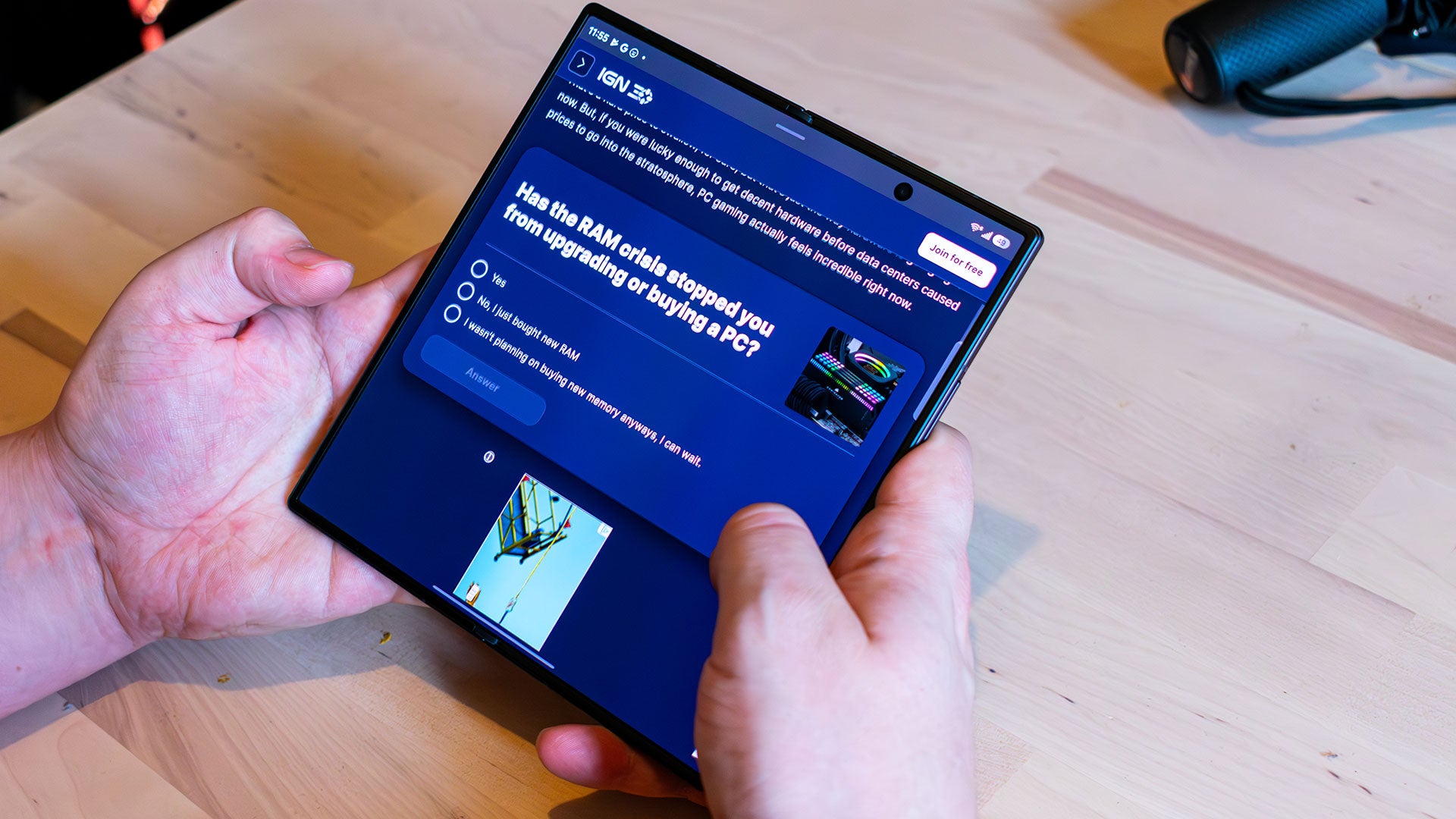
The Samsung Galaxy Z Fold 8 Ultra is finally here, along with the Fold 8 and the Flip 8. Now, aside from tacking ‘Ultra’ onto the name, the Z Fold 8 Ultra looks and feels a lot like last year’s Z Fold 7. I’ve even put them next to each other, and apart from last year’s much more vivid colorway, I legitimately can’t tell the difference between them.
However, appearances are only skin deep, and Samsung has made some big improvements over its last-generation foldables, like finally including the same 5000mAh battery you’d find in the Galaxy S26 Ultra that came out earlier this year. That doesn’t necessarily justify adding the Ultra to the name, but I suspect it has something to do with the Fold 8 Ultra’s new $2099 price tag.
Samsung’s flagship foldables have never exactly been affordable, but crossing that $2000 threshold, just to start, is a lot to ask for a smartphone. Now that I've spent about a week with the Galaxy Z Fold 8 Ultra, I'm still not sure it's worth the $2099 asking price, but Samsung did manage to just create the brilliance of the Z Fold 7, and with a better battery and camera. That's not a lot new for the extra $100, but as much as I loved last year's model, more of the same isn't exactly a terrible thing.
Design and Features
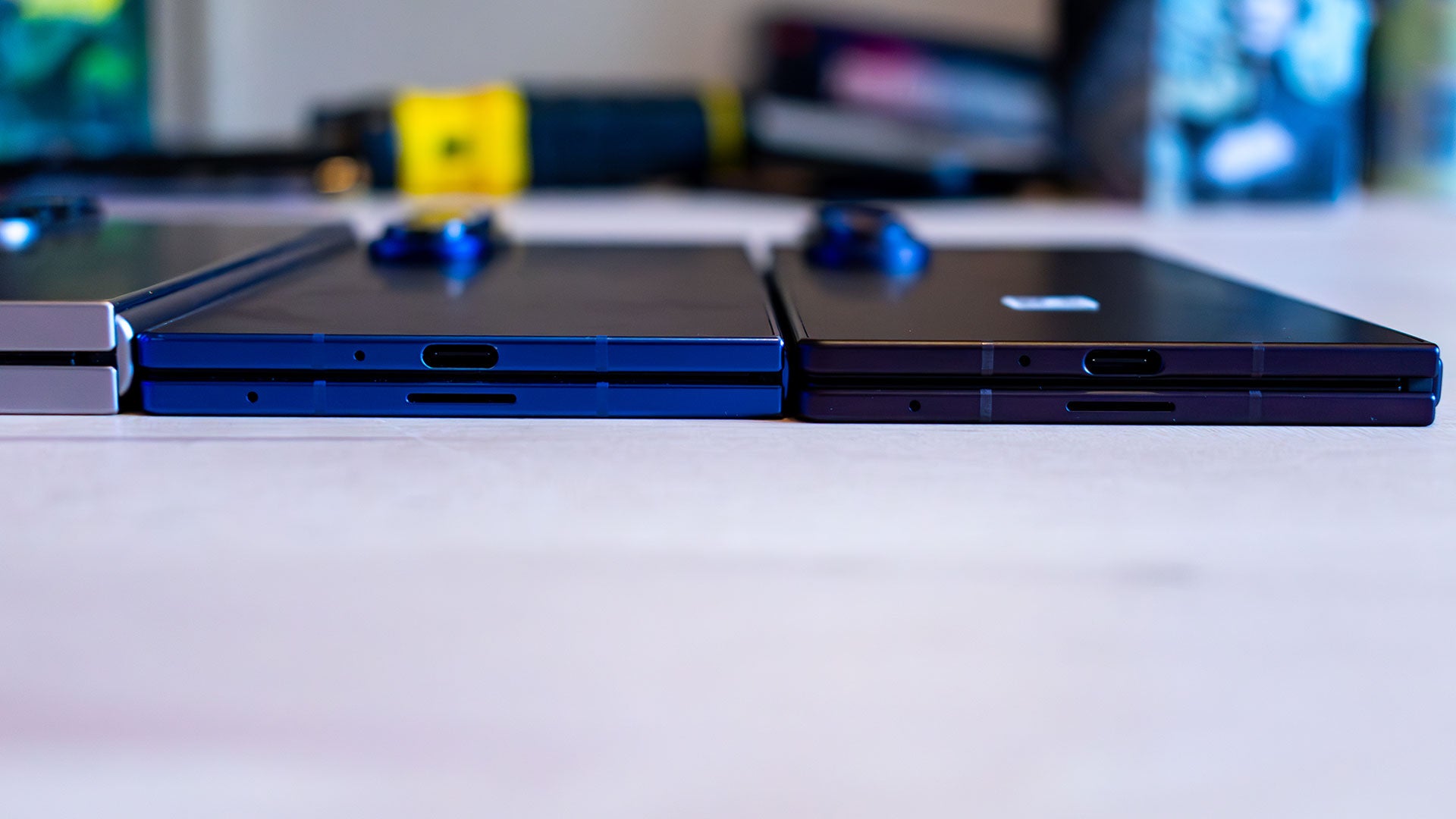
Last year, the Samsung Galaxy Z Fold 7 was drastically slimmed down compared to the Z Fold 6. Samsung says it’s repeated that success, claiming that the Z Fold 8 Ultra is its thinnest foldable yet, but even when I have the Fold 7 and the Fold 8 Ultra right next to each other, I really can’t tell the difference.
In truth, Samsung shaved just 0.1mm off of the Z Fold 8 Ultra, making it just 4.1mm thick when unfolded and 8.9mm thick when folded. And, all credit to Samsung, that does make it the thinnest foldable the company has made, but by such a small margin that you’d never actually notice. With a phone this thin, especially a folding one, durability is a huge concern, but it seems like Samsung thought about that.
Now, I never had any issue with the Fold 7’s build, and I doubt the Fold 8 would fare any worse with 0.1 mm shaved off the chassis, but Samsung added a new titanium alloy film beneath the display, which should help prevent the phone from folding in ways that aren’t indicated by Samsung.
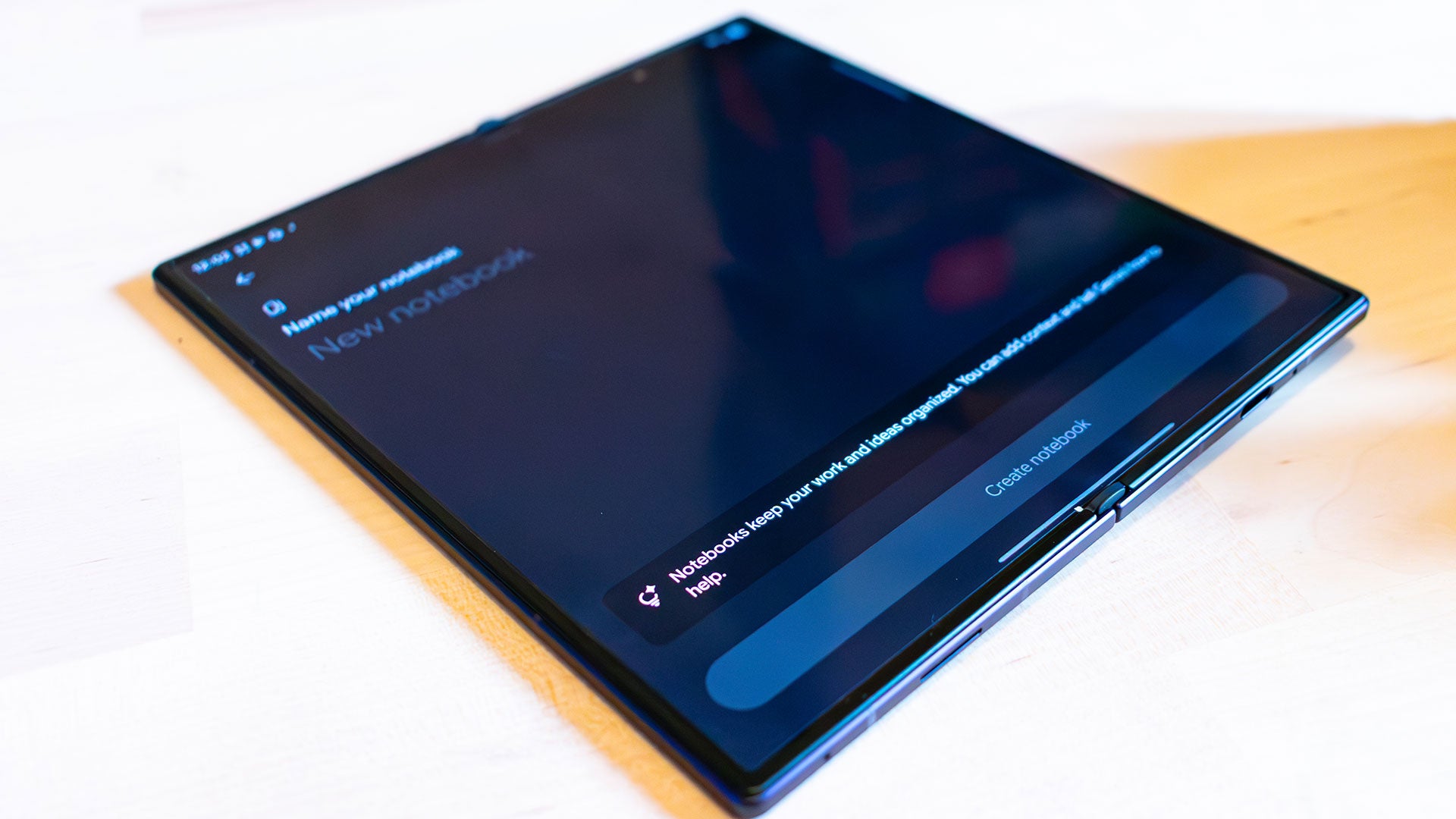
The Fold 8 Ultra’s display is largely the same as the Fold 7’s as well, with a 6.5-inch cover display at 1080 x 2520, and an unfolded 8-inch display with a resolution of 2504 x 2256. The main improvement here is that the unfolded display has a slightly higher resolution than the Fold 7.
However, while the crease in the unfolded display is still noticeable when you hold it at a certain angle, it’s the least pronounced it’s ever been. Seriously, looking at the display head-on, it almost seems like I'm looking at an actual tablet, rather than a foldable phone. But, then the display turns off and I look at it slightly from the side, and the crease shows itself again. Either way, though, the crease is smaller than the Fold 7, so I consider that a win.
Around the back is where the Galaxy Z Fold 8 Ultra actually differentiates itself from its predecessor. Last year’s model only had a 12MP ultrawide lens paired with its 200MP main lens, whereas the Fold 8 Ultra bumps the ultrawide lens up to 50MP. More on the cameras down below.
Display
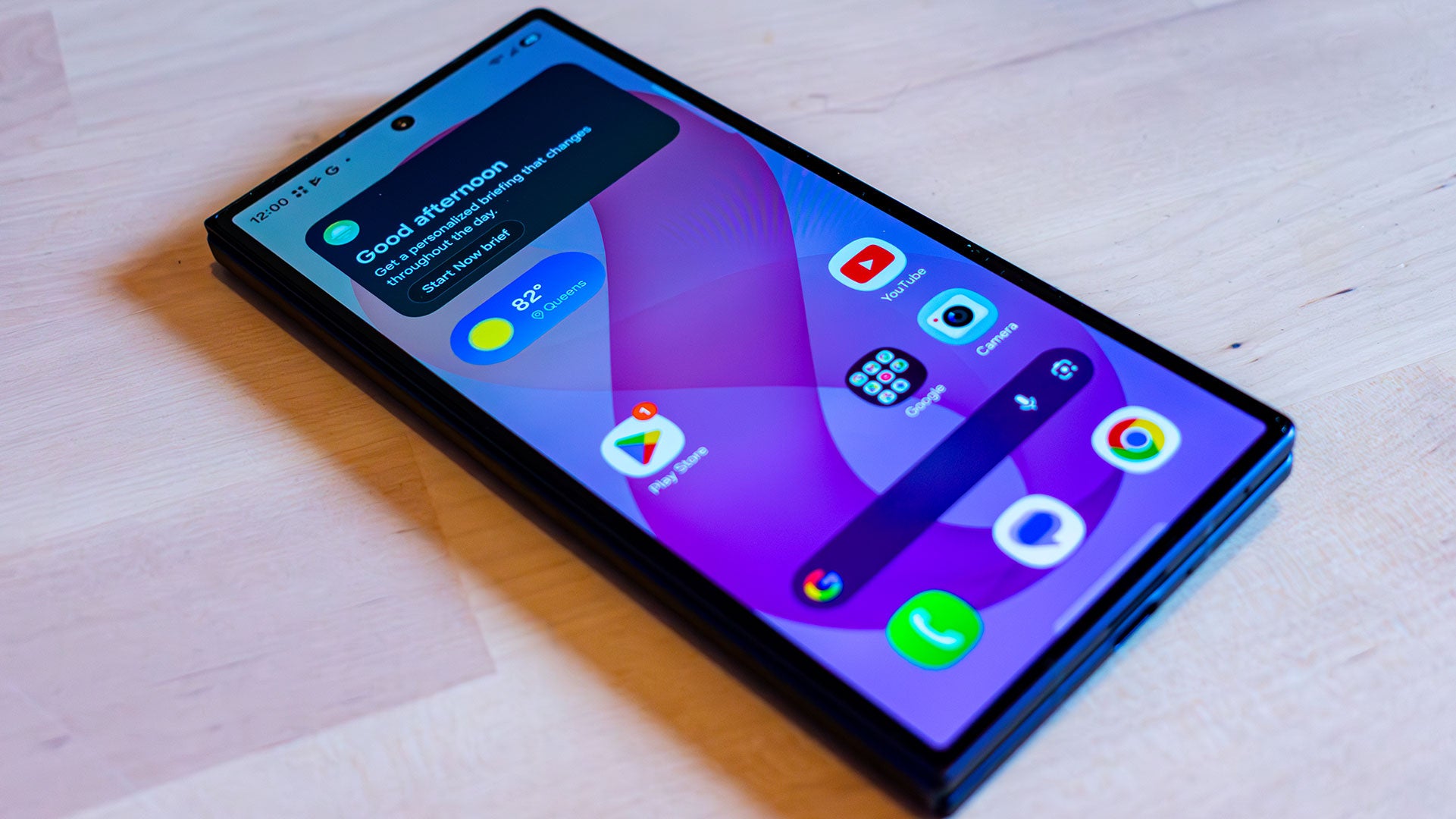
At this point, it's almost a guarantee that Samsung is going to have an absolutely gorgeous display on any of its flagship phones, and the Fold 8 Ultra is certainly no different. The outer display is largely unchanged from last year's Fold 7, which isn't a bad thing, but the inner display has been massively improved.
Samsung has increased the resolution from 2184 x 1968 on the Fold 7 to 2204 x 2256. That's a minor difference, but it does mean text and images are sharper than ever before. What's more noticeable is that the display is ever so much brighter than last year's model, with more accurate colors, at least when looking at them side-by-side.
That not only helps the screen stay readable when you're outside, but it helps to hide the screen's crease – not that it really needs the help this time around. I've already mentioned it above, but the crease is hardly noticeable anymore, especially when the screen is actually turned on. You have to do some creative angling to get it to show up, which means its practically not there when you're not actively looking for it.
I spent my first weekend with the Fold 8 Ultra sick in bed, and so I spent a lot of time scrolling through content and playing games. Everything looks incredible, from YouTube Shorts to Netflix.
Speaking of the former, when Samsung revealed the Fold 8 Ultra, it showed off the ability to read comments on the side of the display when you're watching shorts. I thought this was cheesy at first, but a lot can change when you don't have the energy to do anything but scroll in bed. And, because of the size and aspect ratio of the inner display, you can basically watch the reel in the same size it would be on any other phone, while the comments scroll next to it, without intruding on anything. That's not for everyone, but it's now my favorite way to consume vertical video.
Specs and Performance
The Samsung Galaxy Z Fold 8 Ultra is powered by the Qualcomm Snapdragon 8 Gen 5, just like the Galaxy S26 Ultra that debuted at the beginning of 2026. However, because the chipset in the Fold 8 Ultra has significantly less space to cool itself, it doesn't reach quite the same heights as Samsung's slab.
Due to how thin the Fold 8 Ultra is, the high-end processor heats the chassis up incredibly quickly. Even before I started pushing it in a game or another heavy workload, when all I was doing on it was installing a bunch of apps, I noticed that the phone was very warm to the touch. Now, to be fair, when I’m reviewing a phone I tend to just rapid-fire install everything at once, so the Fold 8 Ultra was doing some work.
When I booted up Arknights: Endfield, I noticed that the phone got even warmer, to the point where it was uncomfortable to hold. You can mitigate this by putting a case on the phone, but even the display can start to feel warm when you’ve been playing games for a while. This was a problem with the Fold 7 as well, and while I got used to it last year, it’s a little disappointing that Samsung hasn’t found a way to dissipate heat a little better. But I guess everything’s in service to having a super thin phone.
Samsung claims that it’s improved the cooling solution with a new graphite cooling structure, which supposedly helps dissipate heat. But, there’s only so much Samsung can do with a phone this thin. Luckily, until you boot up a demanding game, most things you do with a smartphone are bursty enough that you don’t really have to worry about throttling. As soon as you start playing around with CapCut or playing games, though, be prepared for a hot slab of glass in your hand.
I was initially worried that the Fold 8 would throttle quite a bit, like the Fold 7 did. But I was surprised that the phone kept up to 79% of its performance through the Steel Nomad Light stress test. That's better than the Samsung Galaxy S26 Ultra, which only kept 66% of its performance over repeated tests.
The S26 Ultra had higher performance at first, with an initial score of 2082 points, compared to 1641 from the Fold 8 Ultra. However, the S26 Ultra dropped down to 1374 points at its lowest point, compared to 1296 points from the Fold 8 Ultra. So, the thicker S26 Ultra starts off 24% faster than the Fold, but ends up just 6% faster over a long gaming session.
There's always going to be a tradeoff when you go with a foldable phone like this, and I'd personally take better endurance over faster peak performance, at least with the way I use my phone.
I still wouldn't necessarily recommend the Fold 8 Ultra if all you're looking for is a gaming phone, though. That mostly comes down to how hot the phone gets. After testing the Fold 8 Ultra for a few days, it never got quite as hot as it did on the first day, but the cover display will get quite toasty when you're playing games with the phone open for a while. That meant I had to make quite the annoying choice: either deal with the large camera bump in between two of my fingers when playing games, or hold the phone by the warm cover display. Luckily, putting a decent case on the phone can help the camera bump feel a little less intrusive.
Camera
I'm going to come right out of the gate and say that I don't spend a lot of time shooting photos on my phone, that's what my DSLR is for, after all. However, I've spent a bit of time with the Galaxy Z Fold 8 Ultra's camera, particularly at night, and it does seem a bit better than last year's Fold, especially when zooming in on distant objects.
That's mostly because Samsung updated its ultrawide lens with a 50MP sensor, up from the 12MP shooter in last year's Fold 7. It also doesn't hurt that Samsung added an actual optical zoom function to the camera, instead of just relying on AI to fill in the details.
Beyond the physical improvements to the Fold 8 Ultra's actual camera lenses, Samsung is again leaning on AI to do a lot of the heavy lifting. You can avoid that by using a third-party camera app, but the software 'enhancements' aren't super obvious this time around.
Battery Life
The Galaxy Z Fold 8 Ultra does finally include a better battery, too. For years, Samsung has been shoving slightly smaller batteries into its foldables to save space, but the company has found a way to include a 5000mAh battery in the Fold 8 Ultra, rather than the 4400mAh battery found in the Fold 7. Samsung claims that the phone will last for 27 hours of video playback, and I’ll believe that when I see it, but either way it should last a bit longer than the Fold 7.
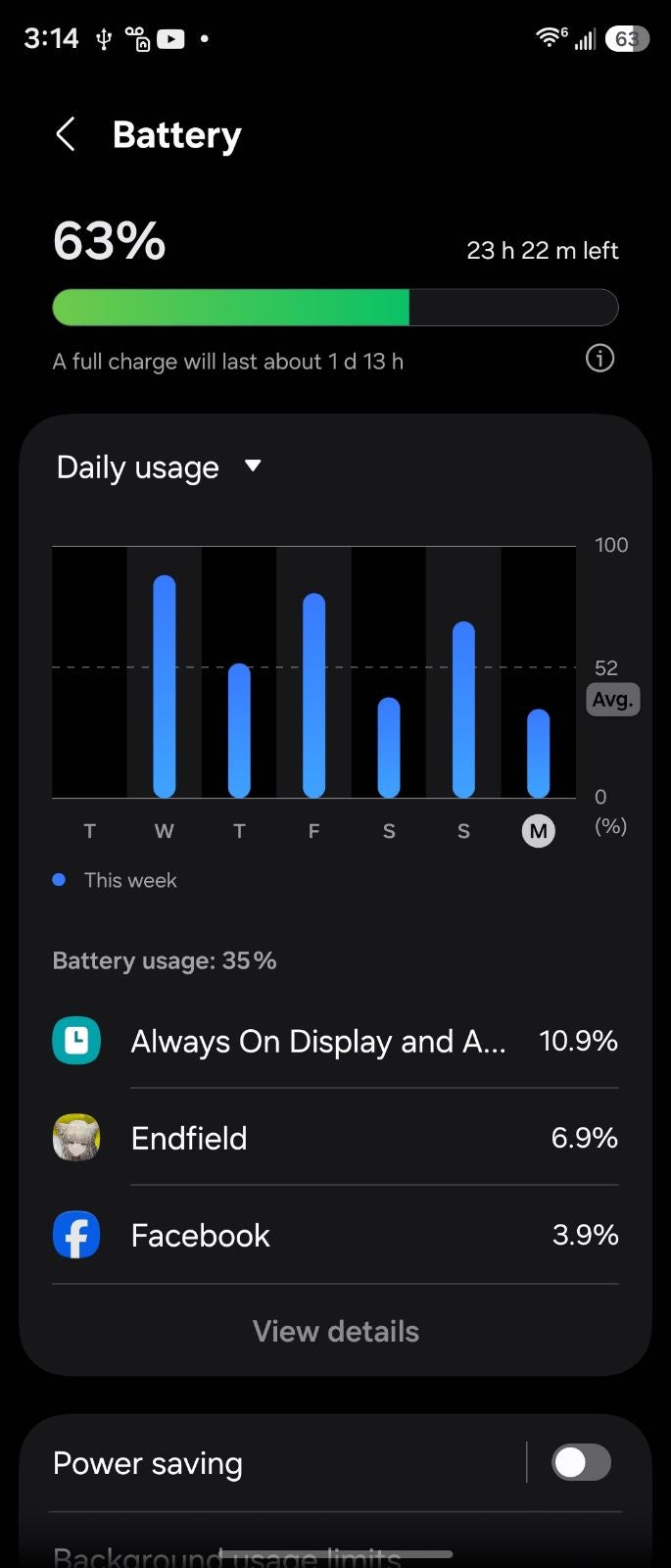
With how long phone batteries last these days, I don't really have a way to definitively test how long the battery lasts. However, even after only charging the battery up to 80%-ish each day, there hasn't been a day where the phone hasn't lasted a full day. According to Samsung's battery info meter, the Fold 8 Ultra's battery will last be about one day and 13 hours on a full charge. My Galaxy S26 Ultra, for comparison estimates about two days and four hours on a single charge.
Either way, the Fold 8 Ultra should last a full day, pretty much no matter what you put it through. Obviously, if you use it in tablet mode a lot, you're going to burn through the battery a little faster, but it does help that OLED displays aren't as power-hungry as phone displays used to be.
Jackie Thomas is the Hardware and Buying Guides Editor at IGN and the PC components queen. You can follow her @Jackiecobra
