
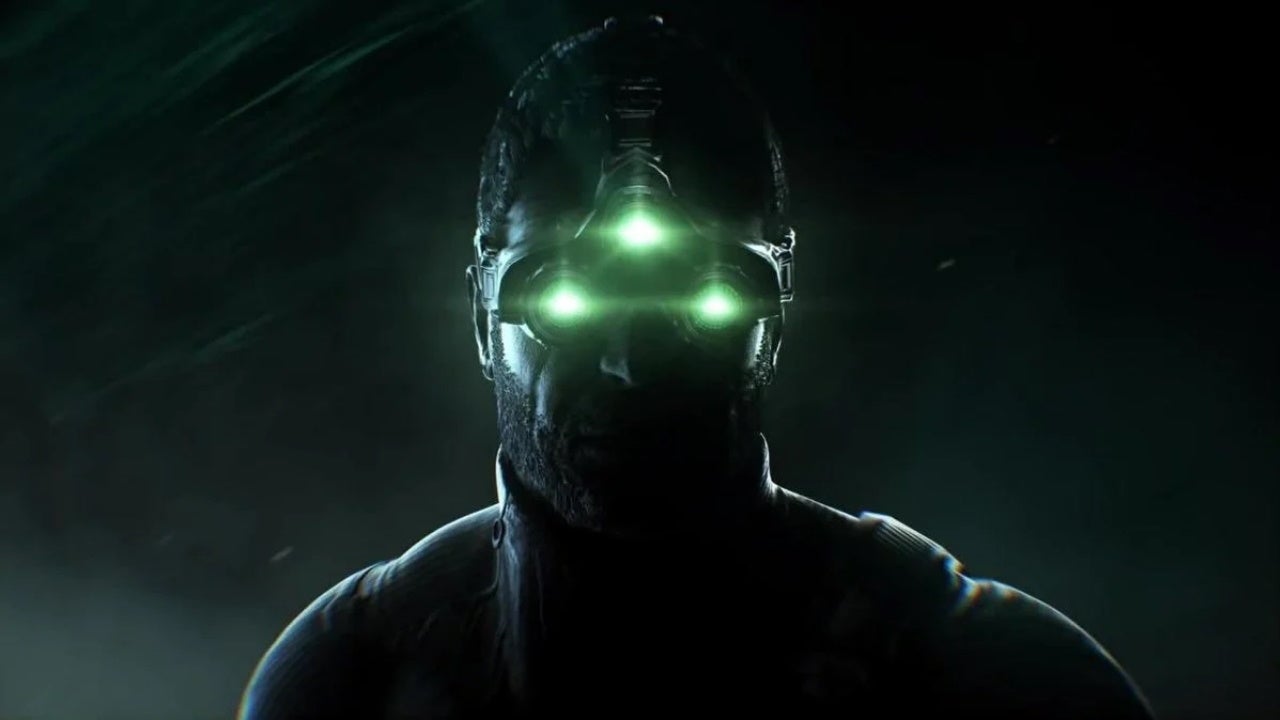
The former creative director of one of gaming's most influential stealth franchises, Splinter Cell, has suggested that advancements in lighting and shadow have made it more difficult than ever for the fans — and creators — of the genre.
In an interview with FRVR, Clint Hocking, who was creative director of 2005's Tom Clancy's Splinter Cell: Chaos Theory, talked candidly about how the more sophisticated development methods actually make it harder to create the shadows needed for stealth games.
“I actually think one of the difficulties with modern stealth games is that the sophistication in the rendering has made lighting so much more realistic,” Hocking said.
“When you think about those old school stealth games because of their baked lighting, the lighting is very clean and readable and very understandable for the player,” he added. “But once you get into this diffuse and ambient occlusion and all of the stuff that comes with it, it gets very hard to tell what’s light, what’s shadow, what’s dark, what’s safe, what’s dangerous and all of that stuff.”
The problem, Hocking said, is that realistic lighting systems, such as direction, can be difficult to manage when so much of the gameplay requires players to huddle in shadowy corners.
“Part of it is also just lighting direction,” Hocking said. "When you go and see a play on a stage, the lighting is often super dramatic. So, you can do it with real lights. It’s just that, you know, these places are often lit to be very realistic and not lit to be aesthetic [for the purposes of] stealth gameplay."
It's a "tough bridge to cross," Hocking added, especially as "people in the industry spent 20 years of their career thinking about how to make things look more realistic."
Ubisoft recently insisted its long-awaited Splinter Cell remake remains in development despite layoffs at the studio working on the project. 40 jobs were cut at Ubisoft Toronto, the company announced in February, as part of the ongoing push to cut costs that has seen thousands of employees depart over the past few years. In a statement sent to IGN, Ubisoft said that work on Splinter Cell was unaffected by the redundancies.
The game itself remains firmly under wraps without any kind of release window. Still, some positive news emerged late last year — when the remake's original director David Grivel announced he had returned to recommence his role after leaving Ubisoft in 2022. Here's hoping more emerges from the shadows soon.
As for Clint Hocking, he left Ubisoft in February having led work on Assassin's Creed Hexe, the upcoming entry in Ubisoft's flagship series that's set to feature a witchcraft vibe.
Vikki Blake is a reporter for IGN, as well as a critic, columnist, and consultant with 15+ years experience working with some of the world's biggest gaming sites and publications. She's also a Guardian, Spartan, Silent Hillian, Legend, and perpetually High Chaos. Find her at BlueSky.