
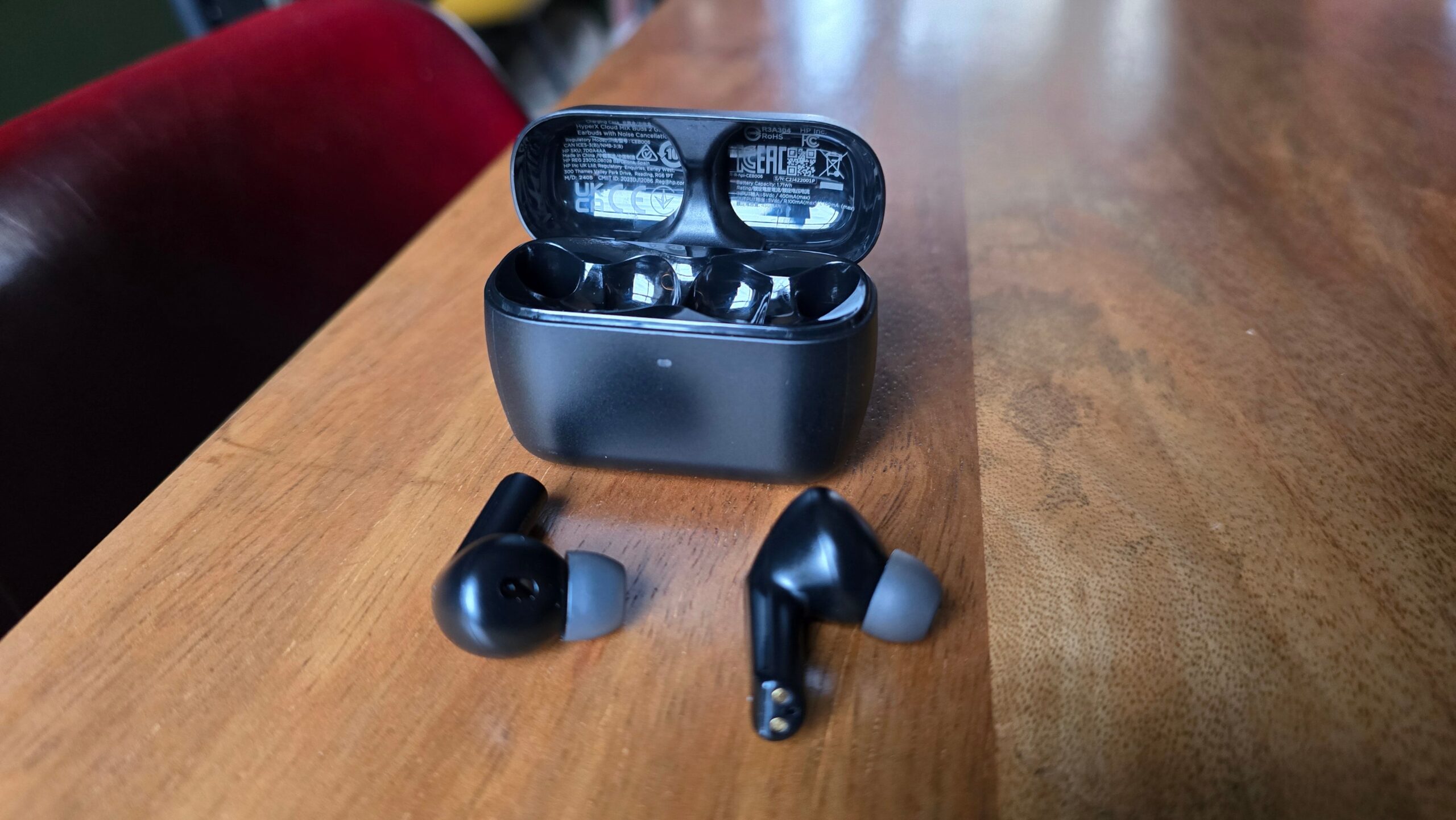
The original HyperX Cloud Mix Buds were nifty gaming earbuds with batteries that could survive 10-hour sessions. For the follow-up HyperX has swapped that juice – they now last just seven hours – for extra audio quality, active noise cancelling, and a more lightweight design.
Is the trade-off worth it? And how do they compare to the best gaming earbuds like Sony's InZone Buds, SteelSeries' Arctis GameBuds or the Sennheiser Momentum True Wireless 4?
Design and Comfort
These buds are light. I weighed each one at 4.2g, at least 20% less than most competitors, and they feel virtually weightless in your ears. The case, too, is lighter than most at 34g, and it's compact: it slipped into my jeans pocket without leaving a lump.
Most bud cases creak when you try to push the closed lid sideways but this one barely squeaks, and feels particularly sturdy, as do the buds themselves.
The USB dongle isn't quite as sturdy, but it won't wiggle from side-to-side anything like as much as the dongle on the Sony InZone Buds I recently reviewed. It sits flat against whatever it's plugged into without protruding, so you're unlikely to knock it or damage it.
The dongle doesn't fit inside the case but you can slot it into the USB-C port on the bottom. The whole thing – case, buds, dongle – weighs just 45g, and I'd feel comfortable flinging it into my bag or sliding it into my pocket. Considering the weight, build quality and flexible connectivity, which I'll discuss more later, they might be the best travel gaming earbuds around.
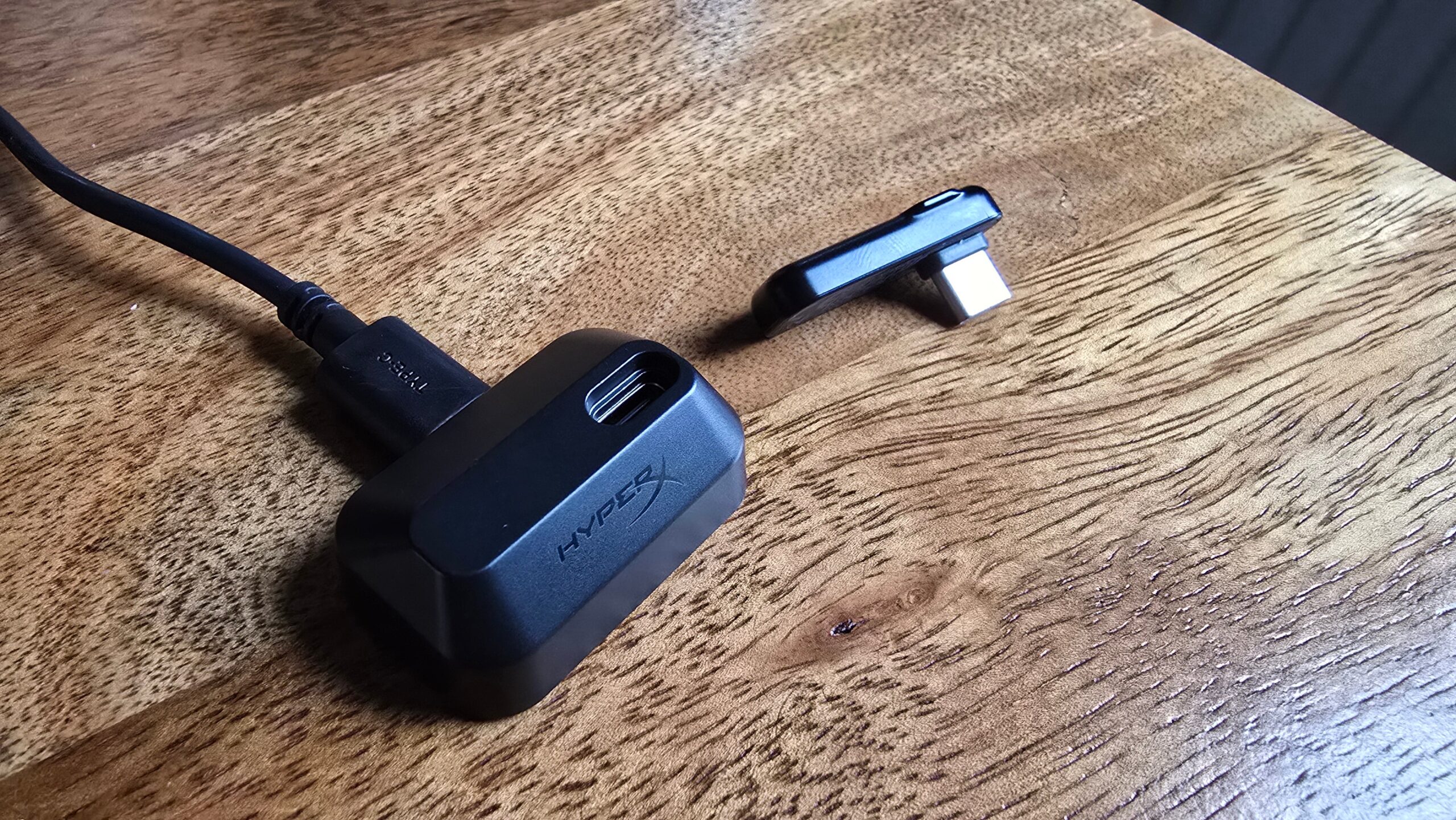
HyperX also includes a larger extension adapter with a peel-away strip that connects to your PC and sticks to your desk. You can plug the dongle into that rather than your PC, if you prefer. The peel-away strip was uneven on the model I tested, but still, it's an option that not many other gaming earbuds offer.
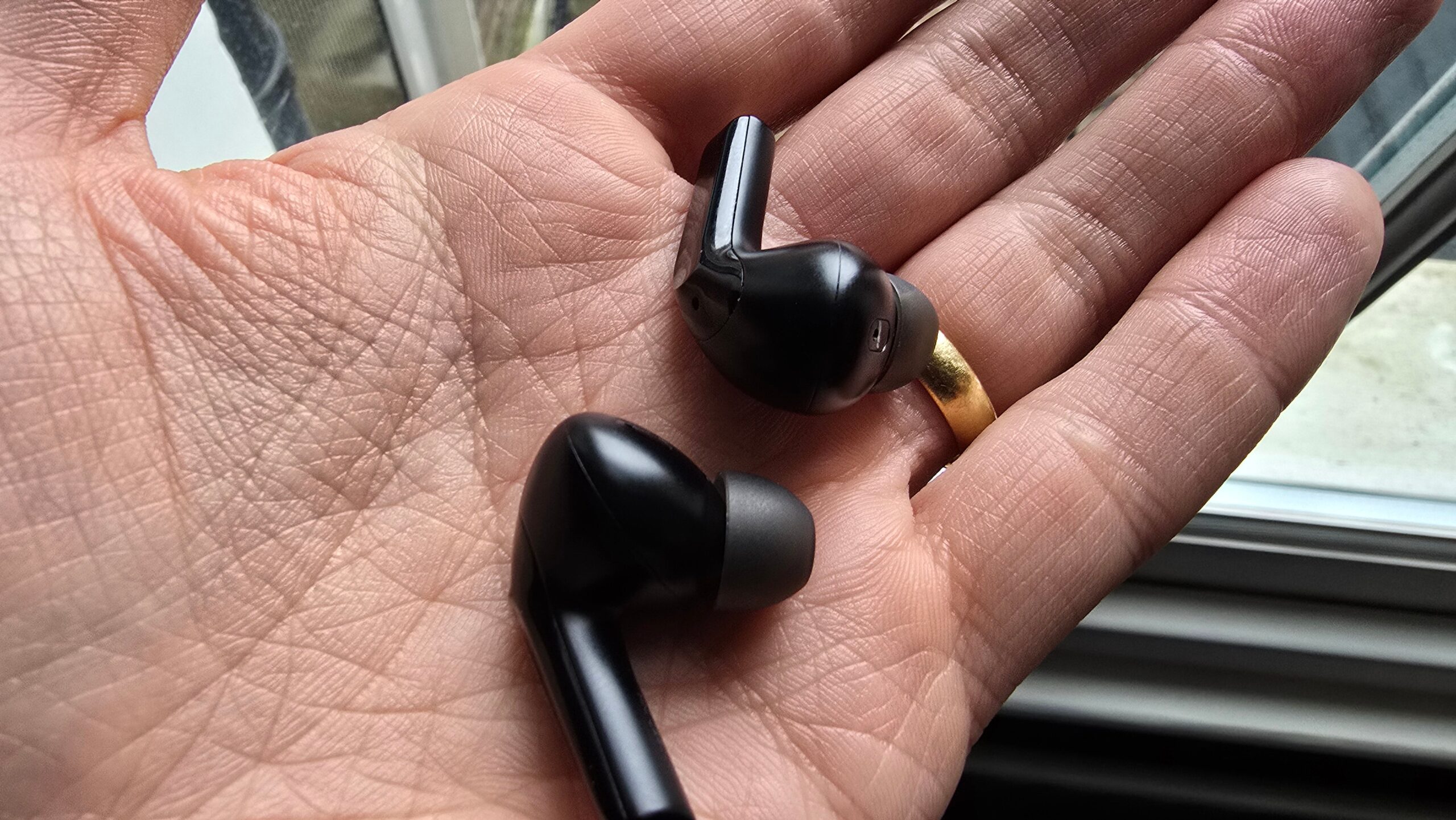
I found the buds reasonably comfortable, partly because of how light they are, and I could play for a few hours at a time without needing a break. I also tried jogging and they stayed in my ears without irritating me, although they jiggled a little more than my regular buds.
But after wearing them for the better part of a day the inside of my ears felt a little sore – that hasn't happened with other buds I've tried recently, and switching to smaller eartips didn't solve it. I'm not sure why exactly, but it could be because the ear tips are oval rather than round. That design decision makes sense – your ear canal isn't circular, after all – but it's different to what my ears are used to
And while I'm usually a fan of minimalist design, I would've perhaps liked HyperX to take a bigger swing on aesthetics. They're modest to the point of being generic.
Sound Quality and Noise Cancelling
Thanks to the low-latency dongle, the Mix Buds 2 pump out game audio with zero perceptible delay. If you've only ever used Bluetooth earbuds for gaming, either on your PC or handheld console, then these will be a revelation – and because the dongle is so slim and inconspicuous, it's never a hassle to plug it in.
They sound decent too. I tested them in multiple games, watching YouTube and films, and listening to music and podcasts. They are clear, loud, and smooth and I was able to distinguish between the layers of sounds I was hearing. Arc Raiders is my go-to game at the moment, and I could easily tell apart different gunshots, or different sets of footsteps. I could also tell which direction noises were coming from, and how far away they were.
They do feel less precise, crisp and atmospheric than other buds I've tested recently, such as the high-end Sennheiser Momentum True Wireless 4 Earbuds and Sony's InZone Buds, which I mentioned earlier. Compared to those two buds, everything sounded smudged, particularly vocals and bass. I enjoyed audiobooks, but in Kendrick Lamar's m.A.A.d city, the bass lacked punch and his voice sounded a little tinny.
It's worth saying, of course, that the Mix Buds 2 are cheaper than both of those other buds, and because they support Bluetooth 5.3 LE Audio they're a step up from the original Mix Buds, which only supported the SBC codec. For the price they're fine, and for games where hearing clearly is more important than atmosphere – say, Arc Raiders – they'll serve you well. But for a game like Tears of the Kingdom, where the music creates a mood, I'd rather reach for a different pair of buds.
The microphone is loud, clear, and blocks out distractions. I was playing with friends while somebody was clattering around in the next room and having a conversation, and all they could hear was my voice.
The buds have active noise cancelling (ANC) and a transparency mode – both were absent from the original Mix Buds, and they make the Mix Buds 2 more viable as daily earbuds for commuting. Both work okay, but they're a step behind competitors. When I took them to the gym they blocked out most of the music coming from the public speakers, but I could still hear more than with other buds I've tested. Transparency mode has a noticeable background hiss, and only boosted external noise slightly, not enough to hear somebody talking in the same room as me while I was playing a game.
Battery life, Connectivity and Software
Speaking of battery, HyperX says they'll last up to seven hours before they need to recharge in the case, and that they'll last 26 hours before you need to plug the case in. In reality I got closer to six hours, probably because of ANC, transparency, and switching connections between devices.
It's disappointing that they fade so much more quickly than the original Mix Buds, which lasted up to 10 hours. They fall slightly short of our favorite buds on single-session charge (the SteelSeries Arctis GameBuds last 10 hours, the InZone Buds 12 hours), but 26 hours is solid for total charge time, and most people won't play more than six hours in a single session without needing a break.
I never had a problem linking them to any device, whether by Bluetooth or the dongle. That's a big advantage over the InZone Buds, which don't support regular Bluetooth and therefore need a dongle to connect to your Switch, Steam Deck, and some phones. Bluetooth audio will have more latency than the dongle, but it's more convenient and for games where immediacy isn't a problem – say, Balatro on my Steam Deck – it's fine.
While they connected instantly, that connection wasn't always stable. I counted four instances of momentary stuttering on Bluetooth, and three while connected to the dongle – the audio only dropped for a split second each time, but it was noticeable. A handful of connection slips on the dongle in tens of hours of testing isn't a huge concern, but it's hardly ideal.
I also had a few issues switching from the dongle on my PC to Bluetooth on my phone. A couple of times only the right bud worked and I had to put them both back into the case before the left one woke up.
The Ngenuity app was fine on my phone but it regularly failed to recognize the buds on PC, forcing me to restart the app and reconnect the buds. It's also laughably barebones on PC: you can change the mic volume, toggle between ANC and transparency mode, and pick between five audio EQs. That's it! There's no balanced EQ option, no way to customize your own EQ, and no other ways to personalize the sound.
Samuel is a freelance reporter and editor specializing in longform journalism and hardware reviews. You can read his work at his website.